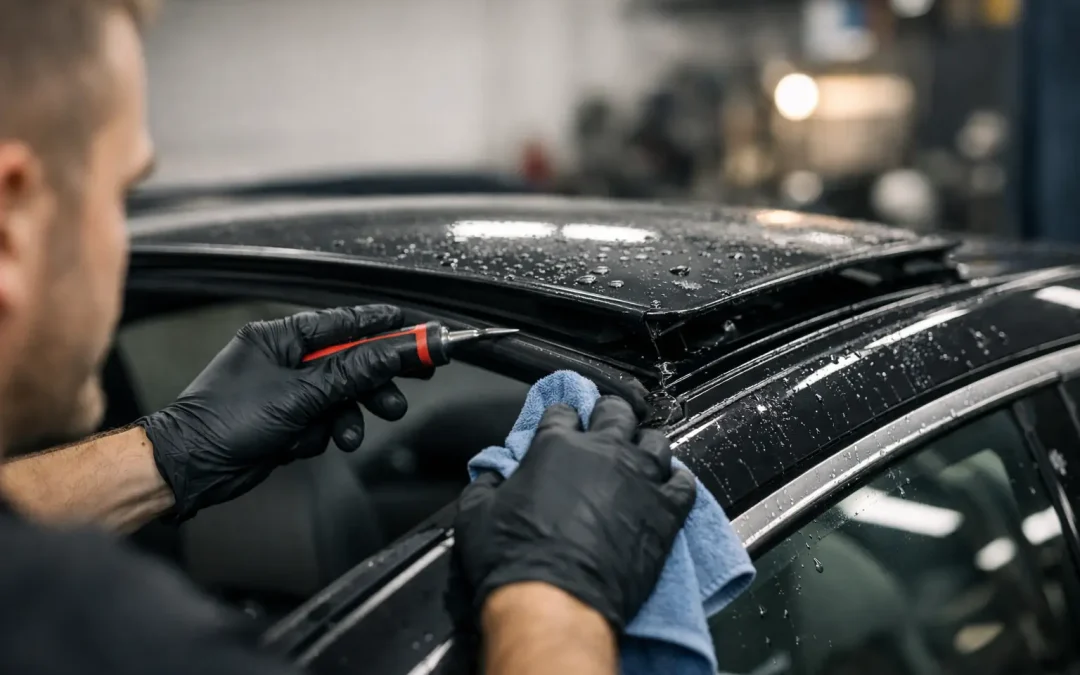
A wet headliner after a Texas downpour is more than an annoyance. Water from a sunroof can travel behind trim panels, soak carpeting, damage wiring, and create odors that are difficult to remove. Learning how to fix leaking sunroof problems starts with finding the true entry point. The glass seal is not always to blame, and treating the wrong cause can leave you with the same leak at the next rainstorm.
Most sunroof leaks fall into one of three categories: blocked drain tubes, worn or misaligned weatherstripping, or damage to the sunroof frame and surrounding roof area. A careful inspection can narrow it down before a small water issue becomes an interior repair.
Find Where the Water Is Entering
A sunroof is designed to handle some water around the glass. On most vehicles, the weatherstrip reduces the amount of water entering the sunroof channel, while drains at the corners of that channel carry the remaining water safely down and out of the vehicle. When those drains clog or disconnect, water overflows into the cabin.
Start by noting where you see moisture. Water near the front map lights, A-pillars, or front floorboards often points to a blocked front drain. Wet rear headliner material or water around the rear seats may indicate a rear drain problem. A damp spot directly around one side of the glass can suggest a seal, alignment, or frame issue.
Before testing, park on level ground and dry the visible sunroof channel with a clean towel. Open the sunroof and look for small drain openings near the corners. Leaves, pine needles, pollen, and roof debris commonly collect in this area, especially after parking outdoors.
Perform a Controlled Water Test
Avoid blasting the roof with a high-pressure hose. That can force water past seals that would otherwise perform normally and make the diagnosis less clear. Instead, slowly pour a small cup of clean water into one corner of the sunroof tray at a time.
Watch underneath the vehicle for water draining near the wheel wells or rocker panels. The exact exit location varies by vehicle, but water should flow out steadily. If it pools in the tray, drains slowly, or appears inside the cabin, that drain path needs attention. Test each corner separately so you can identify the specific problem area.
How to Fix Leaking Sunroof Drains
Clearing a drain is often the most practical repair for a leaking sunroof, but it should be done gently. Drain tubes are narrow and may be made of flexible rubber or plastic. Pushing hard tools into them can puncture, disconnect, or collapse the tube behind the headliner.
First, remove loose debris from the drain opening with a soft brush, microfiber cloth, or a small plastic pick. Do not use a metal screwdriver, coat hanger, or stiff wire. Those tools can damage the drain tube and turn a simple cleaning job into a larger repair.
A short burst of low-pressure compressed air can help loosen a light clog, but use restraint. Excessive air pressure may force the drain tube off its fitting, allowing water to pour behind the trim instead of out of the vehicle. If you use air, keep the nozzle away from the opening and apply brief bursts rather than a continuous blast.
For a stubborn blockage, a flexible nylon line designed for small drain cleaning is a safer choice than metal wire. Feed it slowly into the drain opening without forcing it. Once water moves freely through the tube, flush the channel with a small amount of clean water and repeat the controlled test.
If the drain still does not flow, or water runs inside the vehicle after cleaning, stop there. The tube may be disconnected, pinched, split, or blocked farther down where it cannot be safely accessed from the roof opening. Reconnecting it may require removing portions of the headliner, pillar trim, or interior panels.
Check the Sunroof Seal and Glass Alignment
A sunroof seal can become dry, compressed, torn, or misshapen over time. Heat is especially hard on rubber components, and Houston-area sun exposure can accelerate wear. Still, a dirty seal is more common than a completely failed one.
With the sunroof open, inspect the weatherstrip for cracks, gaps, flattening, or sections that have pulled away from the glass or frame. Clean it with a damp cloth and mild soap, then dry it fully. Do not apply petroleum-based products, because they can degrade rubber and attract more dirt.
Next, close the sunroof and look at the glass from outside the vehicle. It should sit evenly within the roof opening. If one corner sits higher or lower than the others, the glass may be misaligned. You may also notice wind noise, a rattling panel, hesitation when opening, or a sunroof that will not close flush.
Some vehicles have adjustment points for the sunroof glass, but they are model-specific. An incorrect adjustment can make wind noise worse, crack the glass under stress, or prevent the panel from sealing correctly. If the panel is visibly uneven or the mechanism binds, professional diagnosis is the safer route.
Look Beyond the Glass for Frame Damage
Not every apparent sunroof leak starts at the sunroof. A damaged roof panel, loose roof molding, deteriorated windshield urethane, or a previous body repair can allow water to travel along the roof structure and appear near the sunroof opening.
This is why the location of the interior water stain matters. Water follows gravity and can move several inches, or even feet, from the actual leak source. A stain on the headliner does not automatically mean the sunroof itself is defective.
Inspect the roof around the sunroof for dents, corrosion, missing trim, or signs of prior repair. Also check whether the leak began after a windshield replacement, roof-rack installation, collision repair, or aftermarket accessory installation. Those details help a technician trace the problem accurately instead of replacing parts unnecessarily.
Dry the Interior Before Damage Spreads
Once the leak source is controlled, remove as much moisture as possible. Blot wet carpeting and headliner material with clean towels. Pull out removable floor mats and allow them to dry separately. Keep the doors open in a secure, covered location when possible, and use fans or a dehumidifier to move moisture out of the cabin.
Do not ignore a wet headliner or carpet because it feels dry on the surface. Foam backing and padding can hold water for days. That trapped moisture can lead to mildew odors, staining, corrosion on electrical connectors, and problems with modules located beneath seats or under carpeting.
Be especially careful around A-pillars and overhead consoles. Many newer vehicles have side-curtain airbags, wiring harnesses, microphones, sensors, and lighting components in these areas. Avoid pulling trim panels or probing behind the headliner unless you know how your vehicle is assembled.
When a Sunroof Leak Needs Professional Repair
A basic drain cleaning may solve a minor clog, but some signs call for a trained inspection. Schedule service if water continues to enter after the drains are cleared, the headliner is sagging or heavily stained, the glass is cracked, or the sunroof binds, rattles, or will not close evenly.
You should also seek help if the vehicle has electrical symptoms after a leak. Flickering interior lights, warning messages, inoperative power windows, moisture in the overhead console, or unexplained battery drain can point to water reaching wiring or control modules.
Professional water leak repair involves more than replacing a seal. A technician can perform a controlled water test, inspect the drain tray and tube connections, check glass alignment, identify hidden water paths, and determine whether the sunroof cassette, glass, seal, or surrounding roof area needs repair or replacement. That diagnosis matters because replacing the glass will not fix a disconnected drain tube, while cleaning drains will not correct a bent frame.
For drivers in Humble and nearby Harris County communities, NXT Auto Glass can inspect sunroof-related water intrusion and help determine the right repair path. The goal is to stop the leak at its source while protecting the interior, visibility, and safe operation of your vehicle.
A leaking sunroof rarely improves on its own. If a gentle drain cleaning does not restore proper water flow, protect the interior by addressing it before the next heavy rain turns a manageable repair into a larger one.