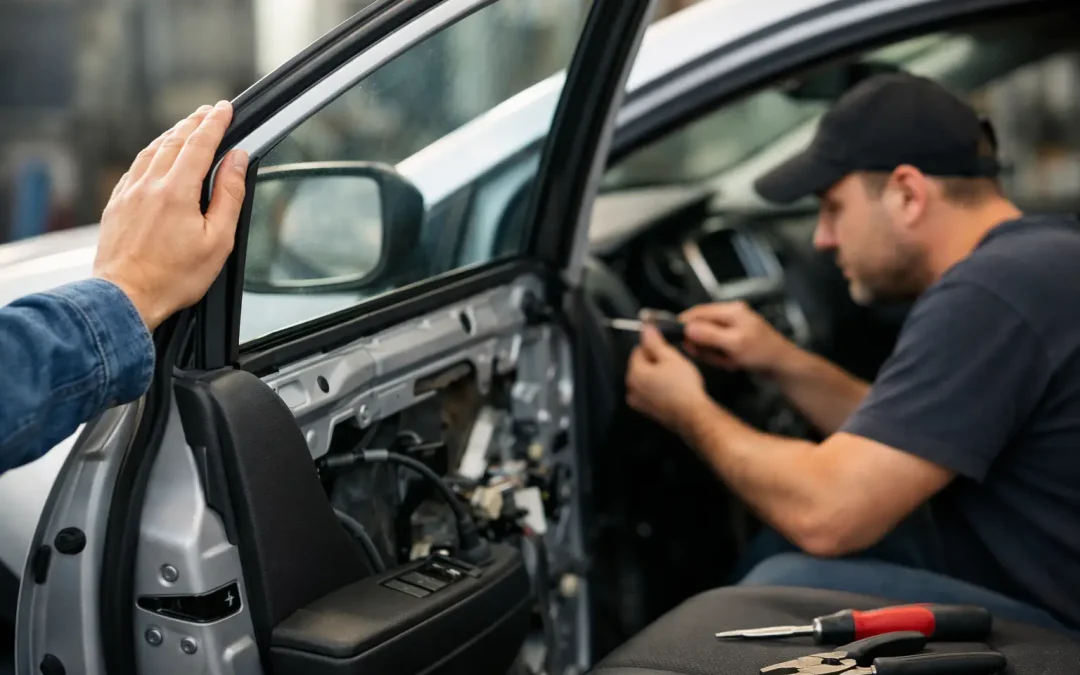
A car window won’t roll up repair becomes urgent fast when rain is coming, your vehicle is parked outside, or you need to leave it overnight. A stuck power window is more than an inconvenience. It can expose your vehicle to water damage, theft, and road noise while making everyday driving less secure.
The good news is that many power-window problems have a clear cause and can be repaired without replacing the entire door or window assembly. The right repair depends on whether the issue is electrical, mechanical, or related to the glass itself. Knowing what to look for can help you protect your vehicle and make an informed decision about service.
Why a Power Window Will Not Roll Up
Most modern vehicles use a power window system made up of a switch, wiring, motor, regulator, window tracks, and glass. When one part fails, the window may move slowly, stop partway up, fall into the door, or refuse to move at all.
A failed window regulator is one of the most common reasons a window will not roll up. The regulator is the mechanical assembly inside the door that guides the glass up and down. Many regulators use cables, pulleys, or plastic guides that can wear out or break over time. If you hear a grinding, clicking, or crunching sound when pressing the switch, a damaged regulator is a likely cause.
A worn power window motor can also leave the glass stuck. You may hear the motor running while the window does not move, or the window may work only intermittently before stopping completely. Motors can weaken gradually, so a window that has been moving slowly for weeks may eventually fail to close.
The switch may be the problem if there is no sound or movement when you press it. A faulty master switch on the driver’s door can affect one or several windows. On some vehicles, a blown fuse, damaged wiring in the door jamb, or a door control module issue can create similar symptoms.
There are also simpler possibilities. Debris in the window channel, worn weatherstripping, or misaligned glass can make the window bind. Texas heat can dry out and harden old rubber channels, increasing friction and putting extra strain on the motor and regulator.
What to Do When Your Car Window Will Not Close
First, avoid repeatedly pressing the window switch. If the regulator cable has tangled or the motor is overheating, forcing the system can cause additional damage. Turn the vehicle off and inspect the visible portion of the glass. If it is tilted, loose, or dropping into the door, do not attempt to force it straight with the switch.
Check whether the other windows work. If every power window is unresponsive, the issue may involve a fuse, relay, battery condition, or electrical control system. If only one window has stopped working, the problem is more likely limited to that door’s switch, motor, regulator, wiring, or track.
If the window is partially open and rain is expected, cover the opening temporarily with a waterproof plastic barrier secured from the outside of the door frame. Avoid using tape directly on painted surfaces for long periods, particularly in high heat. This is a short-term measure, not a repair. Water entering the door or cabin can damage upholstery, electronics, and speakers.
Some drivers try to pull the glass upward by hand while another person holds the switch. This can occasionally help with a weak regulator, but it can also crack the glass, bend the tracks, or pinch fingers. It is not a reliable fix, especially if the glass has fallen inside the door. Professional service is the safer option when the window is not properly supported.
Do Not Slam the Door or Hit the Door Panel
Older advice sometimes suggests slamming the door or striking the interior panel to jar a motor back to life. That may briefly move a worn electrical connection, but it can damage clips, trim, wiring, or the glass. A window that closes once after being hit can still fail again at the worst possible time.
Diagnosing a Car Window Won’t Roll Up Repair
A proper diagnosis starts by checking how the window behaves. The symptoms often point a technician toward the failed component before the door panel is removed.
If you hear the motor but the glass does not move, the regulator or its cables may be broken. If the window moves crookedly, binds halfway, or drops suddenly, the regulator, glass guides, or window channel may be worn or out of alignment. If there is complete silence when the switch is pressed, the technician will test the switch, fuse, wiring, motor power, and ground connection.
Removing a door panel requires care. Modern doors may contain side-impact airbags, delicate trim retainers, speakers, moisture barriers, and electrical connectors. A rushed do-it-yourself repair can leave the panel loose, damage the vapor barrier, or create a water leak inside the door. The technician should also inspect the glass for chips, edge damage, and stress cracks before reinstalling it.
At NXT Auto Glass, power window service focuses on finding the actual failure rather than replacing parts based on a guess. That helps ensure the repaired window moves smoothly, aligns correctly, and seals securely when closed.
When Repair Makes Sense and When Replacement Is Better
The word “repair” can mean different things depending on the condition of the system. A loose connector, damaged switch, misaligned guide, or dirty window channel may be repairable without major component replacement. If the motor is weak or the regulator cable has snapped, replacing the failed assembly is usually the dependable choice.
In many vehicles, the motor and regulator are available separately. In others, they are designed or commonly sold as one assembly. Replacing both at the same time may cost more upfront, but it can be worthwhile when the motor has been straining against a failing regulator or when access to the door is labor-intensive.
Glass condition matters too. If the window glass is scratched, chipped along the edge, cracked, or no longer sitting squarely in its mounts, replacing the glass may prevent another failure. A properly working regulator cannot safely compensate for damaged glass or broken mounting hardware.
The best option depends on the vehicle’s make, model, age, parts availability, and the exact cause of the problem. A clear inspection should explain what failed, what needs to be replaced, and whether any related components show signs of wear.
Why Prompt Power Window Service Protects Your Vehicle
Leaving a window open creates obvious security concerns, but moisture is often the more expensive problem. Rainwater can soak carpet and padding, leading to odors, mold growth, and corrosion beneath the flooring. Water entering the door can also affect speakers, wiring connections, and electronic modules.
A window that will not close can also make highway driving uncomfortable and unsafe. Wind noise, debris, exhaust fumes, and rain can enter the cabin. If the glass is loose in the door, it may shift while driving and become damaged beyond repair.
For families and commuters around Humble and Harris County, fast mobile service can make a meaningful difference. Instead of driving with an open window or arranging a tow, a qualified technician may be able to inspect and repair the issue where your vehicle is located, depending on the work required and weather conditions.
Preventing Future Power Window Problems
Power windows are wear items, but a few habits can reduce strain. Clear ice, dirt, leaves, and sticky residue from the window channels before operating the glass. Do not hold the switch after the window is fully closed, and avoid using the window when the glass is frozen to the weatherstripping.
If a window begins moving slowly, squeaking, or stopping intermittently, schedule service before it fails open. Early attention may prevent a worn guide or binding channel from overworking the motor. It also gives you time to choose a repair instead of dealing with an emergency during a storm or busy workday.
A window that will not roll up rarely fixes itself for long. Protect the opening, avoid forcing the mechanism, and have the door inspected by a technician who can restore smooth operation and a secure seal. That small repair can keep a minor interruption from becoming water damage, a broken window, or an unnecessary safety concern.