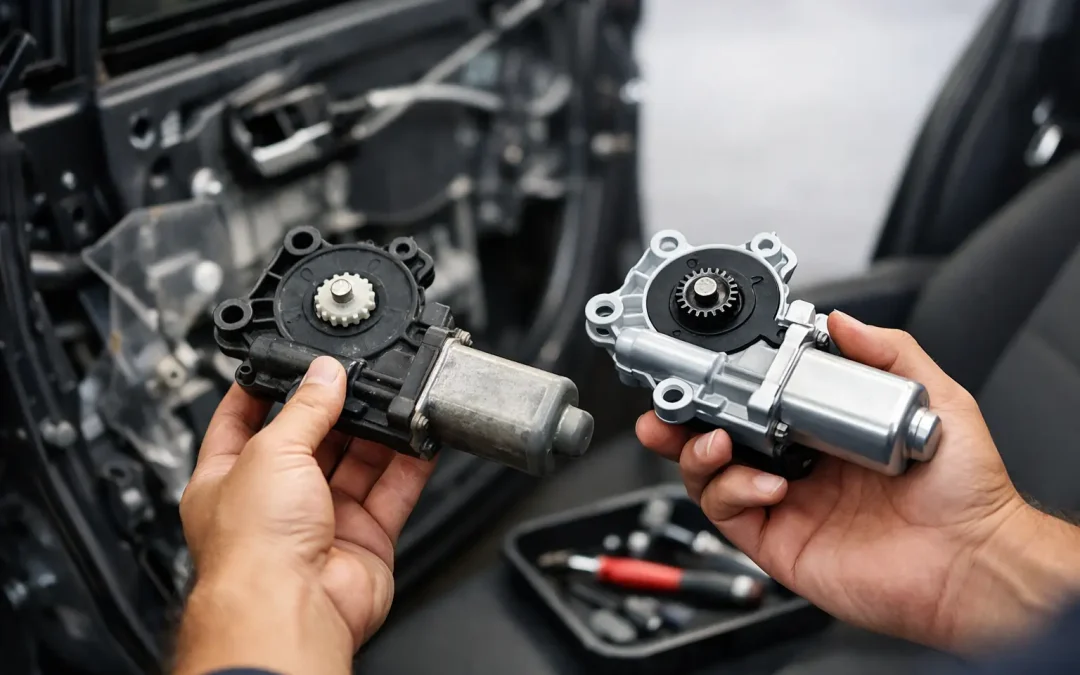
A window that will not close before a Houston-area rainstorm is more than an inconvenience. It can leave your vehicle exposed, affect security, and make the drive home uncomfortable. Power window motor replacement restores reliable control when the motor can no longer raise or lower the glass as it should.
The right repair begins with finding the actual cause of the failure. A bad motor is common, but the switch, wiring, regulator, glass track, or a blown fuse can create similar symptoms. A careful inspection prevents paying for a part that will not solve the problem.
Signs You May Need Power Window Motor Replacement
Power window motors work hard over the life of a vehicle. Each time the window moves, the motor drives the regulator that raises and lowers the glass. Wear inside the motor, corrosion at electrical connections, and added resistance in the window tracks can eventually cause it to fail.
A window that moves slowly is one of the first signs. It may hesitate on the way up, struggle only near the top, or move at a noticeably different speed than the other windows. Slow movement does not always mean the motor is bad, but it is a reason to have the assembly checked before the window gets stuck open.
A clicking, grinding, or humming sound is another warning. If you hear the motor run but the glass does not move, the regulator or its cable may be damaged. If there is no sound at all when you press the switch, the problem may be the motor, switch, fuse, wiring, or power supply. The diagnosis matters because each repair has a different cost and solution.
Other signs include a window that drops into the door, moves crookedly, stops partway, or works only when the door is slammed or the switch is pressed repeatedly. Do not force the glass up by hand or keep holding the switch after it stops moving. That can damage the regulator, scratch the glass, or create a larger repair.
Why a Professional Diagnosis Saves Time and Money
A power window system is a small network of mechanical and electrical parts inside the door. The window motor supplies movement, while the regulator supports and guides the glass. The switch sends the command, and wiring carries power through the door. A professional technician tests these components before recommending a repair.
For example, a window that will not move may have a failed master switch rather than a failed motor. A window that rises slowly may have a worn motor, but it could also be binding in a dirty or damaged track. Replacing only the motor when the regulator is bent or the glass is off track may leave the same issue behind.
This is especially relevant after broken side glass, attempted theft, collision damage, or water intrusion. Glass fragments, moisture, and damaged door components can interfere with window operation. Repairing the glass and inspecting the power window assembly at the same time helps ensure the new window operates smoothly and seals correctly.
What Happens During a Power Window Motor Replacement
The repair starts by protecting the vehicle and removing the interior door panel carefully. Modern door panels often contain clips, trim pieces, wiring connectors, speakers, and side-impact components that need to be handled properly. The technician then accesses the window motor and regulator assembly behind the moisture barrier.
After testing for power and checking the switch, wiring, tracks, and regulator, the failed motor is removed. Depending on the vehicle, the motor may be replaced separately or as part of a complete regulator and motor assembly. Replacing the assembly can be the smarter long-term choice when the regulator cable, pulley, or mounting points show wear.
The glass is secured during the repair so it does not fall or become damaged. Once the new component is installed, the window is cycled several times to confirm it moves evenly, reaches the full closed position, and does not bind or make unusual noise. The door panel is then reinstalled, and the technician checks the switch functions and fit of the trim.
A properly operating window should close firmly without slamming, sit evenly in its frame, and create a weather-resistant seal. That seal matters in Humble and throughout Harris County, where heavy rain, humidity, and summer heat can quickly expose a poorly closed window or water leak.
Motor Replacement or Regulator Replacement?
The motor and regulator are closely connected, but they are not the same part. The motor creates the power. The regulator is the lifting mechanism that guides the glass. On some vehicles, the motor can be replaced independently. On others, the manufacturer supplies the motor and regulator together.
If the motor receives power but does not run, replacing the motor may be enough. If the motor runs while the glass stays still, moves unevenly, or falls into the door, the regulator is more likely to be the main concern. When both parts are worn, replacing the complete assembly can reduce the risk of another door repair soon after.
There is a trade-off. A motor-only repair may cost less when the regulator is in good condition. A complete assembly can cost more upfront, but it may provide better value when the regulator has worn cables, broken guides, or visible corrosion. The best option depends on the vehicle, the condition of the parts, and what testing reveals.
What Affects the Cost of a Window Motor Repair?
Vehicle make, model, year, and door location all affect the final price. Some door panels are simple to access, while others require more labor because of integrated electronics, tight interior trim, or additional components. Parts pricing also varies widely between a common sedan and a luxury vehicle, truck, or SUV.
The condition of the regulator is another major factor. If the glass is intact and the motor alone has failed, the repair is usually more straightforward. If the regulator is damaged, the track needs adjustment, or broken glass must be cleaned from the door, the job becomes more involved.
Quality parts and workmanship are worth considering, especially for a window that is used every day. A low-cost component that fails early can mean repeating the labor and dealing with another stuck window. A clear estimate should explain what is being replaced and whether the recommendation is for the motor alone or the full regulator assembly.
Can You Keep Driving With a Bad Window Motor?
If the window is closed securely, you may be able to drive temporarily. Even then, the issue should be addressed soon. A weak motor can fail completely without warning, and an open window can expose the interior to rain, theft, road debris, and extreme heat.
If the glass is loose, tilted, or stuck open, prompt service is the safer choice. Loose glass can shift unexpectedly while driving, and a window that will not close is a security concern whether your vehicle is parked at home, at work, or in a public lot.
Avoid taping directly to painted surfaces for long periods, and do not attempt to remove a door panel without the right tools and knowledge. Many panels have fragile clips and electrical connectors that are easy to damage. A temporary cover may keep weather out for a short time, but it is not a replacement for a correct repair.
Choosing a Local Power Window Repair Specialist
Look for a service provider that diagnoses the issue before quoting a replacement, explains the recommended repair in plain language, and verifies the window operation after installation. If your vehicle also has broken door glass, a water leak, or damaged weatherstripping, it helps to work with a specialist who can address the full door and glass system rather than treating one symptom alone.
For drivers in Humble and nearby Harris County communities, NXT Auto Glass provides hands-on power window service with a focus on safe operation, proper fit, and clear communication. The goal is not simply to make the glass move again. It is to restore a window that closes securely, seals against the weather, and works when you need it.
A failing power window rarely chooses a convenient time to stop working. Addressing slow movement, strange noises, or an intermittent switch early can protect your vehicle from a much more stressful stuck-open situation later.