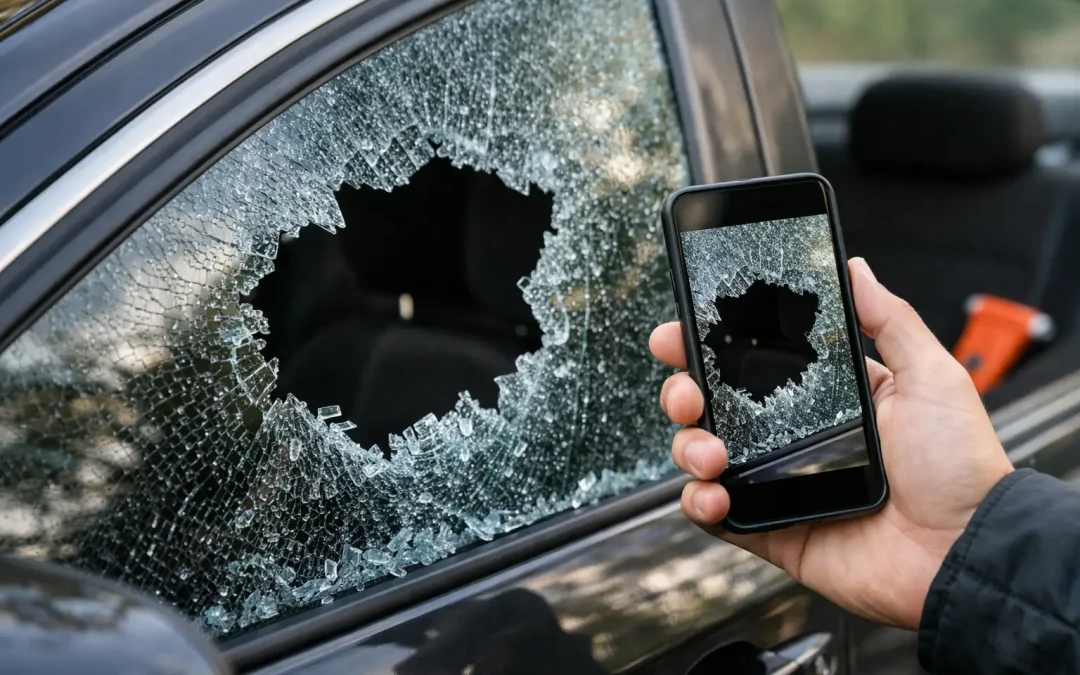
A side window can shatter in seconds, whether it happens during a break-in, a parking lot accident, or after a piece of road debris strikes the glass. Knowing how to handle shattered window damage right away helps protect you from cuts, keeps rain and debris out of your vehicle, and prevents a stressful situation from becoming a larger repair.
The first priority is not cleaning every piece of glass. It is making sure everyone is safe, securing the vehicle, and arranging a proper replacement. Automotive side and rear windows are usually made from tempered glass, which breaks into many small pieces rather than large sharp shards. Those pieces can still cut skin, damage upholstery, and work their way into door panels if they are not removed correctly.
How to Handle a Shattered Window Safely
If the glass breaks while you are driving, pull over in a safe, well-lit location as soon as you can. Avoid sudden braking or turning, especially if glass has entered the cabin. Turn off the vehicle, check passengers for cuts, and keep children and pets away from the damaged opening and floor area.
Do not run your hands along the window frame or attempt to pull out pieces still attached to the glass. Tempered glass often leaves small fragments around the frame, weatherstripping, and door seal. A work glove can reduce the risk of cuts, but a professional should remove remaining pieces from tight channels and inspect the window regulator before installing new glass.
If you suspect a break-in, take photos before moving items or cleaning the vehicle. Document the damage, check for missing belongings, and file a police report if needed. Your insurance company may request photos, a report number, or a repair estimate when you file a claim.
Move People Away From the Glass
Glass can scatter farther than it appears, particularly across the seats and carpet. Ask passengers to step out carefully on the side away from the damage. If the vehicle is parked somewhere unsafe or exposed to traffic, move only if you can do so without creating another hazard.
Wear closed-toe shoes before getting back into the car. Even tiny pieces of glass can become embedded in footwear or lodge in floor mats, where they may later cut a passenger.
Secure the Opening Until Replacement
A broken window leaves your vehicle exposed to rain, humidity, theft, and wind damage. If you must leave it outside before service is available, cover the opening with a temporary barrier. Clear plastic sheeting and painter’s tape are better choices than duct tape directly on painted surfaces or rubber seals.
Place the plastic from the outside of the door when possible, then tape it along clean, dry painted edges. Do not block mirrors, lights, or your view if you need to drive. A temporary cover is only a short-term measure. It will not seal as well as a properly installed window, and highway wind can loosen it.
Clean Up What You Can, but Do Not Force It
Once the vehicle is secure, remove larger loose pieces with gloves and place them in a sturdy bag or box. A shop vacuum can help collect visible fragments from seats, carpeting, and floor mats. Work slowly and avoid pressing glass deeper into fabric.
There are a few areas that are easy to miss: seat tracks, door pockets, cup holders, dashboard vents, trunk seals, and the bottom of the door. Shattered side glass also falls inside the door itself. That is one reason a replacement should include a thorough cleanup and inspection, not just fitting a new pane of glass.
Avoid using a household broom inside the vehicle. Its bristles can push fragments into carpet and upholstery. Also, do not pour water into the door to rinse out broken glass. Water can affect electrical connectors, speakers, and power window components.
Do Not Drive Longer Than Necessary
Whether you can drive after a window breaks depends on the location of the damage, the weather, and the condition of the door. A shattered rear window can severely reduce visibility and allow exhaust fumes, water, and road debris into the cabin. A broken driver-side window creates security concerns and can make it difficult to hear emergency vehicles or traffic conditions clearly.
Driving a short distance to a safe location or repair facility may be reasonable in dry, calm weather if your vision is clear. Longer trips are not a good idea. Wind can throw remaining glass into the cabin, and rain can soak the interior, door electronics, and headliner.
If the damaged glass is a windshield, treat it differently. Windshields are laminated, meaning they generally crack rather than fall apart. A heavily cracked windshield can compromise visibility and, on many vehicles, affects roof support and airbag performance. It should be evaluated promptly rather than driven on casually.
Choose the Right Type of Auto Glass Repair
A fully shattered side or rear window needs replacement. Unlike a small windshield chip, it cannot be repaired back into a safe, functional pane. The right replacement involves more than matching the shape of the glass. A qualified technician should confirm the correct part, remove glass from the window tracks, inspect the regulator and seals, and verify that the new window moves and seals correctly.
For a power window, pay attention to how the glass failed. If the window would not raise or lower before it broke, or if you hear grinding inside the door, the regulator, motor, or guide components may also need attention. Replacing only the glass without addressing a damaged mechanism can lead to another failure.
Rear glass and quarter glass replacement can be more involved because these panels may include defroster lines, antennas, tint, trim pieces, or factory sensors. The best option depends on your vehicle’s year, make, model, and features. An accurate estimate should account for those details instead of relying on a one-size-fits-all price.
Ask About Glass Quality and Installation Details
You do not need to become an auto glass expert to ask a few practical questions. Confirm that the replacement glass is made for your specific vehicle, that broken glass will be removed from the door and interior, and that the technician will test the window operation before returning the vehicle.
Quality installation matters because a poor fit can cause wind noise, water leaks, rattling, or premature damage to the new glass. If your vehicle has rain sensors, cameras, or advanced driver-assistance features near the windshield, ask whether windshield calibration is required after replacement. Camera calibration helps safety systems such as lane departure warnings and automatic emergency braking read the road accurately.
Insurance, Cost, and Timing
Comprehensive auto insurance may cover vandalism, break-ins, and accidental glass damage, subject to your deductible. Before filing a claim, compare the estimated repair cost with your deductible. For some side-window replacements, paying directly can be simpler if the deductible is close to or higher than the repair cost.
Do not delay solely because you are deciding how to pay. An open window can cause water damage that is much more expensive than the glass replacement itself. A local auto glass provider can often help you understand the replacement process, provide a clear estimate, and work around your schedule with mobile service when conditions allow.
For drivers in Humble and nearby Harris County communities, NXT Auto Glass can inspect the damage, replace the correct vehicle glass, and make sure the window operates and seals as it should.
Prevent the Next Problem While You Wait
Until the window is replaced, remove valuables from the vehicle and park in a garage or monitored area if possible. Keep the temporary cover dry and check its edges after wind or rain. If you notice water entering the door or cabin, avoid operating power window switches and arrange service as soon as possible.
A shattered car window is disruptive, but the right response is straightforward: protect people first, secure the vehicle, document the damage, and have the glass replaced by a technician who treats the installation as a safety repair. Getting it handled promptly restores more than your view – it restores the security and everyday comfort you expect from your vehicle.