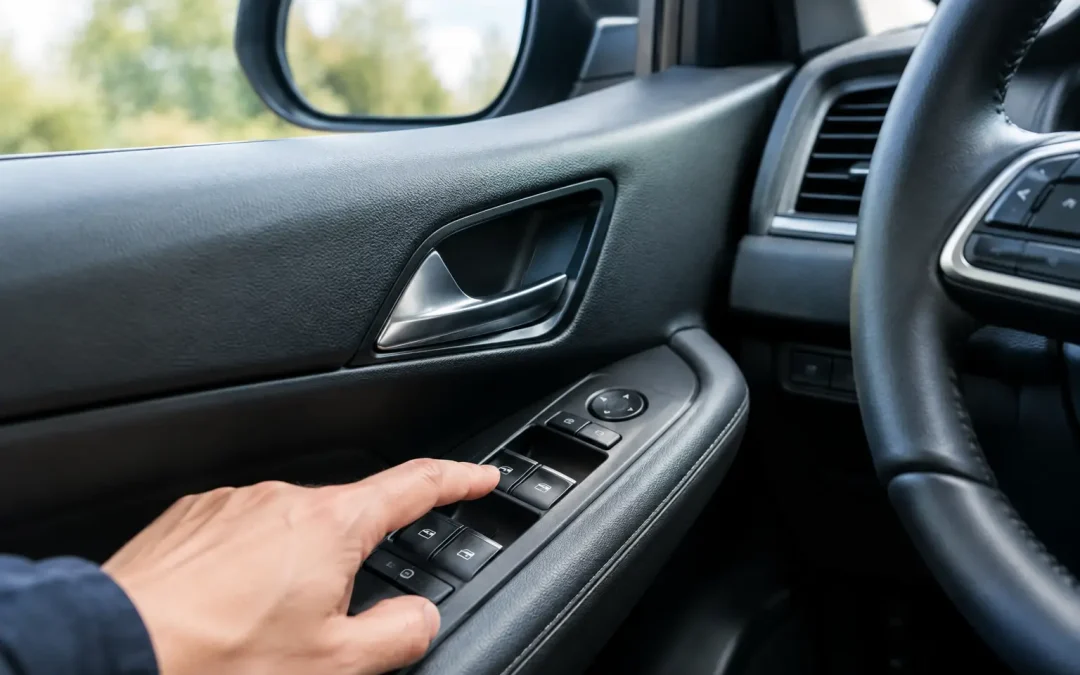
A window that will not close before a Texas downpour is more than an inconvenience. Power windows protect your vehicle from weather, theft, road debris, and unwanted noise. When one starts moving slowly, making unusual sounds, or stops responding altogether, prompt diagnosis can often prevent a smaller mechanical issue from becoming a more costly repair.
When Power Windows Stop Working, the Cause Matters
A failed window switch is not the same problem as a damaged regulator, and a window that falls into the door requires a different repair than one that simply moves slowly. The door panel has to be removed carefully, the source of the problem identified, and the glass positioned correctly before the repair is complete. Replacing parts without confirming the cause can waste time and money.
Most modern vehicle doors use a system of electrical and mechanical components working together. Pressing the switch sends power to a motor, which operates a regulator that guides the glass up or down inside the door. The window also relies on tracks, seals, wiring, and mounting hardware to move straight and seal properly when closed.
Because several parts are involved, the symptoms matter. A professional inspection helps determine whether the repair calls for a switch, motor, regulator, wiring repair, window glass replacement, or adjustment of the glass and tracks.
Common Power Windows Warning Signs
The window moves slowly or struggles to close
A slow window is one of the earliest signs that something is wrong. The motor may be wearing out, the regulator may be binding, or dirt and damaged weatherstripping may be creating too much resistance. Heat can make a weak electrical or mechanical component more noticeable, especially after a vehicle has been parked outside.
Do not assume a slow window only needs lubricant. Lubrication can help in specific cases, but it will not repair a frayed regulator cable, a failing motor, or a misaligned track. Continuing to use the switch repeatedly can place more strain on already worn parts.
You hear grinding, clicking, or a crunching sound
A clicking sound may point to a motor that is receiving power but cannot move the regulator. Grinding or crunching often suggests damage inside the regulator assembly, particularly on cable-driven systems. You may also hear the motor running while the glass stays still.
These sounds are a good reason to stop operating the window until it can be checked. A broken cable or guide can allow the glass to shift unexpectedly, creating a risk of chipped glass, damaged window tint, or a window that drops into the door.
The glass tilts, binds, or comes off track
Window glass should travel evenly. If it rises at an angle, leaves a gap at the top, or needs to be pulled into place by hand, the regulator, track, clips, or mounting points may be damaged. A tilted window can catch on the frame and put pressure on the glass, increasing the chance of breakage.
This issue deserves attention even if the window still closes. A poor seal can let rainwater enter the door, where it can affect electrical connections, speakers, and interior trim.
The window will not move at all
A completely unresponsive window may be caused by a bad switch, blown fuse, broken wire, failed motor, or failed regulator. Testing the other windows can provide a useful clue. If all windows stop working, the issue may involve a fuse, relay, master switch, or shared electrical circuit. If only one window fails, the problem is more likely limited to that door.
Even so, the symptom alone does not provide a final answer. Proper testing is the best way to avoid replacing the wrong component.
The window drops into the door
If the glass suddenly falls or slides down and will not stay up, the regulator or glass mounting hardware has likely failed. This requires timely service. An open window leaves your vehicle exposed to rain, humidity, theft, and road debris. Covering the opening temporarily may help protect the interior, but it is not a substitute for securing the glass correctly.
What Usually Fails Inside a Vehicle Door
Window regulators are among the most common causes of power window failure. Depending on the vehicle, a regulator may use cables, pulleys, arms, or gears to support and move the glass. Over time, cables can fray, plastic guides can break, and moving parts can wear down.
Motors also fail, particularly after years of use or repeated strain from a binding window. A failing motor may work intermittently at first, then stop completely. Switches and wiring can also be the source, especially where moisture has entered the door or wires have worn near the flexible section between the door and vehicle body.
The glass itself may need attention as well. A cracked side window, broken mounting clip, or improperly seated pane can prevent normal operation. The right repair addresses both the failed component and the glass alignment, so the window opens, closes, and seals as it should.
Why a Stuck Window Should Not Wait
A vehicle with a window stuck open is vulnerable, but a window stuck closed can also create problems. It may limit ventilation, make drive-throughs and parking access difficult, and prevent quick communication in an emergency. For families, commuters, and work vehicles, that loss of convenience can disrupt an already busy day.
There is also a safety and security concern. A window that does not fully close may allow rainwater into the vehicle or make it easier for someone to enter. Water inside a door can lead to corrosion and electrical issues that extend beyond the original repair.
If the window is partly open, avoid slamming the door or forcing the glass by hand. This can damage the regulator further or crack the glass. Keep the vehicle protected from weather when possible and arrange an inspection as soon as practical.
Repair or Replacement: What Is the Right Answer?
The best option depends on the condition of the failed part and the vehicle. A damaged switch, loose connection, or misaligned track may be repaired without replacing the entire window assembly. In other cases, a worn regulator or failed motor is more reliable to replace than to patch.
Quality matters here. A low-cost part that does not fit correctly can create repeat problems, excess noise, or poor glass alignment. Proper installation includes securing the regulator, confirming the glass is seated correctly, testing the switch operation, and checking that the window seals against the weatherstripping.
For drivers in Humble and nearby Harris County communities, NXT Auto Glass provides power window replacement and related vehicle glass service with a focus on accurate diagnosis and dependable workmanship. The goal is not simply to make the glass move once. It is to restore normal operation and help protect the vehicle from the issues that come with a poor seal or unstable window.
What Professional Power Window Service Should Include
A thorough repair begins with listening to the symptom and checking how the window responds. The technician should inspect the glass, switch, motor, regulator, tracks, and connections as needed. After the door panel is removed, damaged components can be identified without guessing.
Once the repair or replacement is complete, the window should be cycled several times. It should move smoothly without scraping, binding, or shifting out of alignment. The technician should also confirm that it closes fully and seals properly along the top and sides of the frame.
Mobile service can be particularly helpful when a window is stuck open or the vehicle cannot be safely left exposed. However, the repair environment still matters. The work should be performed carefully, with door trim, electrical connectors, and glass protected throughout the process.
Simple Ways to Reduce Window Wear
No power window system lasts forever, but a few habits can reduce unnecessary strain. Avoid holding the switch after the glass has reached the top or bottom. Clear ice, heavy dirt, and debris from the window channels before operating the glass. If a window begins moving slower than usual, schedule service before it becomes stuck.
Be careful when closing doors with a partially lowered window, particularly if the glass already feels loose. And if you notice water inside the door, wet carpeting, or a musty odor after rain, have the source checked. A water leak can affect window components long before the window stops working.
A working vehicle window should feel routine, quiet, and secure. If yours has started to hesitate, lean, grind, or refuse to close, addressing it early can protect your vehicle, your schedule, and the comfort you expect every time you get behind the wheel.