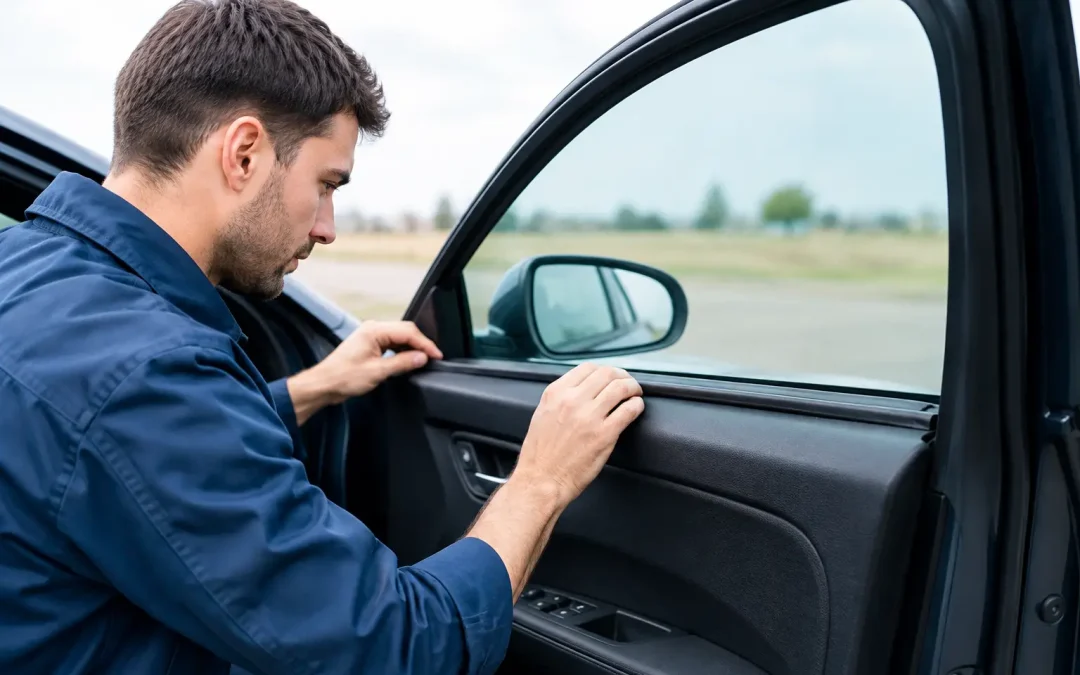
A rattle inside a car door can turn an ordinary drive through Humble into a constant distraction. The best solutions for window rattling depend on what is actually moving: loose glass in its track, worn weatherstripping, a failing window regulator, or hardware inside the door. Finding the cause before attempting a repair protects your glass, keeps the window operating correctly, and can prevent a small annoyance from becoming a broken window or water leak.
Start With the Sound and When It Happens
The timing of the rattle provides useful clues. If the noise appears only over bumps or rough pavement, the glass may have play inside the window channel, or trim and clips inside the door may be loose. A rattle that happens while the window is rolling up or down points more often to the regulator, guide rails, or glass mounting hardware.
Pay attention to the window position as well. Glass that rattles when it is partly open but becomes quiet when fully closed often needs attention to its guides or seals. If it rattles while fully closed, especially at highway speed, worn weatherstripping or a window that no longer sits squarely in the frame may be the issue.
Do not ignore a new rattle after a door was repaired, glass was replaced, or a vehicle had a break-in. A missing clip, loose fastener, or improperly seated door panel can create noise, but it can also leave important components unsupported.
Check for Simple, Visible Causes First
Some window-rattle issues have a straightforward source. Inspect the rubber weatherstrip around the top and sides of the window. It should sit firmly in place, without sections pulling away, cracking, or folding into the glass path. Damaged rubber can allow the window to move more than it should and may let wind noise and rain into the cabin.
Also look along the outer belt molding at the base of the glass. This narrow strip helps stabilize the window and keeps debris out of the door. If it is loose, hardened, or torn, the glass may shake against the channel while driving. Leaves, sand, and small pieces of broken glass inside the window channel can also interfere with smooth movement.
Gently hold the glass near its upper edge with the door open. A small amount of movement can be normal, but noticeable side-to-side play or a clunk should be inspected. Avoid slamming the door repeatedly to test the problem. That can make loose hardware worse or crack already stressed glass.
Clean and Condition the Window Tracks
Dirty tracks are a common contributor to rattling and slow power-window operation. Road grit, pollen, old lubricant, and moisture collect inside the felt-lined channels over time. When the glass cannot move smoothly, it can bind, shift, and place extra strain on the regulator.
Use a clean microfiber cloth to remove accessible debris from the window channels. For stubborn buildup, a vehicle-safe rubber and trim cleaner can help. Follow with a silicone-based dry lubricant made for automotive window tracks. It reduces friction without leaving a sticky residue that attracts more dirt.
Avoid petroleum grease, household oils, and heavy sprays inside the tracks. They may temporarily quiet the noise, but they often collect dirt and can damage rubber components. If the window still rattles or moves unevenly after basic cleaning, the problem is likely beyond surface buildup.
Replace Worn Weatherstripping and Belt Moldings
Rubber seals have a limited service life in the Texas heat. Sun exposure can dry them out, and temperature changes can make them shrink or lose their shape. Once weatherstripping no longer holds the glass securely, rattling, wind noise, and water intrusion can follow.
Replacing a worn seal is more than a cosmetic fix. Properly fitted weatherstripping helps the window close evenly, supports the glass at speed, and keeps moisture away from electrical parts inside the door. The correct molding matters because a universal strip may not match the vehicle’s glass shape or drainage design.
This repair is especially worthwhile if you notice damp carpet, a musty smell, or water collecting in the door after rain. Those signs suggest that the rattle may be connected to a larger sealing issue rather than just loose trim.
Inspect the Window Regulator and Glass Mounts
When a power window rattles, hesitates, tilts, or drops slightly into the door, the regulator deserves close attention. The regulator is the assembly that raises and lowers the glass. Depending on the vehicle, it may use cables, pulleys, arms, sliders, or a motor-driven track. Wear in any of these parts can allow the glass to shift and rattle.
Loose glass mounting bolts or worn regulator clips can make the window feel unstable. A cable regulator may also fray or slip before it fails completely. Early warning signs include a clicking or grinding sound, a window that travels slower than usual, or glass that rises crookedly.
Door-panel removal is often required to inspect and correct these issues. Modern doors contain wiring for speakers, locks, mirrors, side airbags, and power-window controls, so this is not a repair to rush with improvised tools. A proper inspection confirms whether the regulator can be adjusted, whether a guide needs replacement, or whether the full assembly is no longer reliable.
Secure Loose Door Panels and Interior Hardware
Not every window rattle comes from the glass itself. Door panels can loosen around their retaining clips, especially after previous repair work or years of vibration. A loose speaker, trim piece, door handle cable, or wiring connector may sound almost identical to glass moving in a track.
If the rattle changes when you press lightly on the door panel while driving, interior hardware is a likely suspect. The solution may be as simple as replacing broken panel clips or securing a loose component. The key is to remove and reinstall the panel carefully so it fits flush and does not create a new noise.
Foam pads and anti-rattle tape are useful when applied to the correct contact points. They are not a substitute for missing fasteners, cracked mounts, or an unstable window regulator. Covering up the sound without correcting the source can allow damage to continue inside the door.
When a Professional Repair Is the Better Choice
The best solutions for window rattling are not always do-it-yourself repairs. Professional service is the safer choice when the glass feels loose, the window moves unevenly, the door has water intrusion, or the noise began after an accident or glass replacement. These symptoms can involve hardware that is difficult to access and easy to misalign.
A trained auto glass technician can inspect the glass fit, channels, regulator, seals, and door hardware together. That complete approach matters because rattling may have more than one cause. For example, a worn belt molding may be obvious, while a loose regulator mount inside the door is the issue that keeps returning.
NXT Auto Glass helps drivers in Humble and nearby Harris County communities identify the actual cause and make the repair that restores secure, quiet operation. Whether the answer is a weatherstrip replacement, power-window repair, or replacement glass correctly fitted to the door, quality workmanship helps protect both the window and the people riding in the vehicle.
Do Not Wait for the Window to Fail
A light rattle may seem minor, but it can signal a window that is no longer fully supported. Left alone, loose glass can chip at the edge, bind in the track, damage a regulator, or leave the vehicle exposed to rain and theft if it stops closing. The repair is usually simpler before the window drops into the door or breaks.
If your car window rattles over bumps, shifts when closing, or makes noise on every drive, have it checked while the issue is still manageable. A quiet, properly secured window is a small detail that makes every mile safer and more comfortable.