A stuck power window can turn a normal drive into a real problem quickly. This window motor review explains what is usually happening behind the door panel, how to tell a failing motor from a different power-window issue, and when replacement is the safer, more cost-effective choice for drivers in Humble and Harris County.
A power window system looks simple from the driver’s seat. Press a switch, and the glass moves. Behind that convenience are several connected parts: the window switch, wiring, fuse, motor, regulator, guides, weatherstripping, and glass. When one of them fails, the symptom may look like a bad motor even when the actual cause is elsewhere.
What a Window Motor Does
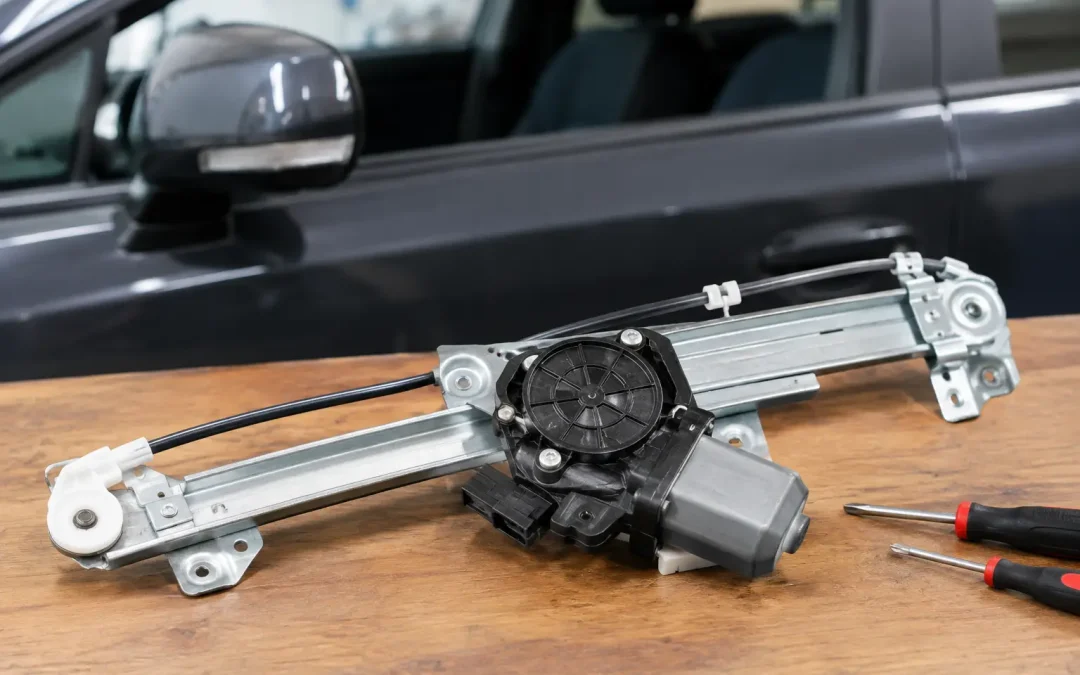
The window motor is a compact electric motor mounted inside the door. It receives power when you press the window switch and turns the regulator, which moves the glass up or down. In many vehicles, the motor and regulator are sold or installed as one assembly because both parts work under the same load and often wear at similar rates.
Motors wear from repeated use, moisture exposure, electrical resistance, and the added strain of a binding window track. A vehicle with a slow-moving window is not always dealing with a motor that has failed. It may be a motor working too hard because the regulator cables are frayed, the track is dirty, or the glass has slipped out of alignment.
That distinction matters. Replacing the motor without correcting a damaged regulator or misaligned glass can leave the new part under the same stress that caused the original issue.
Window Motor Review: Signs the Motor May Be Failing
A failing motor rarely gives the same warning in every vehicle, but several signs point in that direction. The window may move much more slowly than normal, especially on the way up. It may work only after you press the switch several times, stop halfway, or make a humming or clicking sound inside the door.
A window that moves down but will not come back up is another common complaint. Sometimes the motor has a weak spot in its internal contacts. Changing the direction of the switch may temporarily bring it back to life, but that is not a dependable repair. If the window is left open during rain, overnight parking, or a hot Texas afternoon, a small electrical problem can quickly become an interior damage and security problem.
Complete silence when pressing the switch can also indicate a failed motor, but it is not proof by itself. A blown fuse, failed switch, broken wire, damaged connector, or child-safety lock can produce the same result. A proper diagnosis should check the full circuit before a replacement is recommended.
The Motor Is Not Always the Problem
Power window repairs are often more involved than simply swapping a motor. The regulator is a frequent source of trouble. This mechanism may use cables, pulleys, arms, or tracks to raise and lower the glass. When its cable tangles or breaks, the glass can drop into the door, move crookedly, or stop completely.
A damaged window switch can be mistaken for a bad motor, particularly when one window will not work from the driver’s master switch but still works from its own door switch. If no windows operate, the issue could be a fuse, relay, wiring concern, or a broader electrical fault rather than four separate motors failing at once.
Water intrusion deserves attention as well. Door vapor barriers and weather seals help keep moisture away from electrical connections. After a damaged window, a leak, or a previous repair, water can enter the door and corrode connectors or affect the motor over time. Repairing the window’s movement without addressing the moisture path may only postpone the next problem.
How a Professional Diagnosis Saves Time and Money
The best repair starts by confirming the failure, not guessing at it. A technician typically checks whether the switch is sending power, whether the motor is receiving voltage and ground, and whether the regulator and glass move freely. The door panel must be removed carefully so clips, trim pieces, wiring, and the moisture barrier are not damaged during access.
With the panel off, the technician can inspect the regulator for loose cables, broken guides, bent tracks, and signs that the glass is binding. If the motor receives the correct electrical signal but will not operate, motor replacement is usually warranted. If it runs but the glass does not move correctly, the regulator or window alignment may be the real concern.
This diagnostic approach is especially valuable when a window works intermittently. Intermittent issues can come from worn motor brushes, loose wiring, a switch with burned contacts, or a connector that shifts when the door is opened and closed. Replacing parts without testing can increase the repair bill without solving the original problem.
Repairing a Motor vs. Replacing It
In theory, some window motors can be disassembled and repaired by replacing brushes or cleaning internal contacts. In practice, this is often not the best option for an everyday vehicle. The motor may be sealed, replacement internal parts may not be readily available, and labor can exceed the value of installing a quality replacement unit.
Replacement is typically the practical choice when the motor is weak, dead, noisy, or unreliable. If the regulator is worn, bent, or binding, replacing the motor and regulator together can make more sense than installing a new motor onto a failing mechanism. It depends on the condition of the assembly, the vehicle design, parts availability, and how long you plan to keep the vehicle.
A good repair should restore more than basic movement. The glass should travel smoothly, sit correctly in the frame, seal properly when closed, and respond consistently to the switch. On vehicles with one-touch up or down functions, the system may also need to be reset or initialized after repairs so the safety pinch protection works as intended.
Why Delaying Power Window Service Can Cost More
It is easy to put off a slow window when it still moves. But a struggling motor can fail without warning, often when the window is open. For families, commuters, and anyone who parks outside, that can mean exposure to rain, heat, theft, and road noise until a repair can be scheduled.
A slow window also puts extra stress on the regulator. If the glass is dragging in the channels, the motor pulls harder each time it operates. Addressing the problem early may help avoid a more extensive repair later.
There is also a safety consideration. A properly operating window supports visibility, ventilation, and access in an emergency. While it should not be treated as the primary emergency exit in every circumstance, a window that is stuck or loose is not something to ignore.
What to Expect During Power Window Replacement
A professional power window repair begins with testing and inspection, followed by removal of the interior door panel. The glass is secured before the motor or regulator is removed, preventing it from slipping or breaking inside the door. After the new component is installed, the window is cycled repeatedly to check speed, alignment, switch operation, and the seal along the top of the glass.
The exact repair time varies by vehicle and by the source of the failure. Some doors allow direct access to the motor, while others require more disassembly or use an integrated motor-regulator assembly. A clear estimate should explain whether the recommendation is for the motor alone, the regulator alone, or both parts together.
At NXT Auto Glass, the goal is to identify the part that actually needs attention and restore the window so it closes securely and operates the way it should. That means looking beyond the immediate symptom, especially if the glass is off-track, the door has signs of water intrusion, or the window has been getting slower over time.
Simple Steps Drivers Can Take Before Service
Avoid repeatedly forcing the switch if the window is moving slowly or making grinding sounds. Holding the switch can overheat a weak motor or worsen a damaged regulator cable. If the window is partly open, protect the vehicle from rain and avoid slamming the door, which can shift loose glass further out of alignment.
You can also check whether the problem affects one window or all of them, and whether the window works from both its own switch and the driver’s master switch. Those details help narrow the diagnosis. Do not remove the door panel unless you are prepared to handle the glass, electrical connectors, hidden fasteners, and moisture barrier correctly.
A power window should feel routine every time you use it. If yours hesitates, tilts, drops, or refuses to close, arranging an inspection before it fails completely is the easiest way to protect your vehicle’s interior, security, and day-to-day comfort.