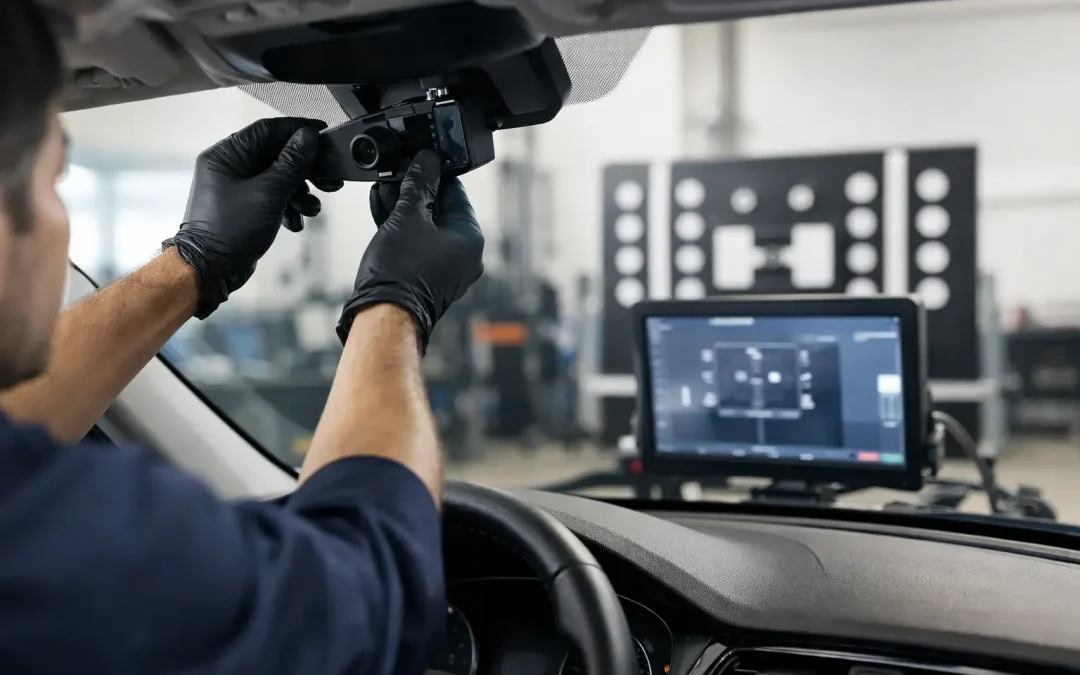
A windshield replacement can restore a clear view of the road, but on many newer vehicles, the work is not complete when the new glass is installed. ADAS camera alignment may be needed to make sure the camera mounted near the windshield sees the road accurately and supports your vehicle’s safety systems the way the manufacturer intended.
That small camera behind the rearview mirror can affect features drivers use every day, including forward collision warnings, automatic emergency braking, adaptive cruise control, lane departure warnings, and lane-keeping assistance. If its position or reference point is off, even slightly, those systems may react late, react incorrectly, or stop working until calibration is completed.
For drivers in Humble and across Harris County, the practical takeaway is simple: when your vehicle has advanced driver-assistance systems, replacing the windshield often means planning for more than glass installation.
Why ADAS Camera Alignment Matters
ADAS stands for Advanced Driver Assistance Systems. These systems use cameras, radar, sensors, and software to monitor lane markings, vehicles, pedestrians, and other conditions around your car. The forward-facing camera is commonly mounted to the windshield or positioned directly behind it.
When the original windshield is removed, the camera assembly may be disconnected, moved, or installed against a new piece of glass. Even when the replacement windshield is an exact fit and the installation is done carefully, the camera needs to confirm its view of the road. A few millimeters of variation can change the angle used by the system to interpret distance, lanes, and objects ahead.
Think of it as resetting a measuring tool after it has been moved. The camera may still appear normal, but the vehicle needs to verify that its electronic reference points match the real world. Calibration gives the vehicle the information it needs to make that adjustment.
This is a safety issue, not an optional add-on for every vehicle. A properly installed windshield protects occupants, supports airbag deployment in many vehicles, and provides the mounting surface or viewing area required for camera-based technology. Precision at every stage matters.
When Is ADAS Camera Alignment Needed?
Windshield replacement is one of the most common reasons for camera calibration. If the camera is attached to the glass, located behind the glass, or uses the windshield as part of its viewing path, the manufacturer may require calibration after replacement.
Calibration can also be needed after a front-end collision, suspension repairs, wheel alignment, damage around the rearview mirror area, or work that affects the camera mount. A battery replacement or diagnostic repair can sometimes trigger a need for recalibration as well, depending on the vehicle.
The owner’s manual and manufacturer repair procedures provide the final answer for a specific make and model. This is why a professional should identify the vehicle’s ADAS equipment before starting a windshield replacement instead of assuming all windshields are the same.
A dashboard warning light is one possible sign, but it is not the only one. Your vehicle could also display a message that lane assist, collision warning, or cruise control is unavailable. In other cases, there may be no obvious warning at all. That does not mean calibration can be skipped if the manufacturer calls for it.
Static vs. Dynamic Calibration
There are two primary methods used for ADAS calibration. The correct method depends on the vehicle manufacturer’s specifications, the equipment on the vehicle, and the repair performed.
Static Calibration
Static calibration is completed with the vehicle parked in a controlled setup. A technician uses diagnostic equipment and precisely positioned targets, patterns, or boards placed at specified distances and heights. The floor surface, vehicle position, lighting, tire pressure, and surrounding area can all affect the process.
This method requires careful measurements and enough clear space to position targets correctly. It is highly precise, but it is not something that should be rushed in a crowded parking lot or attempted with improvised equipment.
Dynamic Calibration
Dynamic calibration is performed while the vehicle is driven under manufacturer-specified conditions. The diagnostic system communicates with the vehicle while the camera observes lane markings, traffic patterns, and road conditions. The route, speed, weather, visibility, and road markings can all influence whether the procedure completes successfully.
Some vehicles use only a dynamic procedure, while others require static calibration, or a combination of both. The right answer is never based on convenience alone. It is based on what the manufacturer requires for that vehicle.
What a Proper Calibration Appointment Looks Like
A careful process begins before the windshield comes out. The technician confirms the vehicle’s year, make, model, trim, and installed safety features. This helps identify the correct replacement glass and determine whether the vehicle requires a camera bracket, acoustic features, heads-up display compatibility, rain sensor compatibility, or ADAS calibration.
After the windshield is installed, the adhesive must be given the proper safe drive-away time. Urethane needs time to cure so the windshield is securely bonded to the vehicle. Trying to calibrate or drive too soon can compromise the quality of the repair.
Next, the technician inspects the camera area, connects professional diagnostic equipment, and follows the required calibration procedure. The vehicle should also be checked for diagnostic trouble codes and any messages related to driver-assistance features. A successful calibration result should be documented before the job is considered complete.
At NXT Auto Glass, that attention to detail is part of treating windshield work as a safety repair, not simply a glass replacement. Customers deserve a clear explanation of what their vehicle needs and why.
Why the Cheapest Windshield Quote May Not Be the Best Value
A low windshield replacement quote can be appealing after unexpected damage, especially when a crack spreads quickly. But it is worth asking what the price includes. Does the quote account for the correct glass type? Is the camera bracket compatible? Does it include required ADAS calibration? Will the installer verify that safety-system warnings are cleared?
Aftermarket glass can be a suitable option for many vehicles, but quality and feature compatibility matter. Some models require glass with specific optical properties, mounting locations, heating elements, or coatings. Using the wrong glass can create problems with camera performance, sensors, or features such as heads-up displays.
The goal is not automatically to choose the most expensive option. It is to choose the correct glass and repair process for your vehicle. A clear, itemized estimate makes that decision easier and helps avoid surprises after installation.
Can ADAS Calibration Be Done Mobile?
Mobile auto glass service is valuable when a damaged windshield makes it difficult to get to a shop. In many cases, replacement can be performed at your home or workplace when there is a safe, covered, reasonably clean area for the job.
Calibration is more dependent on conditions. Dynamic calibration may be possible when road and weather conditions meet the procedure’s requirements. Static calibration requires controlled space, level surfaces, accurate target placement, and proper lighting. If those conditions are not available at the mobile location, completing calibration at a suitable facility is the safer choice.
That is not an inconvenience for its own sake. It is a quality decision. A technician who explains why a particular calibration must be performed in a controlled environment is protecting the accuracy of the repair.
What Drivers Should Do After Replacement
Once the windshield and calibration are complete, take a moment to confirm that the camera area is clean and unobstructed. Avoid placing decals, toll tags, dash-mounted accessories, or other items in the camera’s field of view. Keep the outside of the windshield clean as well, since heavy dirt, ice, condensation, or damage can limit how camera-based systems perform.
During your first few drives, pay attention to dashboard messages and the normal behavior of driver-assistance features. Remember that these systems are designed to assist an attentive driver, not replace one. Keep your hands on the wheel, maintain a safe following distance, and do not rely on lane or collision alerts as a substitute for watching the road.
If a warning appears after windshield work, or if a feature seems inconsistent, have the vehicle checked promptly. A straightforward calibration concern is much easier to address before it becomes a lingering question about your vehicle’s safety systems.
A cracked windshield should not force you to choose between fast service and careful work. Ask whether your vehicle needs ADAS camera alignment, confirm how it will be performed, and make sure the final repair leaves both your visibility and your safety technology ready for the road.