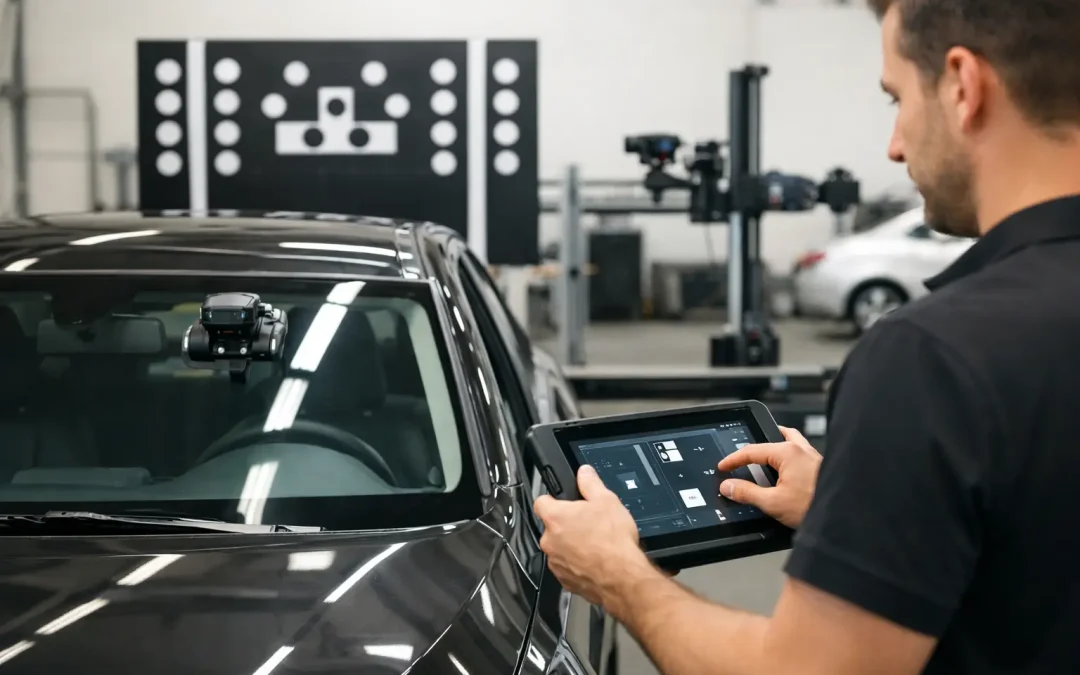
A new windshield can look perfect and still leave your safety systems out of alignment. That is why adas windshield calibration after replacement matters. If your vehicle has features like lane departure warning, forward collision alert, or automatic emergency braking, the camera behind the windshield has to be positioned and calibrated correctly to read the road the way the manufacturer intended.
For many drivers, this is the part nobody explains until after the glass has been replaced. The windshield is not just a sheet of glass anymore. On many newer vehicles, it is part of a larger safety system. When that glass comes out, even a precise replacement can change the camera angle enough to affect how the system performs.
What ADAS calibration actually means
ADAS stands for Advanced Driver Assistance Systems. These are the features designed to help drivers stay aware of hazards, keep proper lane position, and reduce the chance of a collision. In many vehicles, a forward-facing camera is mounted near the rearview mirror and looks through the windshield.
Calibration is the process of making sure that camera knows exactly where it is in relation to the vehicle and the road. If the camera is even slightly off, the system may react too early, too late, or not the way it should. A lane keeping system might drift its reference point. A forward collision warning could misjudge distance. Even if no warning light comes on, performance can still be affected.
That is why calibration is about more than clearing a code. It is about restoring the intended accuracy of the vehicle’s driver-assist features.
Why adas windshield calibration after replacement is often required
When a windshield is replaced, the camera mounting area and the glass itself are part of the job. Small differences in glass positioning, bracket placement, adhesive curing, or camera removal and reinstallation can change alignment. That does not mean the installer made a mistake. It means modern systems are sensitive.
Some vehicles require calibration every time the windshield is replaced. Others may call for it only under certain conditions. The right answer depends on the make, model, year, and ADAS package. This is one of those areas where guessing is a bad idea, because the consequences show up when you need the system most.
There is also a practical side to it. Drivers sometimes assume that if the dashboard is clear, everything is fine. Unfortunately, that is not always true. A vehicle may not display an obvious warning even when the camera needs recalibration. Manufacturer procedures, not assumptions, should guide the job.
Static vs. dynamic calibration
There are two main ways calibration is performed: static and dynamic. Some vehicles require one. Some require both.
Static calibration
Static calibration is performed in a controlled setting using specialized targets, measurement tools, and calibration equipment. The vehicle has to be positioned precisely on a level surface, and the targets must be placed at exact distances and heights based on manufacturer specifications.
This process is detail-heavy for a reason. A few inches off in target placement can throw off the result. That is why calibration needs proper equipment and a technician who follows procedures carefully.
Dynamic calibration
Dynamic calibration is performed by driving the vehicle under specific road conditions after replacement. The system uses lane markings, traffic conditions, and speed thresholds to relearn its orientation. Some manufacturers require a set route or a certain speed range before the calibration is considered complete.
Dynamic calibration sounds simple, but it still has to be done the right way. Traffic, weather, poor lane markings, or rushed handling can interfere with the process.
What happens if calibration is skipped
The biggest risk is false confidence. Your vehicle may appear normal, but the driver-assist systems may not respond the way they were designed to.
That could mean a lane departure warning activates inconsistently. It could mean adaptive safety features read distance inaccurately. In more serious situations, it could affect automatic braking timing or warning thresholds. These systems are not a substitute for safe driving, but when they are present, they should work correctly.
Skipping calibration can also create issues after the fact. A customer may notice warning lights, strange system behavior, or dealership recommendations for recalibration later on. That can mean more time, more cost, and more inconvenience than handling it properly during the replacement process.
Signs your vehicle may need calibration
In many cases, the vehicle manufacturer already answers this question: if the windshield was replaced, calibration is required. Even so, drivers often ask what signs to look for.
A warning light for front camera, lane assist, or collision systems is one clue. Another is a message on the dash after glass replacement. But not every vehicle gives a clear alert. If your car has a camera mounted to the windshield and uses ADAS features, it is smart to assume calibration should at least be checked against manufacturer requirements.
If you are not sure whether your vehicle has these features, look for options such as lane keep assist, traffic sign recognition, forward collision warning, automatic high beams, or adaptive cruise support tied to a windshield-mounted camera.
Why the quality of the replacement matters too
Calibration does not make up for poor installation. The windshield itself has to be installed correctly first. That includes proper glass selection, correct fitment, secure camera bracket placement, and safe adhesive procedures.
A rushed replacement can lead to more than ADAS issues. It can create wind noise, leaks, poor visibility, or structural concerns. On vehicles with safety systems, both parts of the job matter – the physical installation and the electronic calibration.
That is one reason many drivers prefer working with a shop that handles both. It reduces finger-pointing between installers and outside calibration providers. It also gives the customer a clearer process from start to finish.
What drivers in Humble and Harris County should expect
If you need windshield replacement on an ADAS-equipped vehicle, ask early whether calibration is required for your exact vehicle. A good shop should be able to explain the process clearly, tell you whether static or dynamic calibration applies, and set expectations for timing.
You should also expect honesty about the details. Some jobs take longer because the adhesive must cure before the vehicle can be driven. Some calibrations require ideal indoor conditions. Some vehicles may need dealership-level procedures, while others can be handled by a qualified local specialist with the right tools.
For drivers around Humble, Tomball, Aldine, Jersey Village, Bellaire, and nearby Harris County communities, convenience matters, but accuracy matters more. Mobile service can be a major advantage for the glass replacement itself, yet calibration still has to be performed under the conditions the manufacturer calls for. The right provider will explain that balance rather than oversimplify it.
Common questions customers ask
One of the most common questions is whether insurance covers calibration. In many cases, it may be included as part of a covered windshield replacement claim, but coverage depends on your policy and carrier.
Another question is how long the process takes. That varies by vehicle. A straightforward replacement with calibration may be completed the same day, while others require more time based on curing, setup, or drive cycle requirements.
Customers also ask whether they can drive without calibration for a while. The safer answer is not to delay if the vehicle requires it. When safety systems are involved, waiting is rarely worth the risk.
Choosing a shop for adas windshield calibration after replacement
This is not a service where the lowest quote tells the whole story. You want a shop that understands both auto glass installation and ADAS procedures, uses proper equipment, and follows manufacturer guidelines instead of shortcuts.
Clear communication matters too. You should know what your vehicle needs, why it needs it, and what the final result should be before the work starts. At NXT Auto Glass, that means treating calibration as part of restoring the vehicle safely, not as an add-on that gets mentioned at the last minute.
A properly replaced windshield should do more than look new. It should restore visibility, support structural safety, and allow your driver-assist systems to function as intended. When the vehicle is built around those systems, calibration is part of doing the job right.
If your windshield has been damaged and your vehicle uses a forward-facing camera, ask about calibration before scheduling the work, not after. It is a simple question that can protect the value of the repair and your confidence every time you get back on the road.