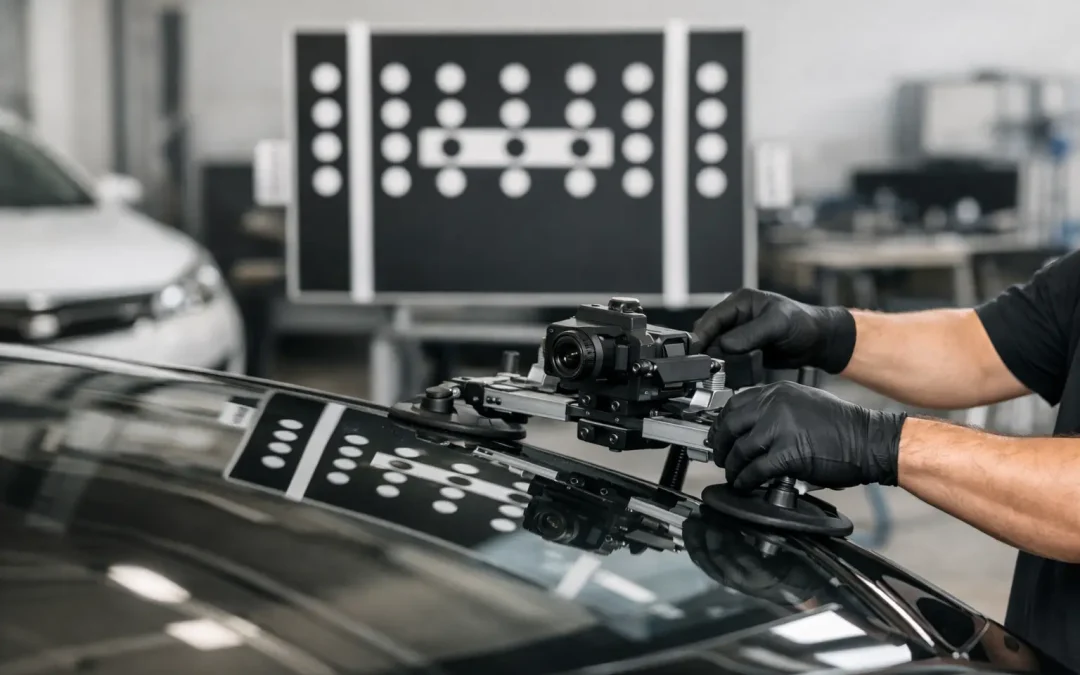
A new windshield can look perfect and still leave a safety concern behind. For vehicles with Advanced Driver Assistance Systems (ADAS), the best reasons for windshield calibration come down to one thing: making sure the cameras and sensors that help you drive are reading the road correctly after the glass or related components have been disturbed.
Many late-model vehicles use a forward-facing camera mounted near the rearview mirror. That camera may support features such as lane departure warnings, lane-keeping assistance, forward collision alerts, automatic emergency braking, adaptive cruise control, and traffic sign recognition. When the windshield is replaced, the camera’s position and view can change by a small amount. Calibration is the process of confirming it is aimed and functioning as the vehicle manufacturer intended.
Best Reasons for Windshield Calibration After Replacement
1. Your ADAS features depend on accurate camera alignment
A windshield-mounted camera does not simply need a clear view. It needs a precise view. A difference that is barely visible to the eye can affect how the system identifies lane markings, following distance, roadside objects, or vehicles ahead.
After windshield replacement, calibration helps the camera understand its position relative to the vehicle again. Without it, a lane-assist feature may respond too early, too late, or inconsistently. That does not mean every vehicle will show an obvious warning right away, which is why relying on a dashboard light alone is not enough.
The right calibration method depends on the make, model, and system installed in your vehicle. Some vehicles require a static procedure using targets and specialized equipment. Others require a dynamic procedure performed through a guided road test. Some require both.
2. It protects the safety systems you use every day
Drivers often think of ADAS as an extra feature until a quick stop in Houston-area traffic or a long commute makes its value clear. Forward collision warnings, emergency braking assistance, and lane support are designed to provide another layer of awareness when conditions change fast.
These systems are not a substitute for an attentive driver. They are safety aids, and they must be able to interpret the road accurately to work as designed. Proper windshield calibration helps restore that capability following a replacement or service that affects the camera area.
For families, commuters, and drivers who spend a lot of time on busy roads around Humble and Harris County, that added confidence matters. The goal is not just to replace broken glass. It is to return the vehicle to safe, dependable operating condition.
3. A clear windshield is not the same as a calibrated windshield
This is one of the most common points of confusion after auto glass work. A quality windshield installation restores visibility, weather protection, and structural support. Calibration addresses a separate but equally important concern: the electronic systems that look through or operate around that windshield.
A shop can install the correct glass and securely reinstall the camera housing, but the vehicle may still require a calibration procedure afterward. In many cases, the need is identified through the vehicle manufacturer’s service information, not by appearance alone.
That is why it helps to work with an auto glass specialist who understands both sides of the job. Glass fitment, camera positioning, OEM procedures, and final verification all need attention. Treating calibration as an afterthought can leave drivers unsure whether key safety features are ready for the road.
4. Calibration can prevent misleading warnings and inconsistent behavior
When camera-based systems are not properly reset or calibrated, the vehicle may display an ADAS warning message or disable certain functions. In other cases, there may be no warning at all, even though the system is not interpreting its surroundings as accurately as it should.
Drivers may notice lane warnings that seem off-center, alerts that appear at odd times, or driver-assist features that are temporarily unavailable. Those symptoms can also have other causes, including damaged sensors, dirty camera lenses, alignment issues, or software faults. Calibration is not a cure-all, but it is a necessary step when the manufacturer calls for it after windshield service.
A professional calibration process helps narrow the question from “Is the windshield installed?” to “Are the related safety systems operating correctly?” That is a much more useful standard for a modern vehicle.
5. It may be required after more than a windshield replacement
Windshield replacement is the most familiar reason for calibration, but it is not the only one. Depending on the vehicle, calibration may also be needed after collision repairs, suspension or wheel alignment work, camera replacement, bumper repairs, mirror repairs, or certain electrical and diagnostic services.
Even a windshield repair can require careful evaluation if damage is near a camera’s viewing area or if the camera bracket, housing, or wiring has been affected. A small chip outside the driver’s main line of sight may be repairable, but the location still matters on ADAS-equipped vehicles.
The best approach is straightforward: tell your auto glass technician about any warning lights, recent repairs, accident damage, or changes in how your driver-assist features behave. That information helps determine whether calibration should be part of the service plan.
6. Proper calibration supports the value of precision workmanship
Modern auto glass service is more technical than it used to be. The windshield is a major safety component, and on many vehicles it also serves as the viewing surface for critical camera technology. Accurate installation and accurate calibration work together.
At NXT Auto Glass, the focus is on explaining what your vehicle needs in plain language. If calibration is required, you should know why it is being recommended, what type of process applies, and what the next step will be before you leave the vehicle in for service.
There is a trade-off worth understanding. Calibration adds time and cost compared with glass replacement alone. But skipping a manufacturer-required procedure to save a little in the short term can leave safety technology unverified. For most drivers, the better value is having the job completed correctly the first time.
7. Documentation gives you confidence after the work is complete
A completed calibration should not feel like a vague promise. Professional service includes a clear record of the work performed and confirmation that the procedure was completed successfully when the vehicle allows for that result.
This documentation can be useful for your own records, insurance-related questions, fleet maintenance files, or future vehicle service. More importantly, it provides peace of mind that the windshield replacement process did not stop once the glass was installed.
Keep in mind that calibration does not override other vehicle problems. If the system has a damaged camera, a wiring issue, a mechanical alignment problem, or a stored fault code unrelated to the windshield, further diagnosis may be needed. A reliable shop will explain that distinction rather than suggesting calibration alone will solve every warning light.
When Should You Ask About Windshield Calibration?
Ask before scheduling windshield replacement if your vehicle has a camera near the rearview mirror, lane-assist controls on the steering wheel, collision warning settings in the dashboard menu, or a safety-feature warning light. If you are unsure, the vehicle identification number and make, model, and year can help a qualified technician check the service requirements.
Do not assume your vehicle is too old or too basic to need it. ADAS technology is common across many sedans, SUVs, trucks, and luxury vehicles, and features vary even within the same model year. It is also possible for two similar-looking windshields to have different brackets, heating elements, acoustic layers, or camera-related specifications.
A careful evaluation before the work begins prevents surprises later. It also makes it easier to schedule the proper equipment, workspace, and time needed for your specific vehicle.
When your windshield needs replacement, ask one clear question before the job starts: does my vehicle require ADAS calibration afterward? Getting a direct answer helps you make a safer decision and leaves you with more than a clean, clear view of the road.