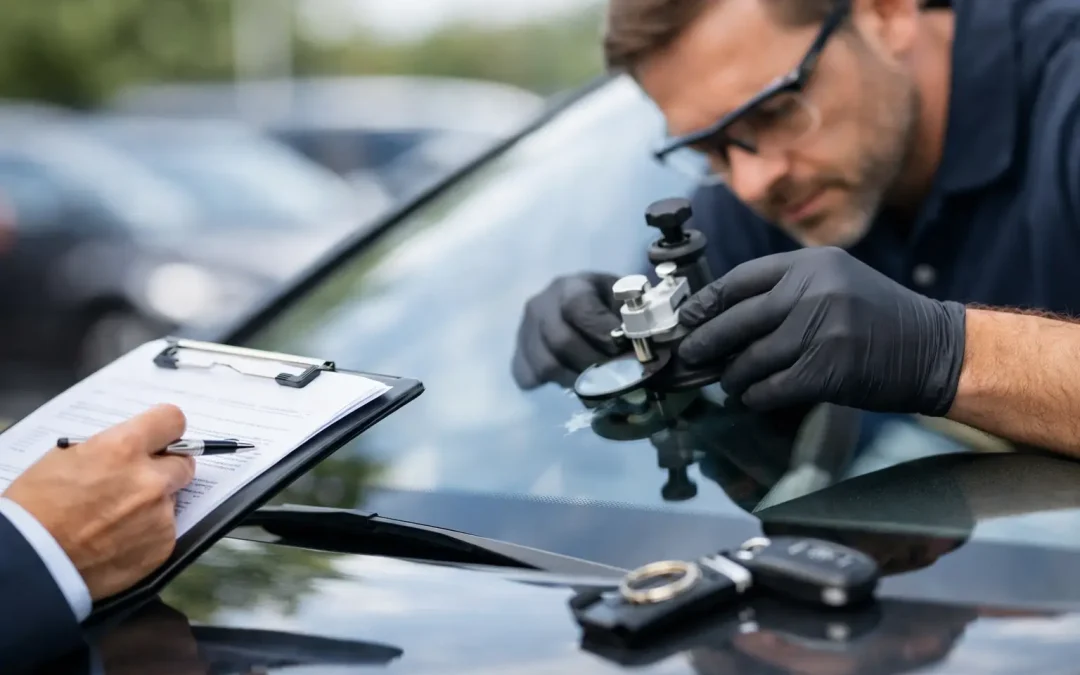
A windshield chip can appear out of nowhere – often after a truck throws a rock on a Harris County highway. The good news is that the answer to “does insurance cover windshield repair” is often yes. The details, however, depend on the coverage on your policy, your deductible, the type of damage, and whether repair is still a safe option.
For many drivers, a small chip can be repaired quickly before it spreads into a crack that requires a full windshield replacement. Knowing how insurance approaches that decision can help you protect your visibility, avoid a larger expense, and get back on the road with confidence.
Does Insurance Cover Windshield Repair Under Comprehensive Coverage?
In most cases, windshield damage is handled under comprehensive coverage. This is the optional part of an auto insurance policy that generally covers damage not caused by a collision, such as flying road debris, hail, vandalism, falling branches, fire, or animal-related incidents.
If you carry comprehensive coverage, your insurer may pay for windshield repair after any applicable deductible. Many insurance companies will waive the deductible for a repairable chip or small crack because a repair costs much less than replacing the entire windshield. It helps the insurer too: fixing a chip early can prevent a more expensive claim later.
That does not mean every policy handles glass claims the same way. Some policies include full glass coverage or a glass endorsement with a separate, lower deductible. Others apply your standard comprehensive deductible. A quick review of your declarations page or a call to your insurance provider can clarify what applies to your vehicle.
Liability-only coverage generally does not pay for damage to your own windshield. Collision coverage may apply if the glass was damaged in an accident with another vehicle or object, but comprehensive is the coverage most commonly used for a rock chip or crack that happens during normal driving.
When Windshield Repair May Cost You Nothing
A repair may be covered with no out-of-pocket cost when your policy waives the deductible for glass repairs. This is common, but it is not guaranteed. The key distinction is repair versus replacement.
A windshield repair uses specialized resin to fill and stabilize eligible damage. The goal is to stop the crack or chip from spreading, strengthen the affected area, and improve the appearance of the glass. It will not always make the damage disappear completely, but it can restore structural integrity and preserve the original factory windshield.
Insurers are more likely to approve a no-deductible repair when the damage is small and can be safely addressed. Waiting changes the equation. Texas heat, road vibration, temperature swings from air conditioning, and a hard door slam can turn a manageable chip into a long crack quickly.
If the repair cost is below your deductible and your insurer does not waive that deductible, filing a claim may not make financial sense. In that situation, paying directly for a professional repair can be the simpler and more affordable choice.
The Deductible Is the Number That Matters Most
Your deductible is the amount you pay before your insurance coverage begins paying on a covered claim. For example, if windshield replacement costs $500 and your comprehensive deductible is $500, insurance would not reduce your cost. If replacement costs $900 with a $250 deductible, you would generally pay $250 and the insurer would pay the covered balance.
Before authorizing work, compare your deductible with the repair or replacement estimate. Also ask whether your insurer has a separate glass deductible, whether it waives the deductible for repairs, and whether the claim will be recorded on your policy history.
A glass claim is usually different from an at-fault collision claim, but claim history and rating practices vary by insurer. Your insurance representative can explain how a claim may affect your specific policy. The best financial choice depends on your coverage and the scope of the damage, not just whether a claim is available.
Repair or Replacement: Insurance Is Not the Only Decision
Insurance approval does not automatically mean repair is the right solution. Safe auto glass work starts with evaluating the damage itself.
A technician may be able to repair a small chip, bullseye, star break, or short crack when it is away from the windshield edge and does not interfere with the driver’s primary viewing area. The exact decision depends on the damage pattern, depth, location, contamination, and the condition of the glass.
Replacement is typically recommended when a crack is long, reaches the edge of the windshield, has penetrated multiple glass layers, or sits where a repair could still affect the driver’s view. A windshield is more than a piece of glass. It contributes to roof support in a rollover and helps support proper airbag deployment. Cutting corners to avoid a replacement can compromise safety.
Newer vehicles add another consideration. If your windshield has a forward-facing camera or sensors for features such as lane departure warnings, automatic emergency braking, adaptive cruise control, or traffic sign recognition, windshield replacement may require ADAS calibration. The camera must be positioned and calibrated accurately so these systems can read the road as intended.
Ask your insurer whether calibration is included in a covered windshield replacement claim. In many cases it is, but coverage and documentation requirements can differ. A qualified shop should explain whether your vehicle needs calibration and perform or coordinate the required work rather than treating it as an optional afterthought.
What to Do After Your Windshield Is Damaged
Start by taking clear photos of the chip or crack and noting when it happened. If the damage came from an accident, document the incident and exchange information as needed. For a typical road-debris chip, you usually do not need to know exactly which vehicle caused it to use comprehensive coverage.
Next, avoid washing the windshield, picking at the damaged area, or applying a temporary DIY product before a professional assessment. Dirt and moisture can get inside the break and reduce the cosmetic result of a repair. If you need to drive, keep the damaged area clean and dry as much as possible, and avoid blasting the defroster or air conditioner directly on it.
Then contact your insurer or a trusted local auto glass specialist. Have your policy information ready and ask these practical questions:
- Do I have comprehensive coverage or separate full glass coverage?
- Is windshield repair covered with a waived deductible?
- What deductible applies if replacement is necessary?
- Can I choose the auto glass shop that performs the work?
- Does my vehicle require ADAS calibration after windshield replacement?
You are generally entitled to choose the repair facility you trust. Your insurer may provide preferred-shop options, but the most important factor is receiving safe, quality work with the correct glass, adhesives, installation procedures, and calibration when required.
Why Prompt Repair Protects More Than Your Budget
A chip is not simply a cosmetic nuisance. Once glass has been damaged, daily driving stress can cause it to grow without warning. The cost difference between a repair and replacement can be substantial, especially on vehicles with rain sensors, acoustic glass, heads-up display areas, cameras, or other advanced equipment.
Prompt service also helps preserve clear visibility. Even a small break can catch sunlight, create glare, and distract you during a commute, school pickup, or late-night drive. Taking care of it early is usually the most practical path.
For drivers in Humble and surrounding Harris County communities, NXT Auto Glass can inspect the damage, explain whether repair or replacement is appropriate, and help make the insurance process easier to understand. The goal is not to push a larger service. It is to restore safe visibility with workmanship that fits your vehicle and the damage in front of you.
A quick policy check and a professional assessment can turn an unexpected chip into a straightforward repair. Address it before the Texas heat and road vibration make the decision for you.