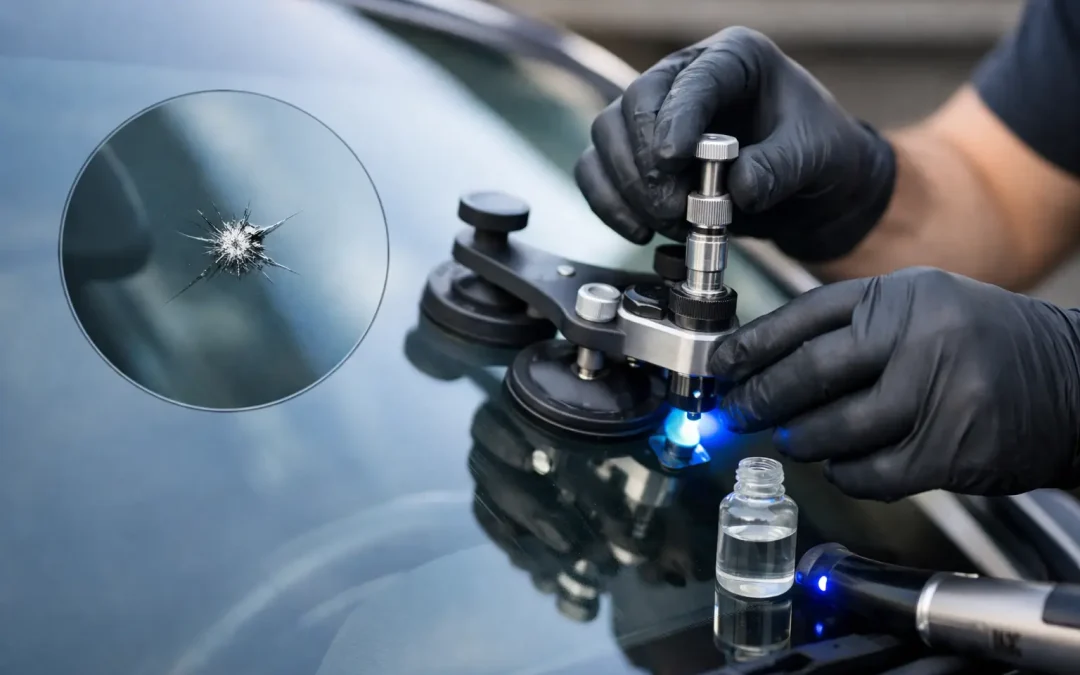
A stone chip can look harmless when it first appears, especially if it is no bigger than a pencil eraser. On a Harris County commute, though, heat, road vibration, potholes, and sudden temperature changes can turn that small mark into a spreading crack quickly. Knowing how to repair stone chip windshield damage can help protect your visibility, preserve the original factory glass, and avoid a more expensive replacement.
The key is acting early and choosing the right repair method for the damage. Some chips can be repaired effectively with a quality resin process. Others need professional attention right away, and some have already crossed the line into windshield replacement territory.
First, Protect the Chip From Getting Worse
Before deciding whether to use a repair kit or schedule service, keep the damaged area clean and dry. Do not blast the windshield with hot or cold air, and avoid washing the vehicle until the chip has been assessed. Moisture, dirt, and glass fragments can settle into the break, making a clean repair harder.
If you need to drive before the repair, place a small piece of clear tape over the outside of the chip. The tape is not a repair. It simply keeps road dust and water out of the damaged area. Do not press it into the glass or use opaque tape that could interfere with visibility.
Park in the shade when possible. Texas heat can cause the glass to expand, while a cool air-conditioned cabin can create a sharp temperature difference across the windshield. That stress is often enough to make a chip run into a long crack.
Can Your Windshield Chip Be Repaired?
Repairability depends on more than the chip’s diameter. A trained technician considers its shape, depth, location, contamination, and whether cracks extend from the impact point. Common repairable damage includes small bull’s-eyes, star breaks, combination breaks, and surface chips that have not spread far.
A repair is often a good option when the damage is relatively small, the glass is still structurally stable, and the chip is not directly in the driver’s primary viewing area. The goal is to bond the damaged glass with clear resin, restore strength, and make the break far less visible. A successful repair may still leave a small blemish, but it should prevent the damage from spreading and improve the windshield’s appearance.
Replacement may be the safer recommendation if the crack is long, the damage reaches the edge of the windshield, or the impact has penetrated too deeply. Edge cracks are especially concerning because the windshield frame places constant stress on that area. A chip in the driver’s line of sight can also be a problem, even if it is technically repairable, because resin can leave minor visual distortion.
How to Repair a Stone Chip Windshield With a DIY Kit
A DIY windshield repair kit can be a reasonable short-term option for a fresh, small chip away from the driver’s direct view. It is not the right choice for every vehicle or every break. If your windshield has a camera or sensors behind the glass, be particularly careful about assuming a simple repair is all the vehicle needs.
Most kits use an injector, an adhesive bridge, and a UV-curing resin. Read the kit instructions closely because cure times and mounting methods vary. In general, the process follows a few careful steps:
- Work in a shaded, dry area where the windshield is cool to the touch. Direct sun can cure the resin before it fully fills the break.
- Remove loose surface glass only if the kit instructs you to do so. Do not dig into the chip with a sharp object, as that can enlarge the damage.
- Center the injector over the impact point and create a tight seal against the glass. The injector cycles between pressure and vacuum to pull air from the break and push resin into it.
- Let the resin cure under the supplied curing strip or UV light, then remove excess resin with the included razor blade, keeping the blade flat against the glass.
Take your time with the injector step. Air trapped in the break can leave the repair weak and more noticeable. If the chip does not fill evenly, if legs of the crack continue to show clearly, or if the damage spreads while you work, stop and have the windshield inspected.
DIY kits save money upfront, but they have limits. They cannot correct every break pattern, clean contamination that has been sitting in the chip for days, or match the controlled resin application used by an experienced auto glass technician. An unsuccessful attempt can also make a later professional repair less effective.
Why Professional Windshield Repair Is Often the Better Value
Professional repair is designed to preserve your windshield, not just cover the visible mark. A technician can identify whether the damage is suitable for resin repair, remove trapped air and moisture more thoroughly, and use the proper resin for the break type. The process is usually fast, but the evaluation behind it matters.
There is also a safety reason to avoid delaying service. Your windshield supports the roof structure in a collision and helps the passenger-side airbag deploy correctly in many vehicles. A damaged windshield does not automatically mean the vehicle is unsafe to drive, but a spreading crack or compromised installation should never be ignored.
For drivers in Humble and nearby Harris County communities, mobile service can make this easier. Rather than risking a chip worsening during several more days of driving, a qualified technician can assess the damage where the vehicle is parked and recommend repair or replacement based on the glass itself.
Watch for ADAS Cameras and Calibration Needs
Many newer vehicles have advanced driver-assistance systems, or ADAS, that rely on a forward-facing camera mounted near the rearview mirror. Features such as lane departure warnings, lane-keeping assistance, automatic emergency braking, and adaptive cruise control may depend on that camera seeing the road accurately.
A simple stone chip repair usually does not require windshield calibration because the windshield is not removed. Full windshield replacement is different. If the glass is replaced on an ADAS-equipped vehicle, the camera system may need calibration afterward to confirm it is aligned and functioning as intended.
This is one reason a low-price windshield replacement is not always a complete repair. Proper glass installation, correct molding and adhesive procedures, and calibration when required all contribute to safe vehicle operation. NXT Auto Glass can explain what your particular vehicle needs without adding unnecessary work.
When to Stop Driving and Call for Help
A chip is not always an emergency, but certain signs mean you should arrange service as soon as possible. Do not rely on a DIY kit if you notice any of the following:
- A crack extending from the chip or reaching the windshield edge
- Damage directly in front of the driver
- Multiple impact points or a chip larger than a typical repair area
- Glass damage near a camera, sensor, or windshield-mounted hardware
- A windshield that is leaking, loose, or visibly damaged after a collision
If a crack begins spreading while you are driving, avoid slamming doors, hitting rough roads when possible, or using extreme defrost settings. Those actions can add stress to the glass. Get the vehicle evaluated promptly instead of waiting to see whether the crack stops.
A Small Repair Can Protect a Bigger Investment
The best time to address windshield damage is before it becomes urgent. A fresh chip is easier to repair, more likely to stay contained, and usually less costly than a replacement. Even when a repair is not possible, getting a clear recommendation early gives you time to schedule the right work instead of making a rushed decision after the crack has spread across the glass.
If you are unsure whether your stone chip can be repaired, keep it protected, avoid temperature shock, and have a local auto glass specialist inspect it. Clear visibility and a properly functioning windshield are worth more than waiting for a small mark to become a much larger problem.