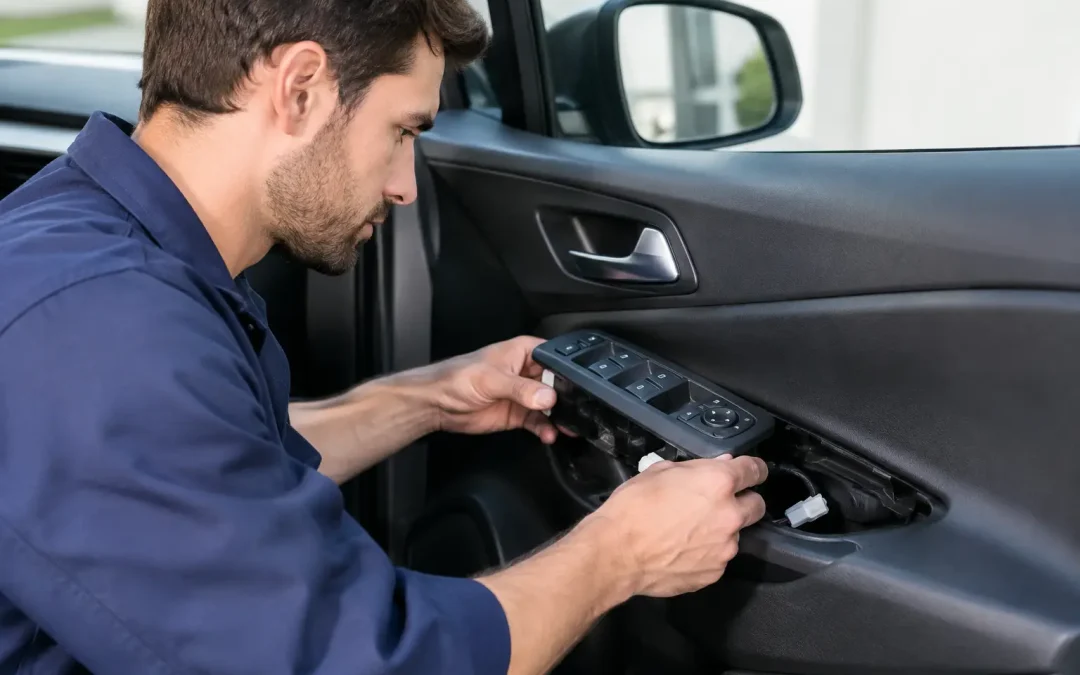
A power window that creeps upward at a stoplight, then moves normally the next day, is easy to put off. But when you need to restore slow power windows, acting early can prevent a stuck-open window, damaged glass, or a regulator that fails without warning. The right fix depends on whether the resistance is in the window tracks, the glass alignment, the switch and wiring, or the motor and regulator assembly.
Why power windows become slow
Your vehicle’s power window system is a small mechanical assembly that works hard every day. When you press the switch, an electric motor turns a regulator that raises or lowers the glass through guide channels inside the door. Any added friction or electrical weakness in that system can turn a quick motion into a slow, strained one.
Dry or contaminated window tracks are a common cause. Dust, road grime, old residue, and weather exposure can make the rubber-lined channels grip the glass too tightly. This is especially noticeable in hot Texas weather, when rubber parts can become less flexible and old lubricant can harden.
A failing window motor may also be the problem. Motors can lose strength gradually, so the window may move more slowly over several weeks or months before it stops altogether. If the window moves slowly in both directions, especially with a low hum or strained sound, the motor deserves attention.
The regulator is another frequent source of trouble. Depending on the vehicle, it may use cables, pulleys, arms, or plastic guides to control the glass. A frayed cable, worn guide, bent arm, or loose mounting point can make the glass bind or tilt as it moves. In that situation, cleaning the tracks may provide little or no improvement.
Start with the symptoms, not a guess
Before applying any product or removing a door panel, pay attention to how the window behaves. The pattern can point you toward the most likely repair.
If one window is slow while every other window works normally, the issue is usually local to that door. It may be the motor, regulator, track, or glass alignment. If all windows are sluggish, weak battery voltage, a charging-system concern, or a shared electrical issue may be involved.
A window that slows near the top or bottom of its travel often has dirty or tight channels. One that moves crookedly, clunks, clicks, or pauses may have a damaged regulator or loose glass. A window that works from the driver’s master switch but not its own door switch can have a worn switch or wiring problem instead.
Do not keep holding the switch after the glass stops moving. A stalled motor can overheat, and a binding regulator can become more damaged each time it is forced.
Safe first steps to restore slow power windows
For a window that still moves and shows no signs of tilting or grinding, basic cleaning can be a reasonable first step. Lower the glass as far as it will go, then clean the exposed run channels along both sides of the window frame. Use a clean cloth to remove loose dirt and buildup without pushing debris deeper into the door.
Next, use a silicone-based lubricant made for automotive rubber and window channels. Apply it sparingly to the tracks, then run the window up and down a few times. Silicone is generally the better choice for this job because it lubricates without leaving the heavy, dirt-catching film associated with many petroleum-based products.
Keep lubricant off the glass as much as possible, and clean any overspray promptly. Do not spray unknown lubricants through large openings in the door panel. Excess product can attract dirt, affect interior materials, and make it harder to identify the real cause of the problem later.
After cleaning and lubricating, test the window several times. If it returns to normal speed and stays smooth, monitor it over the next few days. If the improvement is brief, the tracks may not be the real issue, or the regulator and motor may already be under too much load.
Check for a weak electrical supply
Power windows need adequate voltage. A battery that is near the end of its life, corroded battery terminals, or charging-system trouble can make electrical accessories perform poorly. You may notice dimming interior lights, slow cranking, or other unusual electrical behavior at the same time.
Still, do not assume a slow window means you need a battery. When only one window is affected, a door-specific mechanical or electrical fault remains far more likely. A professional diagnosis can keep you from replacing parts that are not causing the problem.
When cleaning is not enough
Some symptoms call for repair rather than lubrication. These are signs to stop forcing the window and have the door inspected:
- The glass leans forward or backward as it moves.
- You hear grinding, popping, repeated clicking, or a cable-like scraping sound.
- The window drops into the door, falls after reaching the top, or will not stay closed.
- The motor runs but the glass does not move.
- The window is slow even after the channels have been cleaned and lubricated.
A failing regulator can eventually leave the glass down, which creates a security and weather-exposure problem. In Humble and across Harris County, an open window can quickly mean rain entering the door panel, heat entering the cabin, and a vehicle that is not safe to leave parked.
If the glass is cracked, scratched deeply, or has come loose from its mounting points, the repair may involve more than the regulator. Proper car window replacement includes checking the new glass for correct fit, securing it to the regulator, and verifying that it travels smoothly and seals correctly at the top.
Why the right repair protects the glass
A power window is not just a convenience feature. The glass, regulator, weatherstripping, switches, and door structure all have to work together. Installing a new motor while leaving a bent regulator in place can overload the replacement motor. Replacing a regulator without correcting a tight track can create the same cycle all over again.
That is why a careful inspection matters. A technician should check the condition of the tracks, alignment of the glass, regulator operation, motor output, mounting hardware, and switch response before recommending parts. The goal is not simply to make the window move for the moment. It is to restore reliable operation without putting unnecessary stress on the glass or door components.
For late-model vehicles, door panels may also contain side-impact components, wiring connectors, speakers, and electronics that need careful handling. A rushed do-it-yourself repair can break clips, damage a vapor barrier, or create a water leak inside the door. Those issues can lead to rattles, electrical trouble, and moisture damage long after the original slow-window problem is gone.
What professional power window service should include
A dependable repair begins with finding the cause, not selling the first part that seems plausible. Once the issue is confirmed, the damaged motor, regulator, switch, glass, or hardware can be repaired or replaced as needed. The window should then be cycled repeatedly to confirm smooth travel, proper alignment, and a secure seal.
At NXT Auto Glass, power window service is approached with the same attention to fit and function used for auto glass repairs. Whether the problem is a dragging window, broken regulator, damaged door glass, or a window that will not close, the focus is on restoring safe, dependable operation and explaining the recommended repair clearly.
Costs can vary because vehicle designs differ widely. Some door panels are straightforward to access, while others require more labor and specialized components. A clear estimate after inspection is more useful than a guess based on the symptom alone, particularly when the window glass may also be at risk.
Do not wait for the window to fail completely
A slow window may seem minor until it stops during a storm, before a road trip, or when the vehicle must be secured overnight. Addressing the issue while the window still operates often gives you more repair options and may help prevent damage to the glass, motor, and regulator.
If your window is dragging, straining, or moving unevenly, use the simple cleaning step only when the glass remains aligned and quiet. For recurring slowness or any unusual noise, a prompt inspection is the practical next move. A properly repaired power window should move smoothly, close securely, and let you get back to driving without wondering whether it will work the next time you need it.