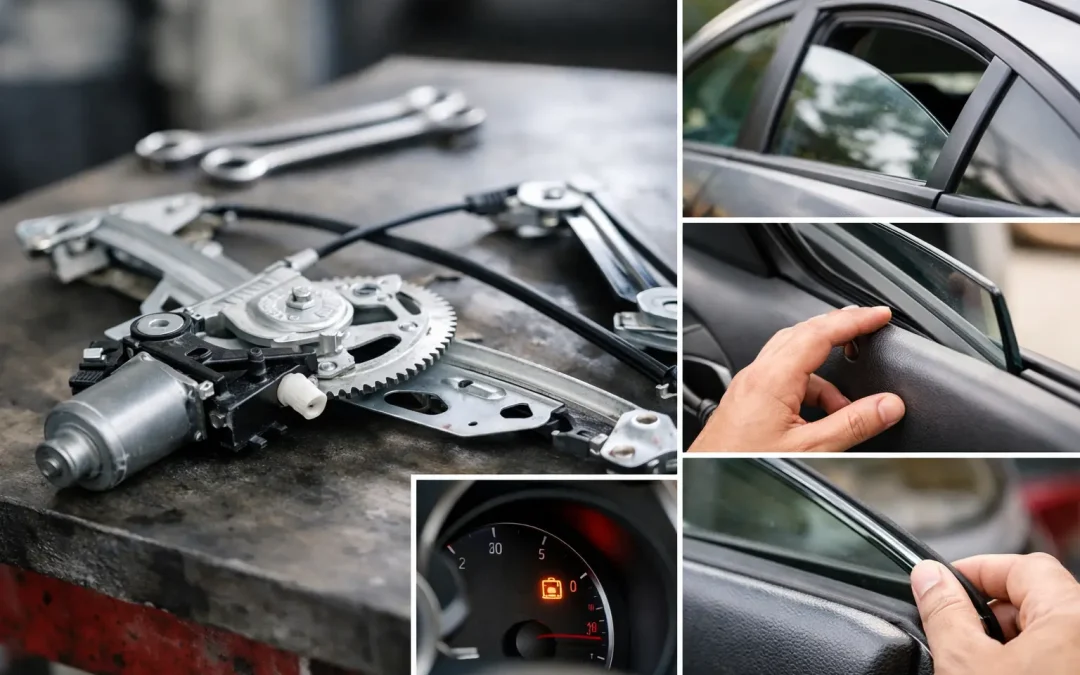
A power window that hesitates at the drive-through, drops crookedly in the door, or refuses to close before a Houston-area storm can turn a routine drive into an urgent problem. Recognizing window regulator symptoms early gives you a better chance of avoiding a stuck-open window, damaged glass, or a more involved repair.
The window regulator is the mechanical assembly inside your vehicle door that raises and lowers the side glass. In power-window vehicles, it works with the window motor, switches, wiring, tracks, and guides. Because several parts work together, a window problem is not always the regulator itself. The way the window behaves provides useful clues about what needs attention.
What Does a Window Regulator Do?
Most modern vehicles use a cable-style or scissor-style regulator. When you press the window switch, the motor moves the regulator, and the regulator guides the glass along its intended path. It needs to support the weight of the glass while keeping it aligned within the door frame.
Over time, cables can fray, plastic guides can break, mounting points can loosen, and moving parts can wear out. Texas heat can also put added stress on aging door components, while moisture entering the door can affect metal parts, wiring, and electrical connections.
A failing regulator can look like an electrical problem at first. That is why a proper inspection matters. Replacing a switch or motor when the regulator is the real issue does not restore reliable window operation.
7 Window Regulator Symptoms to Watch For
1. The window moves slowly or struggles to move
A window that rises or lowers more slowly than usual is often one of the earliest warning signs. It may pause partway up, move normally only after several tries, or slow down noticeably near the top of its travel.
This can be caused by a worn regulator, a weak motor, dry or dirty window channels, or glass that is binding in the track. If the motor sounds like it is working hard, do not keep cycling the switch repeatedly. That extra strain can turn a repairable component issue into a failed motor or broken cable.
2. The glass tilts, slips, or comes up crooked
A properly functioning window should stay level as it moves. If one side rises faster than the other, the glass leans forward or backward, or it appears to slip inside the door, the regulator or its guides may be damaged.
This symptom deserves prompt attention. Crooked glass can bind against the window frame, scratch the glass, damage the weatherstripping, or fall completely into the door. Forcing a tilted window upward by hand may also make the alignment worse.
3. You hear grinding, clicking, popping, or cable-like noises
Unusual noise inside the door is a common sign of mechanical wear. A clicking sound may indicate stripped regulator gears or a slipping motor mechanism. Grinding can point to worn components, while a snapping, popping, or metallic cable sound can mean the regulator cable is fraying or has come off its track.
The sound alone does not identify every failed part, but it is rarely something to ignore. A quiet window that simply stops may be electrical. A noisy window that still moves is more likely to have a mechanical issue developing.
4. The window falls down into the door
When a window suddenly drops and will not stay up, the regulator has often failed or separated from the glass. This is one of the clearest window regulator symptoms and one that calls for immediate service.
Do not drive with the opening exposed if you can avoid it. Rain, dust, theft risk, and interior damage become real concerns quickly. If the glass has dropped inside the door, avoid slamming the door or trying to pull it up forcefully. The glass may be unsupported, and damaged regulator pieces may be loose inside the panel.
5. The window will not close all the way
A window that stops short of the fully closed position is more than an inconvenience. Even a small gap can allow water, wind noise, road debris, and outside air into the cabin. In humid Harris County weather, repeated water entry can damage door trim, speakers, switches, and electrical connectors.
Sometimes the window stops because the regulator is binding. In other cases, the motor is weak, the glass is out of alignment, or the auto-up safety feature is reversing due to resistance. An inspection can separate a simple track adjustment from a regulator or motor replacement.
6. The switch works sometimes, but not every time
Intermittent operation can be frustrating because the window may work perfectly during one trip and fail during the next. A failing switch, loose wiring connection, tired motor, or worn regulator can all create this symptom.
Pay attention to what happens when you press the switch. If you hear the motor running but the glass does not move, the regulator is a likely suspect. If there is no sound at all, the issue may be electrical. Either way, intermittent performance is not something to wait on, especially if the window is beginning to slow or stick.
7. The window moves only when you help it by hand
If you need to pull the glass upward or guide it while pressing the switch, stop using the window until it can be checked. The regulator may no longer be supporting the glass correctly, or the tracks and guides may be severely worn.
Helping the glass by hand can sometimes get it closed temporarily, but it can also crack the glass or pinch your fingers. It is best treated as a sign that the mechanism is near complete failure, not as a long-term workaround.
Regulator Problem or Motor Problem?
The regulator and motor are closely connected, but they do different jobs. The motor supplies the power. The regulator converts that power into controlled up-and-down movement for the glass.
A motor issue often produces no movement and little or no sound from inside the door. A regulator issue may produce noise, crooked glass, slipping, or a window that moves briefly before binding. Still, there are exceptions. A weak motor can move a window slowly, and a damaged regulator can place enough load on the motor that it appears to be the source of the problem.
The right repair depends on the vehicle and the condition of the components. Some vehicles allow the regulator and motor to be replaced separately. Others use an assembly that makes replacing both parts the more dependable choice. A professional assessment helps prevent paying for parts that do not address the actual cause.
Why Prompt Repair Protects More Than Convenience
A failed power window affects security, weather protection, and safe visibility. If the driver’s window is stuck down, you may be tempted to delay repairs with plastic covering or tape. That may offer short-term protection, but it is not a dependable solution for daily driving, rain, or high speeds.
There is also a cost consideration. A regulator that is starting to bind may be addressed before it damages the motor, glass, or door panel. Once the glass breaks, falls, or scratches badly, the work can involve both window mechanism repair and car window replacement.
For vehicles with side window auto-reverse functions, correct operation also matters for passenger safety. The window should close firmly without excessive resistance or unpredictable reversing. Any repair should restore smooth movement and proper glass alignment, not merely get the window to move once.
What to Do When Your Power Window Fails
If the glass is partially open or has fallen into the door, protect the interior from weather and schedule service as soon as possible. Avoid repeatedly pressing the switch, slamming the door, or forcing the glass into position. These actions can damage the regulator further and may create a risk of broken glass.
When arranging an inspection, share the vehicle year, make, model, which window is affected, and what you hear or see when operating it. Those details help identify whether the concern is likely the regulator, motor, switch, wiring, glass alignment, or more than one component.
For drivers in Humble and nearby Harris County communities, NXT Auto Glass can inspect power window concerns and provide a clear recommendation based on the condition of your glass and door mechanism. The goal is a repair that closes securely, moves smoothly, and holds up to regular use.
A power window rarely chooses a convenient moment to fail. If yours is slowing down, making new noises, or sitting crooked in the frame, taking care of it now can keep a minor warning sign from becoming an open-door emergency.