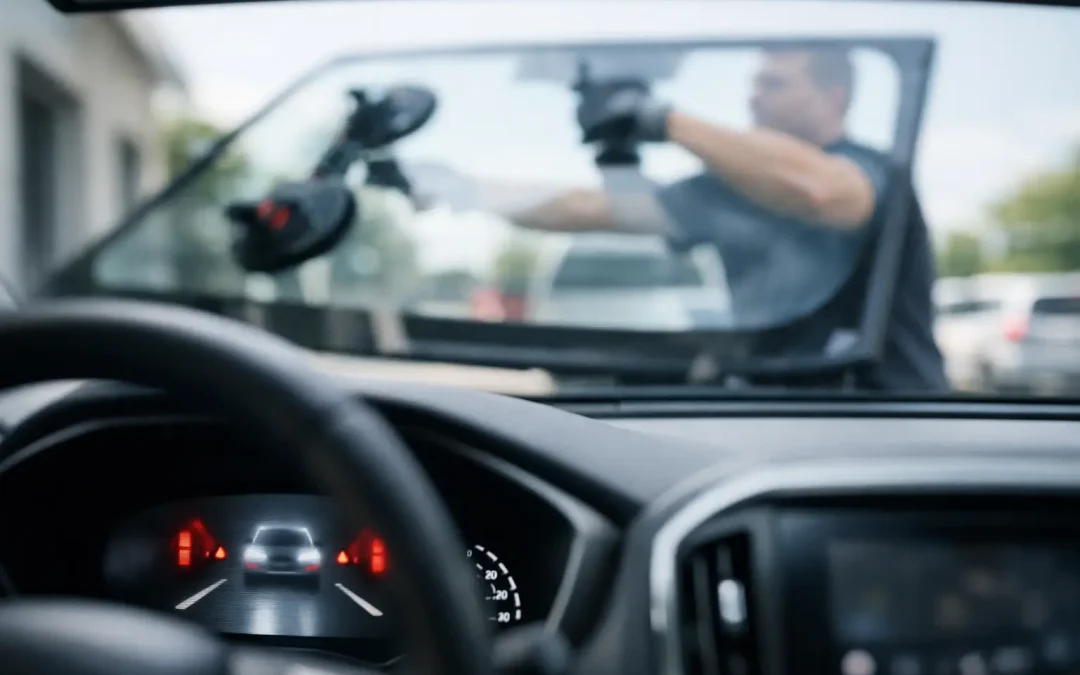
A calibration error example can be as simple as a dashboard warning appearing after a windshield replacement – or as serious as a vehicle failing to recognize a car ahead when traffic suddenly stops. On newer vehicles, the windshield is more than a piece of safety glass. It can be the mounting point and viewing path for cameras that support driver-assistance features.
If that camera is even slightly out of position after glass work, the system may receive the wrong information about lane markings, vehicle distance, or road conditions. That is why proper windshield calibration is a safety step, not an optional add-on.
A Real-World Calibration Error Example
Picture a late-model SUV with forward collision warning, lane departure alert, and automatic emergency braking. The owner has the windshield replaced after a highway rock crack spreads across the driver’s view. The new glass looks clear, fits correctly, and the vehicle seems normal at first.
On the drive home, however, a message appears: Front Camera Unavailable. A few minutes later, the lane-keeping feature briefly warns the driver even though the SUV is centered in its lane. The forward collision warning may also become unavailable or behave inconsistently.
This calibration error example usually does not mean the new windshield is defective. More often, the camera behind the glass needs to be recalibrated so the vehicle’s computer understands its exact position and angle again. A camera moved by only a small amount can interpret the road differently than the vehicle expects.
That difference matters. At highway speed, a slight error in how the camera sees lane lines or following distance can affect when an alert appears and how a driver-assistance feature responds. These systems are designed to assist the driver, not replace attentive driving, but they still need accurate inputs to work as intended.
Why Windshield Work Can Affect ADAS Calibration
Advanced Driver Assistance Systems, often called ADAS, rely on cameras, radar, sensors, and vehicle software. Many front-facing cameras sit near the rearview mirror, looking through the windshield. Windshield replacement can affect that camera’s relationship to the road even when the installation itself is completed carefully.
Several things can create the need for calibration. The camera may be removed and reinstalled during the glass replacement. The replacement windshield may have a different optical characteristic than the damaged one. A bracket, mounting point, or camera housing may shift slightly. In some cases, a collision repair, suspension work, wheel alignment issue, or bumper repair can also affect systems that use sensors beyond the windshield camera.
Not every vehicle uses the same process. Some manufacturers require calibration after every windshield replacement. Others require it only under certain conditions. The correct answer depends on the vehicle’s year, make, model, equipment package, and manufacturer procedures. A professional should verify the requirement rather than assume a warning light is the only sign that calibration is needed.
What Drivers May Notice When Calibration Is Off
A dashboard message is the clearest clue, but it is not the only one. Driver-assistance features can also deactivate without a persistent warning. For example, adaptive cruise control may be unavailable, lane departure alerts may not engage, or automatic high beams may stop working as expected.
Other symptoms can be less obvious. The vehicle may issue lane warnings too early or too late. It may have trouble recognizing marked lanes in normal conditions. A collision warning may appear when there is no immediate hazard, or it may not be available at all.
Weather, dirt, fog, glare, and blocked camera areas can temporarily affect these systems too. That is an important distinction. A camera message during heavy rain may clear when the glass and weather improve. A warning that appears immediately after windshield replacement, remains present in clear conditions, or returns regularly deserves professional attention.
Drivers should not try to correct the issue by adjusting the rearview mirror area, disconnecting a camera, or clearing warnings without diagnosis. The camera’s position and aiming are measured in ways that cannot be confirmed by eye.
Static and Dynamic Calibration: What Is the Difference?
Windshield calibration generally falls into two methods: static calibration and dynamic calibration. Some vehicles require one method, while others require both.
Static calibration is performed with the vehicle parked in a controlled setup. A technician uses specialized scan equipment and precisely placed targets at specified distances and heights. The floor needs to be level, lighting conditions matter, tires need to be properly inflated, and the vehicle must be positioned correctly. Small setup errors can affect the result, which is why precision is essential.
Dynamic calibration is completed while the vehicle is driven under manufacturer-required conditions. The scan tool communicates with the vehicle while the camera observes lane lines, traffic, and road markings. The route, speed range, weather, and traffic can all influence whether the process completes successfully.
A dynamic process may sound simpler because it happens on the road, but it is not just a casual test drive. The technician must follow the vehicle manufacturer’s requirements and confirm that the calibration completed correctly. In busy Harris County traffic, finding suitable road conditions can take planning and patience.
Why a Clear Windshield Is Not the Same as a Correctly Calibrated Vehicle
A windshield can look perfect and still leave an ADAS camera out of alignment. Glass fit, urethane bonding, leak prevention, and camera calibration are connected, but they are separate parts of a complete repair. The goal is not only to restore visibility. It is to restore the vehicle’s safety systems as closely as possible to their intended operating condition.
This is also why the lowest quote is not always the best value. A price that excludes required calibration may look attractive until the driver has to arrange another appointment, pay for additional diagnosis, or drive with disabled safety features. Ask whether calibration is required for your vehicle, whether it is included in the service plan, and how completion will be verified.
At NXT Auto Glass, the focus is on explaining those requirements clearly before the work is complete. Drivers should know what is being done to their vehicle and why it supports safer operation.
What Proper Calibration Service Should Include
A reliable calibration process begins before a scan tool is connected. The technician should confirm the vehicle’s ADAS equipment, inspect the camera area and windshield installation, and check for fault codes that may point to an unrelated issue.
If calibration is required, the vehicle should be prepared according to the manufacturer procedure. That may include checking tire pressure, fuel level, ride height, windshield cleanliness, battery condition, and the condition of sensors or camera brackets. These details are not busywork. They help make sure the vehicle is calibrated from a correct starting point.
After the static, dynamic, or combined procedure is completed, the technician should verify the result with the diagnostic equipment. If the vehicle will not calibrate, the next step is diagnosis, not guesswork. A damaged camera, incorrect windshield part, bent bracket, existing alignment issue, stored fault code, or prior collision damage may need to be addressed before the system can complete its process.
When to Schedule a Calibration Check
Schedule a professional check after windshield replacement when your vehicle has a forward-facing camera or ADAS warning message. It is also wise to have the system evaluated after a collision, camera-area repair, major suspension work, or a persistent warning involving lane assistance, collision alerts, or adaptive cruise control.
If your vehicle’s features are working normally and no warning is present, do not assume that means calibration was unnecessary. Some systems may not display a warning until a feature is actively used or a specific condition is met. Checking the manufacturer’s requirements for your exact vehicle is the safer approach.
A properly installed windshield protects your view of the road. Proper calibration helps the vehicle understand what it sees through that windshield. If a warning appears after glass work or something about your driver-assistance features feels different, have it checked promptly so you can drive with clearer visibility and greater confidence.