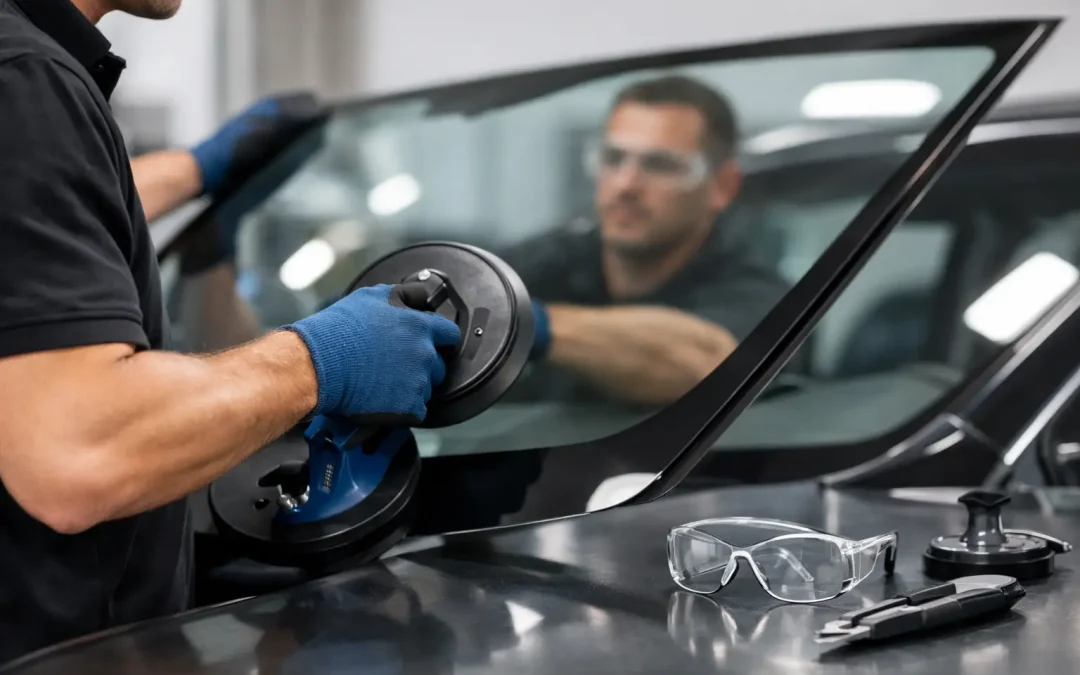
A small rock chip can become a windshield crack before the next commute, especially after a hot Harris County afternoon followed by a cool evening. When replacement is the right call, knowing how to choose replacement auto glass helps you protect more than your view of the road. The glass, adhesive, installation method, and calibration work all affect how safely your vehicle performs.
A low price can be appealing when damage is unexpected. But auto glass is not a part where the cheapest option is always the best value. The right replacement should match your vehicle’s safety features, fit correctly, and be installed by a technician who treats the job as safety work, not just a quick glass swap.
Start With the Type of Glass Your Vehicle Needs
Not all auto glass serves the same purpose. Windshields are typically made from laminated safety glass: two glass layers bonded around a plastic inner layer. That construction helps the windshield stay together during an impact and supports the vehicle’s roof structure. It also gives the passenger-side airbag a surface to deploy against in many vehicles.
Side and rear windows are often tempered glass, which is designed to break into small pieces when damaged. Some newer vehicles use laminated side glass for extra sound reduction, security, or UV protection. Sunroofs may have specialty glass, tinting, coatings, or a design that must work precisely with tracks and seals.
Before approving a replacement, make sure the shop identifies the exact glass position and the features built into that piece. A windshield that looks similar may not be the right windshield for your trim level.
Match Every Built-In Feature
Modern windshields can carry much more than a clear view. Depending on the vehicle, the replacement may need to accommodate a forward-facing camera, rain sensor, humidity sensor, heated wiper park area, acoustic layer, heads-up display, antennas, or solar coating.
The vehicle identification number, or VIN, is often the best starting point for confirming the correct part. A qualified glass professional should also visually inspect the vehicle instead of relying only on a year, make, and model. Two versions of the same vehicle can use different glass.
If your vehicle has a camera near the rearview mirror, do not assume any windshield with a similar camera bracket will work. The glass must be compatible with the camera system, and the camera may need recalibration after installation.
How to Choose Replacement Auto Glass Quality
You will usually hear terms such as OEM, dealer glass, and aftermarket or OEE glass. These terms can be useful, but they do not tell the whole story on their own.
OEM glass is made to the vehicle manufacturer’s specifications and may carry the automaker’s branding. OEE, or original equipment equivalent, is produced to meet comparable standards but may not have the vehicle brand logo. Quality aftermarket glass can be a practical, cost-conscious choice when it matches the required features and meets applicable safety standards.
The best option depends on your vehicle, the availability of the part, your insurance coverage, and the features integrated into the glass. For a newer vehicle with advanced driver-assistance systems, heads-up display, or unusual acoustic and heating features, part selection deserves extra care. For an older vehicle without those features, a quality equivalent windshield may provide dependable performance at a lower cost.
Ask the shop to explain what glass they recommend and why. You should get a clear answer about the manufacturer, feature compatibility, and expected fit. If the only explanation is that one part is “cheaper,” keep asking questions.
Installation Quality Matters as Much as the Glass
Even excellent glass can create problems if it is installed poorly. A windshield must be set at the proper depth, bonded with the right automotive urethane, and allowed to cure according to the adhesive manufacturer’s instructions. Rushed work can lead to wind noise, water leaks, trim problems, or a compromised bond.
Proper preparation matters. The technician should inspect the windshield frame for rust, corrosion, or old adhesive issues before the new glass goes in. If there is hidden damage around the opening, it needs to be addressed rather than covered up. The replacement glass should sit evenly, and moldings, clips, sensors, and camera covers should be reinstalled securely.
Ask about the safe drive-away time before you leave. This is the amount of time needed for the adhesive to cure sufficiently for safe operation. It can vary with the adhesive used, temperature, humidity, and the vehicle itself. In Texas heat, cure time still should not be guessed or skipped.
Do Not Skip ADAS Windshield Calibration
Many late-model vehicles use advanced driver-assistance systems, commonly called ADAS. These systems can include forward collision warning, automatic emergency braking, lane departure warning, lane-keeping assistance, and adaptive cruise control. A camera mounted behind the windshield often supports these features.
When that windshield is replaced, the camera’s position can change by a small amount. That small difference can affect what the system sees and how it responds. Calibration resets or verifies the camera’s alignment so the system can operate as designed.
Some vehicles need static calibration, which is performed with targets and specialized equipment in a controlled setup. Others require dynamic calibration, completed during a road drive under specific conditions. Some need both. The correct procedure comes from the vehicle manufacturer’s requirements, not from a one-size-fits-all rule.
A shop should tell you whether calibration is required, perform it or arrange it through a qualified provider, and document the result. If a driver-assistance warning appears after replacement, treat it seriously. Do not assume it will clear on its own.
Compare Estimates by What They Include
A clear estimate makes it easier to compare providers fairly. It should identify the glass type or part, labor, moldings or clips if needed, adhesive, disposal, taxes, and calibration when applicable. If a quote seems much lower than the others, find out what is missing before scheduling the work.
Insurance can help, but you still have choices. Your policy may cover glass replacement after your deductible, and some policies have separate glass coverage. Ask whether filing a claim makes financial sense based on your deductible and the total replacement cost. You can also ask whether you are responsible for choosing the repair facility.
Price matters, but look at the complete repair. A less expensive installation that later leaks, whistles, or leaves safety features uncalibrated is rarely a bargain.
Choose a Shop That Can Answer Practical Questions
The best glass shop does not need to overwhelm you with technical language. It should be able to explain the work in plain terms and give direct answers about the materials, process, and warranty.
Before you schedule, ask whether the shop can verify the part by VIN, replace the needed moldings and clips, inspect for leaks, and handle windshield calibration for your vehicle. Also ask what workmanship warranty is provided and what happens if you notice wind noise or water intrusion afterward.
Mobile service can be a major convenience for busy families and working professionals, but the location still has to be suitable. The vehicle needs a safe, reasonably level area with enough room to work. Heavy rain, high winds, or excessive dirt can interfere with a proper installation. A dependable provider will recommend shop service when conditions do not support quality mobile work.
For drivers in Humble and nearby Harris County communities, NXT Auto Glass focuses on the details that make replacement work dependable: proper glass selection, precision installation, and calibration support when modern vehicle systems require it.
Inspect the Vehicle Before You Drive Away
A quick inspection after replacement gives you confidence and helps catch concerns early. Look at the glass from inside and outside. It should be clean, centered, and free of scratches, distortion, or loose trim. Check that the rearview mirror, rain sensor cover, cameras, and windshield wipers are secure.
Make sure the technician explains any adhesive curing instructions. Avoid car washes, slamming doors, or removing retention tape before the recommended time has passed. If your windshield has a camera-based safety system, confirm whether calibration was completed and whether any dashboard messages remain.
For side window, rear glass, or sunroof work, test the operation before leaving when possible. Power windows should move smoothly and seal correctly. A sunroof should open, close, and drain as intended. Any glass replacement should leave your vehicle cleaner, quieter, and ready for the road.
The right choice is not simply the first available pane of glass. Choose a replacement that matches your vehicle, an installer who respects the safety systems around it, and a process that gives you clear answers before the work begins. That approach turns an inconvenient crack or break into a repair you can drive away from with confidence.