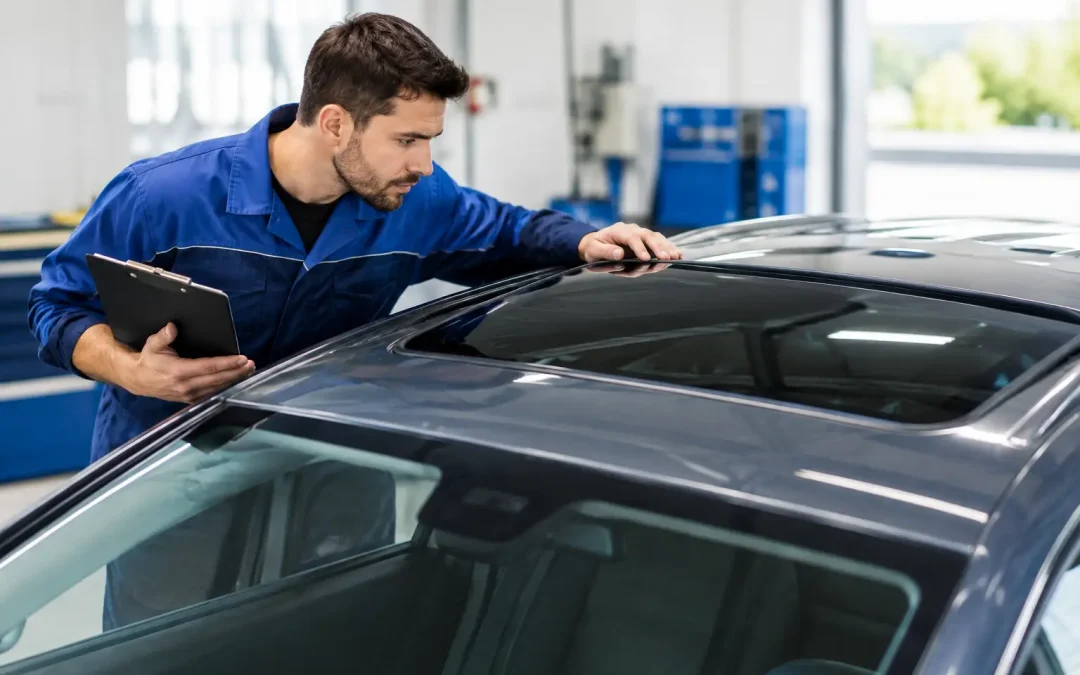
A sunroof that leaks onto the headliner, rattles at highway speed, or will not close completely is more than an inconvenience. It can lead to interior water damage, electrical problems, and reduced security. This sunroof replacement service review explains what local drivers should look for before approving the work, from accurate diagnosis to the details that keep water where it belongs: outside your vehicle.
Start With the Real Cause of the Problem
A damaged sunroof panel is not always the reason a sunroof fails. Many issues begin with blocked drain tubes, a worn seal, broken tracks, a failed motor, or a misaligned glass panel. Replacing the glass alone will not correct a drain blockage or a mechanical failure underneath it.
A dependable technician begins with an inspection. They should check the glass, perimeter seal, tracks, guides, frame, drains, and opening mechanism before recommending replacement. This matters because the right repair can sometimes cost less than a full sunroof replacement, while a cracked panel, severely scratched glass, damaged frame, or failed assembly may require more extensive work.
Ask the shop to explain what failed and why. A clear answer such as, “The rear drain is clogged, but the glass and track are intact,” is more helpful than a vague recommendation to replace everything. Good service is not about selling the biggest repair. It is about restoring safe, reliable operation with the right solution.
What a Quality Sunroof Replacement Service Includes
Sunroof work requires more care than simply removing one piece of glass and installing another. The panel must match the vehicle’s specifications, sit correctly within the roof opening, and seal properly through rain, car washes, heat, and road vibration.
A quality replacement typically starts by protecting the vehicle’s roof, interior trim, and upholstery. The technician then removes the damaged panel or components without bending the frame, damaging the headliner, or disturbing nearby wiring. On many vehicles, access to the sunroof assembly requires careful removal of trim pieces, overhead consoles, or portions of the headliner.
The replacement glass or assembly should be compatible with the vehicle’s year, make, model, and sunroof configuration. Some vehicles use a simple tilt-and-slide panel, while others have panoramic roofs with multiple panels, sunshades, and more complicated track systems. The right part and proper fitment are essential.
After installation, the work should not be considered finished until the panel opens, closes, tilts, and sits flush as designed. The technician should also inspect the seal and perform a controlled water test. That final test is one of the clearest signs that a shop takes leak prevention seriously.
Sunroof Replacement Service Review: Workmanship Details to Check
You do not need to be an auto glass expert to judge whether the job was handled carefully. A few practical checks after service can reveal a lot about the quality of the installation.
First, look at the panel from outside the vehicle. It should sit evenly in the roof opening, without one corner raised, a wide uneven gap, or contact with painted roof surfaces. Uneven alignment can create wind noise, poor sealing, and extra strain on the tracks.
Next, operate the sunroof several times. It should move smoothly without binding, grinding, popping, or hesitation. The glass should close firmly and stop in the correct position. If your vehicle has a power sunshade, make sure it also opens and closes normally.
Then inspect the interior around the headliner and overhead console. The trim should be secure, clean, and free from obvious marks. While some older vehicles may already have stains from a prior leak, a professional should protect the interior during the repair and communicate if existing water damage is found.
Finally, pay attention during your next drive and after the next rain. New wind noise, damp headliner material, dripping near the pillars, or standing water in the floor area should be reported promptly. Water can travel through the roof structure before it becomes visible, so the source is not always directly above the wet spot.
Water Testing Is Not an Optional Extra
The most frustrating sunroof problem is the one that seems fixed until the first Houston-area downpour. That is why a proper water test matters. It gives the technician a chance to confirm that water is draining correctly and that the replacement panel is sealing as intended before the vehicle leaves.
A water test should be controlled, not a high-pressure blast directly at the seal. Sunroofs are designed to manage some water through channels and drain tubes, so the goal is to verify normal drainage and identify leaks at the seal, frame, or interior trim. If drain tubes are clogged or disconnected, water may overflow into the cabin even when the glass itself is in good condition.
For a panoramic roof or a vehicle with a history of leaks, ask whether the drains and surrounding roof channels will be inspected as part of the job. The answer may affect the estimate, but it can also prevent repeat visits and more costly interior repairs later.
Questions That Help You Choose the Right Shop
Before scheduling service, ask how the shop determines whether you need glass replacement, seal replacement, drain cleaning, track repair, or a complete assembly. A technician who explains the diagnostic process is more likely to recommend work based on the actual condition of your vehicle.
It is also reasonable to ask whether the quoted part is OEM, aftermarket, or used. Each option has trade-offs. OEM parts are made to the original vehicle specification and may be the preferred choice for certain fitment or appearance concerns. Quality aftermarket parts can offer a more budget-friendly option when available. Used parts may help in limited situations, but their condition, seal integrity, and long-term reliability should be evaluated carefully.
Ask what is included in the estimate. Labor, parts, trim removal, water testing, cleanup, and warranty terms should be clear before work begins. The lowest quote is not always the best value if it leaves out diagnosis, leak testing, or correction of the underlying issue.
For drivers in Humble and nearby Harris County communities, NXT Auto Glass focuses on clear recommendations and precision workmanship, so you can understand the condition of your sunroof before deciding on repair or replacement.
When Replacement Makes More Sense Than Repair
A small issue does not always mean a full replacement is necessary. A sunroof that is slow to move may only need track service or motor diagnosis. A minor leak may trace back to debris in the drain channels. A worn seal may be replaceable if the glass and frame remain in good shape.
Replacement becomes the stronger option when the glass is cracked, the panel no longer seals correctly, the frame is bent, or damage has affected the components that hold the panel in place. On some vehicles, individual parts are difficult to source or cost nearly as much as a complete assembly. In those cases, replacement can be the more practical long-term repair.
Do not keep driving with a sunroof that will not close securely, especially if rain is expected. Covering the opening temporarily may protect the interior, but it is not a substitute for professional service. Moisture around headliners, wiring, and airbags can create problems that become more expensive with time.
Protect the Repair After Installation
Keeping the sunroof clean helps preserve the work. Leaves, pollen, pine needles, and dirt can collect in the roof channels and clog drains. Periodic inspection is especially useful after heavy storms, parking under trees, or long periods without opening the sunroof.
Avoid forcing the switch if the panel hesitates or makes unusual sounds. Continuing to operate a binding sunroof can damage cables, guides, and motors. A quick inspection at the first sign of trouble is usually easier than repairing a system that has been forced out of alignment.
The best sunroof repair gives you more than a clear view overhead. It gives you confidence that the panel closes securely, the cabin stays dry, and the work was performed with the care your vehicle deserves.