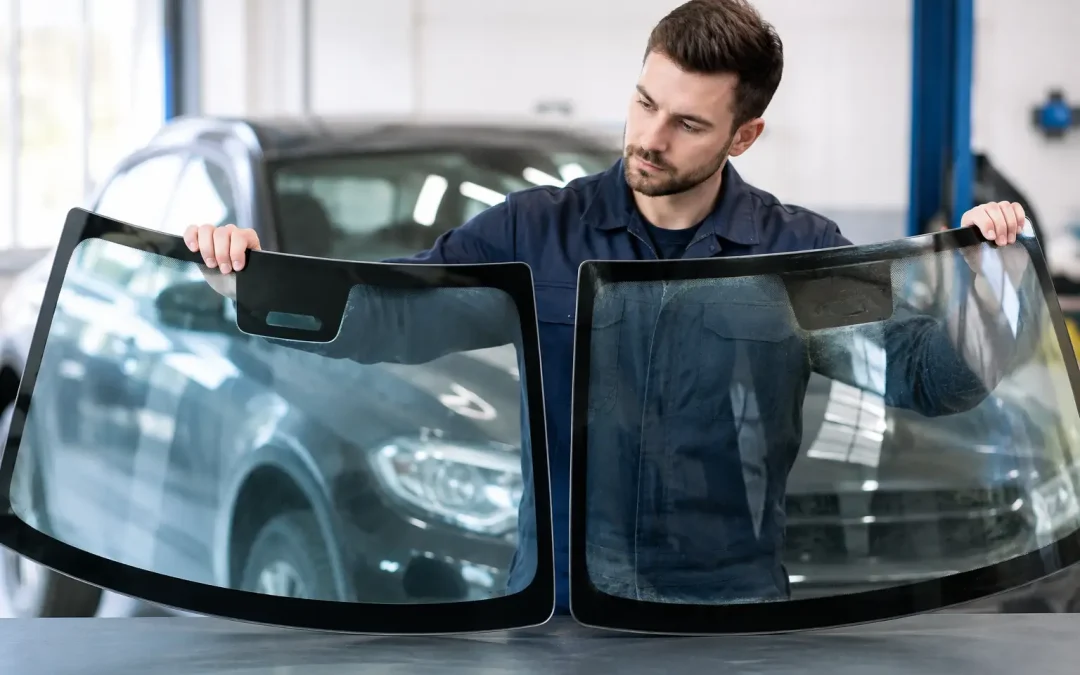
A windshield replacement is not just a matter of putting new glass in the opening. The choice affects visibility, cabin protection, camera performance, and the way your vehicle handles an impact. This aftermarket glass comparison explains what separates aftermarket and OEM auto glass so Harris County drivers can make a clear, safety-focused decision.
What Does Aftermarket Auto Glass Mean?
Aftermarket auto glass is replacement glass made by a company other than the vehicle manufacturer or its contracted original supplier. It is designed to match the size, shape, and required safety standards for a specific vehicle, but it may not be identical to the windshield or window installed at the factory.
OEM glass, short for original equipment manufacturer glass, is made by or for the automaker to its original specifications. It typically carries the vehicle brand’s logo and is intended to match the original glass as closely as possible.
Neither option is automatically right for every driver. A quality aftermarket windshield can be a practical, safe choice when it fits properly and is installed correctly. In other situations, especially on vehicles with advanced driver assistance systems, OEM glass may be worth considering because minor differences in camera brackets, optical properties, or sensor areas can matter.
Aftermarket Glass Comparison: The Details That Matter
Price is usually the first difference drivers notice. Aftermarket glass commonly costs less than OEM glass, which can make it appealing when paying out of pocket or managing a high insurance deductible. The savings can be meaningful, particularly for older vehicles or a side window replacement where factory branding provides little additional benefit.
But the lowest quote is not always the best value. Auto glass is a safety component, and the cost of the glass is only one part of the job. The adhesive system, preparation of the vehicle frame, precise placement, safe drive-away time, and calibration procedures can have a larger effect on the finished result than a small difference in glass price.
Fit and Installation Quality
Good aftermarket glass should align evenly with the vehicle body, molding, and weatherstripping. A windshield that is slightly off-center or poorly bonded can create wind noise, water leaks, trim issues, or reduced structural performance in a collision.
The glass itself does not determine whether the job will be successful. The installer must inspect the pinch weld area for rust or old adhesive problems, use the correct urethane, and follow proper curing requirements. A windshield contributes to roof support and helps the passenger airbag deploy as designed. That is why workmanship should never be treated as an add-on.
For side windows and back glass, proper fit is still essential. A door glass replacement needs to travel smoothly through its regulator and seals. Rear glass must match the vehicle’s defroster connections, antenna elements, and trim layout when equipped.
Optical Clarity and Distortion
Both OEM and quality aftermarket windshields are made from laminated safety glass. Still, drivers can occasionally notice differences in optical clarity between brands. Waviness, distortion near the edges, or a slight visual bend through the glass can be distracting, especially during long commutes, night driving, or rainy conditions.
This is not true of every aftermarket windshield. Many reputable aftermarket manufacturers produce clear, dependable glass. The key is not to assume all non-OEM options are the same. The source and quality level of the replacement part matter.
If a replacement windshield creates noticeable visual distortion, it should be addressed promptly. Clear vision through the entire driving area is a basic safety expectation, not a luxury feature.
Features Built Into Modern Windshields
Newer windshields often do much more than block wind and debris. Depending on the vehicle, the glass may include an acoustic interlayer to reduce road noise, solar coating, humidity sensors, rain sensors, heated wiper park areas, heads-up display compatibility, or embedded antenna connections.
The most important feature for many late-model vehicles is the area around the forward-facing camera. This camera supports ADAS features such as lane departure warning, lane keep assist, automatic emergency braking, adaptive cruise control, and traffic sign recognition.
An aftermarket windshield may be available with the correct sensor mounting points and camera bracket. However, the bracket position, glass thickness, curvature, tint band, and optical characteristics must work with the vehicle’s camera system. Some vehicles accept a high-quality aftermarket option without issue. Others perform best with OEM glass due to manufacturer-specific requirements.
A professional should confirm the exact options on your vehicle before ordering glass. Two vehicles that look nearly identical can require different windshields based on trim level, production date, camera package, or windshield features.
Why Calibration Changes the Decision
If your vehicle has a windshield-mounted camera, replacement glass should be followed by ADAS calibration when required by the manufacturer. Calibration verifies that the camera sees the road correctly after the windshield has been removed and replaced.
Skipping this step can leave safety features unavailable, inaccurate, or unreliable. A dashboard warning light may appear, but not every issue is obvious to the driver. A camera that is only slightly out of position can affect where the system detects lane lines, vehicles, pedestrians, or road signs.
This is one reason a basic aftermarket versus OEM price comparison can be misleading. The right question is whether the selected glass, installation process, and calibration plan restore the vehicle’s safety systems correctly. NXT Auto Glass evaluates those details before recommending a replacement option, rather than treating every windshield as interchangeable.
When Aftermarket Glass Is Often a Smart Choice
Aftermarket glass can be an excellent fit when the vehicle does not have complex windshield technology, when a reputable manufacturer offers a well-matched part, or when the budget calls for a dependable replacement without the cost of factory-branded glass.
It is also frequently a practical choice for door glass, quarter glass, vent glass, and many rear windows. These components may still include defrosters, antennas, or tinting, but they generally do not affect forward-facing ADAS camera alignment in the same way a windshield can.
For a driver dealing with a broken passenger window after a break-in or a damaged back glass after a storm, fast availability and correct installation may matter more than the logo printed in the corner. A qualified technician can verify that the replacement matches the original features and seals properly against water and road noise.
When OEM Glass May Be the Better Call
OEM glass may make sense for a newer vehicle with a sensitive camera system, a heads-up display, specialized acoustic glass, or features that are difficult to match precisely. It can also be the preferred option for drivers who want the closest possible match to their original windshield and are comfortable with the additional cost.
Insurance coverage can influence the choice. Some policies cover OEM parts only under specific endorsements, while others authorize an equivalent aftermarket replacement. Before approving a job, ask what your policy pays for, what you would owe out of pocket, and whether calibration is included.
There are cases where an insurer-approved aftermarket windshield is fully appropriate. There are also cases where the vehicle manufacturer or the available part configuration points toward OEM glass. The best recommendation should be based on the vehicle, not a one-size-fits-all sales pitch.
Questions to Ask Before Scheduling Replacement
Before choosing any replacement glass, ask whether the part matches your vehicle’s options, whether it meets applicable safety standards, and whether it comes from a recognized manufacturer. Ask how the installer will handle rain sensors, camera brackets, moldings, and corrosion found around the windshield opening.
For ADAS-equipped vehicles, ask whether calibration is required and whether it will be completed after installation. You should also ask about safe drive-away time. Fresh urethane needs time to cure, and driving too soon can compromise the bond.
A clear estimate should identify the glass type, labor, moldings or clips when needed, calibration, and any likely additional work. That transparency helps you compare quotes fairly instead of choosing based on a single low number.
The right replacement is the one that restores clear vision, proper fit, and the safety features your vehicle was built to use. If you are unsure which glass is appropriate, a local auto glass specialist can inspect the vehicle details and give you a recommendation you can feel comfortable driving with.