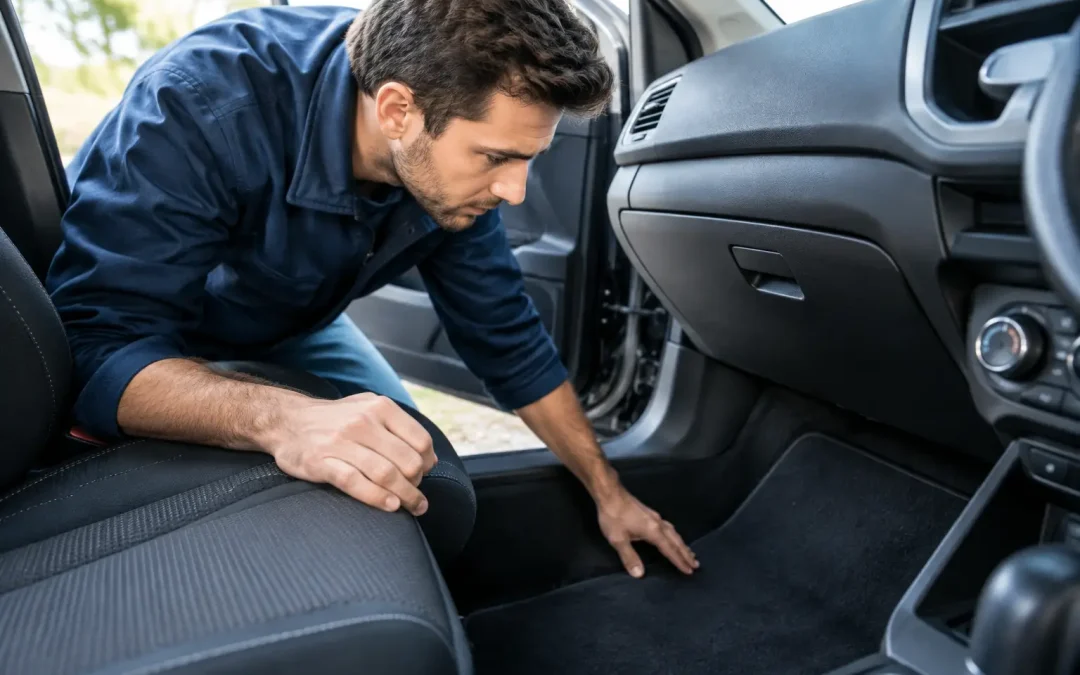
A vehicle can look completely dry on a sunny afternoon and still have a water-intrusion problem waiting to show itself after the next Harris County downpour. Dry car interior leaks are often intermittent leaks: water enters only at certain angles, during heavy rain, after a car wash, or when a drain becomes overwhelmed. By the time you notice a damp carpet, foggy windows, or a musty smell, moisture may already be trapped beneath the surface.
The goal is not simply to dry the interior. It is to find where water is entering, correct the source, and make sure hidden moisture does not create corrosion, electrical issues, or mold-like odors later. A careful inspection can save you from replacing carpet, dealing with repeat leaks, or chasing warning lights caused by wet connectors.
Why a Leak Can Be Present When the Interior Feels Dry
Car interiors have plenty of places for water to travel before it becomes obvious. Moisture can move behind dashboard panels, down A-pillars, under door trim, and beneath carpet padding. The top layer of carpet may feel dry while the foam backing underneath is still wet.
Heat can also hide the evidence. In Texas, a small amount of water may evaporate quickly from an exposed floor mat, leaving behind a water line, a stale odor, or light staining rather than an obvious puddle. Then another storm sends water through the same path and the problem returns.
Leaks are not always related to a cracked windshield. A windshield may be structurally sound but improperly sealed around the edge from a past installation. Water can also enter through a sunroof drain, damaged door weatherstripping, a body seam, a cowl panel, or a rear glass opening. Finding the true entry point requires more than looking at the wettest spot.
Common Sources of Dry Car Interior Leaks
Windshield and rear glass seal failures
The adhesive bond around fixed auto glass is designed to keep water outside while helping the glass support the vehicle structure. If an old windshield, back glass, or quarter glass was installed without proper preparation or sealing, water may work its way around the edge. You may see moisture at the headliner, the lower corners of the dashboard, or inside the trunk rather than directly beside the glass.
A leak after windshield replacement does not automatically mean the glass itself is defective. It may come down to surface preparation, corrosion around the pinch weld, damaged molding, or a gap in the adhesive bond. The correct repair depends on the condition of the opening and how the glass was installed.
Clogged sunroof drains
A sunroof is built to manage a small amount of water. Its surrounding tray routes water into drain tubes, which carry it down through the vehicle body. When leaves, dirt, or debris clog a drain, the tray can overflow into the headliner and pillars.
Drivers may first notice a damp headliner, wet front floorboards, or water near the rear seats. Clearing a drain may solve a simple blockage, but a disconnected or cracked drain tube can require access behind interior trim. Forcing air into a drain without care can disconnect the tube and make the leak worse.
Door seals, vapor barriers, and window channels
Water normally passes through the outer window beltline and drains out through openings at the bottom of the door. A problem begins when those drain holes are clogged, the inner vapor barrier has come loose, or the door weatherstripping is torn or flattened. Water can then bypass the door shell and reach the carpet along the sill.
This type of leak is easy to misdiagnose because the door panel itself may look normal. A technician may need to remove the panel, inspect the moisture barrier, and verify that water follows the proper path through the door.
Cowl, firewall, and body seam leaks
The cowl is the area at the base of the windshield where fresh air enters the HVAC system. Leaves and debris can block drains in this area, allowing water to collect and enter through a cabin air intake or seam. A leaking cowl can cause wet passenger-side carpet, unusual HVAC odors, or moisture behind the glove box.
Older vehicles and collision-repaired vehicles can also develop seam-sealer failures. These leaks may appear in the trunk, spare-tire well, rear footwells, or around side panels. Because water may travel a long distance along the body before dripping, professional testing is often the fastest way to isolate the source.
Signs You Should Not Ignore
A wet carpet is the clearest warning, but it is not the only one. Persistent window fogging, especially when the A/C or defroster is running, can point to excess humidity inside the cabin. A musty smell after rain, unexplained stains on the headliner, or water marks around trim are also worth investigating.
Check your trunk and spare-tire well, too. Water can collect there unnoticed for weeks. Rust around seat mounts, damp insulation, or a sloshing sound when turning are stronger signs that moisture has been sitting where it should not be.
Electrical concerns deserve prompt attention. Modern vehicles have wiring connections, sensors, amplifiers, airbag components, and control modules under seats, behind panels, and beneath carpets. A small leak can become a much larger repair when water reaches those components.
How Professionals Find an Interior Water Leak
The best leak diagnosis starts with confirming the customer’s symptoms: when the moisture appears, where it is found, whether it happens after rain or a wash, and whether glass or body work was done recently. That history narrows the inspection.
A technician then checks visible seals, trim, drains, and glass edges before performing a controlled water test. Water is applied gradually to specific areas, not sprayed indiscriminately across the entire vehicle. This matters because high-pressure water can force its way past seals in a way normal rain never would, creating misleading results.
Interior trim may need to be removed to follow a water trail. In some cases, compressed air, drain testing, or dye tracing helps identify a blocked path or hidden gap. The right repair could be resealing a glass opening, repairing a vapor barrier, restoring a drain route, replacing damaged weatherstripping, or addressing a corroded body area.
At NXT Auto Glass, water leak repair is approached as a diagnosis first, not a guess. That helps prevent the common frustration of resealing one area while the actual source remains untouched.
Why Drying Alone Is Not Enough
A shop vacuum, towels, and a few days of warm weather can make a vehicle seem fixed. They do not correct the path that allowed water inside. More importantly, carpet padding can hold a surprising amount of moisture long after the visible carpet feels normal.
After the source is repaired, the affected area should be dried thoroughly. Depending on the leak and how long it has been present, that may involve lifting carpet, drying insulation, checking connectors, and inspecting for corrosion. If the vehicle has a strong odor, prompt attention is especially worthwhile because odors become harder to remove once moisture has remained in enclosed materials.
There is a practical trade-off here. A minor door-drain blockage caught early may be a straightforward repair. Waiting until water has reached electronics or caused corrosion can turn the same original leak into a more involved job.
What You Can Check Before Scheduling Service
Start by noting exactly where moisture appears and what conditions trigger it. Check whether the floor is damp near a specific door, whether the headliner is stained near the sunroof, or whether the trunk collects water after rain. Avoid pulling trim panels aggressively or applying sealant around glass as a first response. Caulk can trap water, interfere with proper repairs, and make later diagnosis more difficult.
You can gently clear obvious leaves from the cowl area and inspect door seals for visible tears. If you find wet carpet, remove floor mats and allow air circulation, but do not assume the problem is solved because the surface dries. A focused inspection is the safer next step when the leak returns, reaches the headliner, affects a recently replaced windshield, or creates electrical concerns.
The next storm should not be a test of whether your car stays dry. Addressing the source now protects the comfort, safety, and long-term condition of your vehicle.