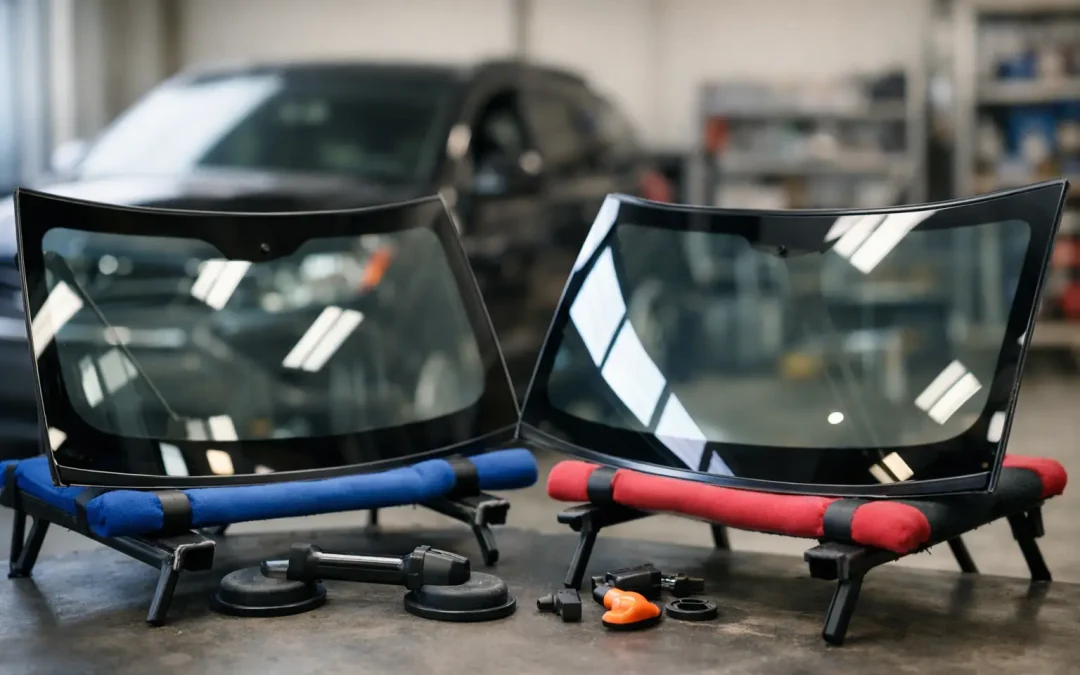
A windshield replacement is not simply a matter of putting new glass in an opening. The choice between an OEM vs aftermarket windshield can affect optical clarity, features such as rain sensors and head-up displays, insurance costs, and the calibration of safety systems in your vehicle. The right answer depends on your vehicle, its equipment, your budget, and the quality of the installation.
For drivers in Humble and throughout Harris County, the most useful question is not always, “Which option is best?” It is, “Which windshield is right for my vehicle and will it be installed and calibrated correctly?” Here is what that decision looks like in practical terms.
What Is an OEM Windshield?
OEM stands for Original Equipment Manufacturer. An OEM windshield is made to the vehicle manufacturer’s original specifications and is typically sold with the automaker’s branding or logo. It is designed to match the glass that came with the vehicle when it was new, including its shape, tint band, acoustic properties, mounting points, and compatibility with factory-installed technology.
On many newer vehicles, the windshield is more than a piece of safety glass. It may contain a camera bracket for forward collision warning or lane departure systems, a rain sensor mount, a heated wiper park area, acoustic layers to reduce road noise, a solar coating, or a designated area for a head-up display. OEM glass is built around the exact specifications for those features.
That precision can be especially valuable for luxury vehicles, newer vehicles, and cars with complex advanced driver assistance systems, often called ADAS. It can also be the preferred choice when a driver wants the closest possible match to the original windshield.
The trade-off is cost. OEM windshields usually cost more than aftermarket alternatives, and availability can sometimes add time to a replacement. A higher price does not automatically mean it is the only safe choice, but it may be worth it when your vehicle requires an exact match for specialized features.
What Is an Aftermarket Windshield?
An aftermarket windshield is produced by a glass manufacturer other than the vehicle brand. Reputable aftermarket glass is made to meet federal safety standards, including Department of Transportation requirements for automotive glass. It is not automatically lower-quality or unsafe simply because it does not carry the automaker’s logo.
In fact, some aftermarket glass comes from manufacturers that also produce original equipment glass for vehicle makers. The difference may be branding, distribution, or a variation in specifications rather than basic safety. However, aftermarket options vary more widely from one manufacturer and vehicle application to another.
A good aftermarket windshield can provide reliable fit, clear visibility, and solid value. For many everyday vehicles without highly specialized glass features, it is often a practical choice that helps control out-of-pocket costs. It can be particularly appealing when insurance coverage includes a deductible or when a driver needs prompt replacement after road debris causes major damage.
The key is selecting the correct part for the vehicle’s trim and equipment. A windshield for the same model year may look identical at first glance but differ in sensor brackets, camera mounting locations, shade bands, antenna connections, or acoustic construction. That is why the vehicle identification number and a careful equipment check matter before glass is ordered.
OEM vs Aftermarket Windshield Fit and Quality
When comparing OEM vs aftermarket windshield quality, fit is one of the biggest concerns. A properly manufactured windshield should sit correctly in the opening and support an even, secure urethane bond. The glass itself must also provide clear, undistorted visibility for the driver.
OEM glass is designed to match the vehicle maker’s specifications as closely as possible. That can reduce concerns about minor differences in edge shape, optical quality, markings, or feature placement. For vehicles with a head-up display, for example, an exact windshield specification may be needed to avoid a doubled or blurry image on the glass.
Quality aftermarket glass can fit very well too, especially for common vehicle models. Still, there can be small differences between brands. Some drivers notice a variation in sound insulation, tint appearance, radio reception, or optical clarity around the edges. Those issues are not guaranteed, but they are part of the reason the lowest-priced glass is not always the best value.
The installation itself matters just as much as the brand of glass. Even premium OEM glass cannot perform as intended if it is installed with poor preparation, incorrect adhesives, damaged molding, or improper curing time. A windshield is a structural safety component that helps support the roof in a rollover and allows the passenger airbag to deploy correctly. Precise workmanship is never optional.
Safety Standards Matter, but Details Matter Too
Both OEM and compliant aftermarket windshields are designed to meet safety requirements. The difference often comes down to matching the original vehicle features and selecting a trusted glass manufacturer for the specific application.
A lower quote may not include the same acoustic layer, rain sensor bracket, camera-compatible design, or required molding as another quote. Before choosing based on price alone, ask what glass brand is being used, whether all vehicle features are included, and whether calibration is part of the job when applicable.
ADAS Calibration After Windshield Replacement
If your vehicle has a camera mounted behind the windshield, replacement usually requires ADAS calibration. This process helps the camera recognize lanes, vehicles, road markings, and distances accurately after the glass has been removed and replaced.
Calibration is not an extra cosmetic service. It is a safety step for vehicles equipped with systems such as lane keep assist, adaptive cruise control, automatic emergency braking, traffic sign recognition, or forward collision alerts. Depending on the vehicle, calibration may be static, dynamic, or require both procedures.
An OEM windshield may be the best option when the manufacturer requires it, when the camera area has very specific optical requirements, or when there is a head-up display or other integrated technology. In many cases, however, a high-quality aftermarket windshield that is built for the correct ADAS configuration can be calibrated successfully.
What should never be skipped is verifying that the replacement glass is compatible and completing the calibration procedure required by the manufacturer. At NXT Auto Glass, that means treating the glass installation and calibration as connected parts of restoring your vehicle’s safety systems, not as separate afterthoughts.
Cost, Insurance, and Warranty Considerations
OEM glass generally has a higher price because of manufacturer branding, tighter specification matching, and distribution costs. Aftermarket glass often provides a more affordable replacement option, which can make a real difference if you are paying a deductible or handling the repair without insurance.
Insurance policies vary. Some carriers cover aftermarket glass as the standard option and may require an additional payment for OEM glass. Others may approve OEM glass for newer vehicles, leased vehicles, specialty models, or situations where comparable aftermarket glass is unavailable. It is worth reviewing your policy rather than assuming every replacement will be covered the same way.
Warranty should also be part of the conversation. Ask about coverage for workmanship, water leaks, air noise, and glass defects. A dependable installer should stand behind the bond, fit, and finish of the replacement. If a windshield is installed correctly, you should not have to worry about loose trim, wind noise, or water entering the cabin after the first heavy Texas rain.
How to Choose the Right Replacement
Choose OEM glass when preserving exact factory specifications is your top priority, your vehicle has specialized windshield technology, or your manufacturer and insurance situation support that option. It is also a strong choice for drivers who want the original logo and the closest factory match possible.
Choose quality aftermarket glass when the correct feature-compatible part is available, cost is a major consideration, and the glass comes from a reputable manufacturer. For many commuter cars, family SUVs, and work vehicles, this route delivers safe, dependable performance without the higher OEM price.
Whichever option you choose, do not compromise on correct installation, quality urethane, safe drive-away time, and required ADAS calibration. Those details have a direct effect on visibility, weather protection, structural support, and driver-assistance performance.
A clear recommendation should feel straightforward, not pressured. The best windshield replacement is the one that properly matches your vehicle, restores its safety features, fits your budget, and gives you confidence every time you pull onto the road.