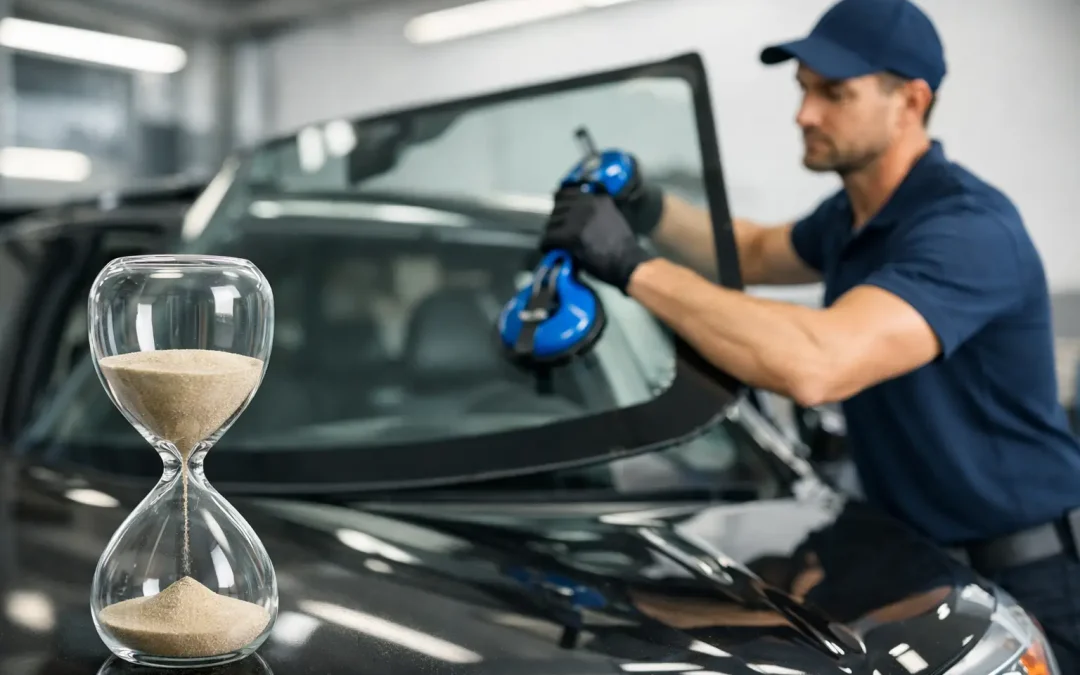
A cracked windshield can turn a normal drive through Humble or Harris County into a safety concern fast. So, how long does windshield replacement take? For most passenger vehicles, the hands-on replacement work takes about 60 to 90 minutes. The complete timeline can be longer when the adhesive needs additional curing time or the vehicle requires windshield calibration.
The good news is that a professional replacement is usually a same-day service. What matters most is not rushing the final steps. Your windshield supports visibility, helps reinforce the vehicle’s roof structure, and works with safety systems on many newer vehicles. Proper installation and safe drive-away time are worth the wait.
How Long Does Windshield Replacement Take From Start to Finish?
Most standard windshield replacements take one to two hours for removal and installation. This includes protecting the vehicle, removing the damaged glass, preparing the frame, applying automotive-grade urethane, setting the new windshield, and checking the fit and seals.
However, the appointment is not always the same as the time before you can drive. The urethane adhesive that bonds the windshield to the vehicle needs time to reach a safe strength. Depending on the adhesive, temperature, humidity, and your vehicle, the safe drive-away time may be as short as 30 to 60 minutes or may take several hours.
A technician should always give you a specific safe drive-away recommendation for your installation. That guidance is based on the adhesive used that day, not a generic estimate. Following it helps protect the bond and ensures the windshield can perform correctly in a collision.
For many drivers, the realistic schedule looks like this: the vehicle is serviced in the morning or afternoon, the installation is completed within about 90 minutes, and the vehicle is ready to drive after the required curing period. If calibration is needed, plan for additional time.
What Can Make a Windshield Replacement Take Longer?
A quick job is helpful, but a correctly completed job is the goal. Several factors can affect how long your replacement takes.
ADAS calibration requirements
Many late-model vehicles have advanced driver-assistance systems, often called ADAS. Cameras and sensors near the windshield may support features such as forward collision warning, lane departure alerts, lane-keeping assistance, automatic emergency braking, and adaptive cruise control.
When a windshield is replaced, the front-facing camera may need recalibration so it can read the road accurately through the new glass. Calibration can add roughly 30 minutes to two hours, depending on the vehicle and whether it requires static calibration, dynamic calibration, or both.
Static calibration is performed with specialized equipment and targets in a controlled setup. Dynamic calibration involves driving the vehicle under the right road conditions while the system completes its learning process. Some vehicles require one method, while others require both. A proper technician will verify the requirements for your make and model rather than assuming every windshield replacement is the same.
Skipping required calibration can leave safety features inaccurate or unavailable. A dashboard warning light may stay on, but not every issue is obvious to the driver. That is why calibration is a safety step, not an optional add-on for vehicles equipped with these systems.
Glass availability and the correct part
The actual installation may be fast, but getting the correct windshield can affect the overall schedule. Windshields are not interchangeable just because they fit the same model year. Your vehicle may need a specific glass option for a rain sensor, acoustic insulation, heads-up display, heating elements, camera bracket, antenna, shade band, or ADAS system.
A local auto glass specialist will confirm the vehicle identification details and glass features before ordering or scheduling. This prevents the frustration of removing a windshield only to find that the replacement part does not support the vehicle’s equipment.
Weather and curing conditions
Texas heat, humidity, rain, and sudden weather changes can affect adhesive curing conditions. Quality urethane products are designed for automotive use, but their safe drive-away time still depends on the environment and manufacturer instructions.
Mobile windshield replacement can be a convenient option when the work area is appropriate. The vehicle needs a clean, stable location with enough room for safe installation. Heavy rain, high winds, or an exposed location can make it safer to complete the job in a protected setting instead of forcing an installation in poor conditions.
Rust, old adhesive, or frame damage
Once the old windshield is removed, the technician may find corrosion around the pinch weld, the metal frame where the windshield bonds to the vehicle. Rust, previous poor-quality repairs, or body damage needs to be addressed properly before new glass is installed.
This can add time, but it is not a step to overlook. Adhesive cannot create a reliable bond over damaged metal or improperly prepared surfaces. A clear explanation of what was found and what needs to happen next is part of responsible service.
The Difference Between Installation Time and Safe Drive-Away Time
One of the most common misunderstandings is assuming the vehicle is ready the moment the glass is in place. The windshield may look finished, but the urethane bond is still curing.
Safe drive-away time is the minimum time required before the vehicle can be safely operated. It is determined by the adhesive product, the temperature, humidity, and the vehicle’s airbag system. During a collision, passenger-side airbags can push against the windshield. If the windshield is not properly bonded, it may not stay in position as designed.
Your technician may also recommend avoiding a high-pressure car wash, slamming doors, or removing retention tape for a short period after replacement. These simple precautions help the adhesive cure without unnecessary pressure changes or disruption.
You do not need to treat the vehicle like it is fragile for days. You just need to follow the specific aftercare instructions for the first hours following installation. If anything seems unusual – wind noise, water intrusion, loose molding, camera warnings, or a warning light – contact the installer promptly.
Can a Windshield Be Replaced the Same Day?
Yes, same-day windshield replacement is often possible when the correct glass is available and conditions allow for safe installation. For a straightforward vehicle without calibration requirements, many drivers can have the work completed and be back on the road the same day.
Same-day service may be more difficult when the windshield is a specialty part, the vehicle needs ADAS calibration, or there is frame damage that must be repaired first. Rather than treating that as an inconvenience, view it as a sign that the work is being handled with the attention your vehicle needs.
At NXT Auto Glass, the focus is on giving drivers a clear timeline before work begins. That means confirming the right windshield, explaining whether calibration is required, and providing honest safe drive-away guidance instead of promising a speed that compromises safety.
How to Make Your Replacement Appointment Go Smoothly
Before the appointment, remove personal items from the dashboard and front seats if possible. If you have toll tags, parking permits, dash cameras, rearview mirror accessories, or windshield-mounted devices, ask whether they need to be removed before service.
It also helps to share your vehicle’s year, make, model, trim level, and VIN when requesting a quote. Mention any driver-assistance features, rain-sensing wipers, heads-up display, or camera warning lights. Those details help identify the correct glass and prevent delays.
If you are using mobile service, choose a level, accessible parking area. Leave enough space around the front of the vehicle for the technician to work safely. A garage, covered carport, or other protected location can be especially helpful during unpredictable weather.
Is It Better to Repair a Chip Instead?
A small chip or short crack can sometimes be repaired in less time than a full replacement, often in about 30 to 45 minutes. Repair is usually the better value when the damage is limited, outside the driver’s primary line of sight, and has not spread to the windshield edge.
Replacement is generally the safer choice when the crack is long, the damage is near the edge, the glass is badly pitted, or the windshield’s structural integrity is compromised. A professional inspection can help you avoid replacing glass that is still repairable, while also avoiding the risk of relying on a windshield that should no longer be in service.
A windshield replacement does not have to take over your day. Set aside enough time for careful installation, curing, and calibration when required, then let the technician’s safe drive-away instructions guide your next trip.