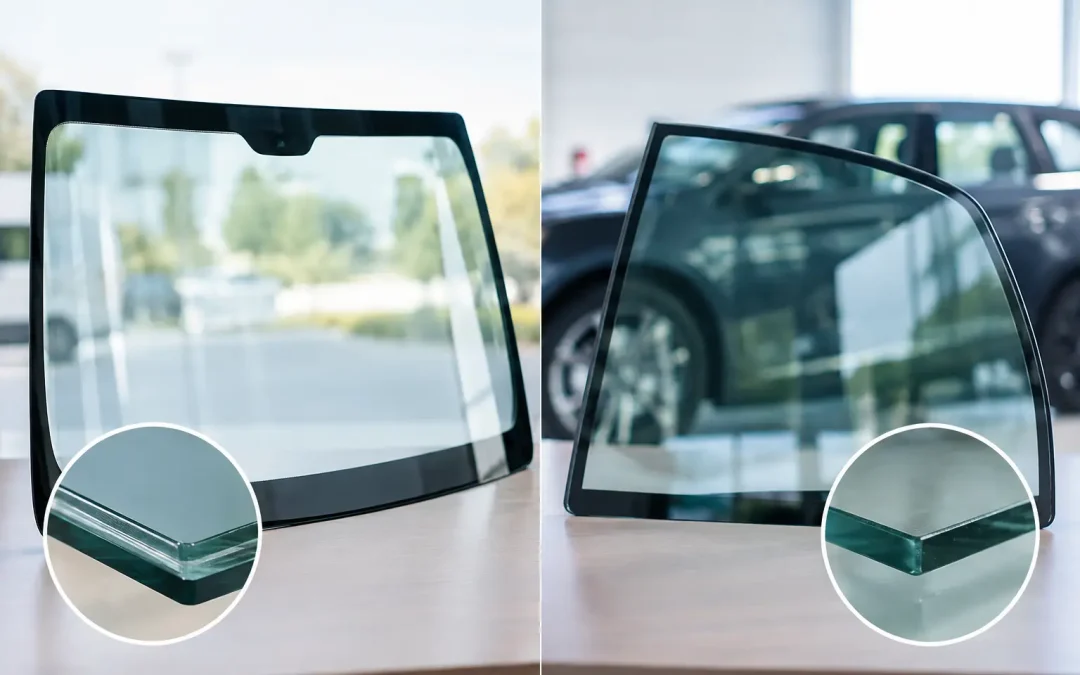
A cracked windshield and a shattered door window can look like similar problems from the driver’s seat, but they usually involve two very different materials. Understanding laminated versus tempered auto glass helps you make a safer, more informed decision when damage happens – especially when you need to know whether repair is possible or replacement is the right call.
For most passenger vehicles, the windshield is made from laminated glass, while side and rear windows are typically tempered. Each type is designed to behave differently in a collision, during an impact, and when it breaks. That difference affects visibility, passenger protection, repair options, replacement procedures, and the technology your vehicle may rely on.
What Is Laminated Auto Glass?
Laminated glass is built in layers. It generally has two sheets of glass bonded around a clear plastic interlayer, usually polyvinyl butyral or PVB. That interlayer is the reason a damaged windshield often stays together instead of falling into the cabin.
When a rock strikes a laminated windshield, it may leave a chip, bullseye, star break, or crack. The outside layer can be damaged while the inner layer and plastic interlayer remain intact. Even when a windshield cracks, the glass usually stays in place long enough to provide a barrier from wind, road debris, and outside objects.
This construction serves several safety purposes. It helps reduce the risk of occupants being ejected in a serious collision, supports the roof structure in many vehicles, and provides a stable surface for airbags to deploy against during a crash. A windshield is not simply a window. It is a structural and safety-related part of the vehicle.
Laminated glass is most common in windshields, though some manufacturers also use it for front door glass, panoramic roof panels, or other locations to improve security and sound reduction. The exact glass type depends on the vehicle’s make, model, and year.
Why Laminated Windshields Can Sometimes Be Repaired
Because laminated glass tends to remain intact after a small impact, certain damage can be repaired by injecting a specialized resin into the break. The resin fills the damaged area, is cured with ultraviolet light, and can help restore clarity and strength.
A repair is often a good option when the chip is small, the damage is not heavily contaminated, and the crack has not spread too far. Location matters just as much as size. Damage directly in the driver’s primary viewing area may still call for replacement if a repair would leave noticeable distortion. Cracks near the windshield edge also deserve close attention because that area is more likely to affect the glass’s overall stability.
Fast action can make a real difference. Texas heat, sudden temperature changes from air conditioning, potholes, and normal vehicle vibration can turn a small chip into a longer crack. Covering a fresh chip with clear tape until it can be inspected may help keep out moisture and dirt.
What Is Tempered Auto Glass?
Tempered glass is made through a heat-treatment process that strengthens it. The glass is heated and then cooled quickly, creating internal stresses that make it much stronger than standard untreated glass.
Its most recognizable feature is how it breaks. Rather than creating large, sharp shards, tempered glass is designed to break into many small, pebble-like pieces. This reduces the chance of severe cuts if a side window or rear window breaks during an accident.
Most vehicles use tempered glass for rear door windows, many front door windows, quarter glass, and rear windows. It is also common in certain sunroof components, although sunroof construction varies by vehicle. Tempered glass is strong in normal use, but a concentrated impact, attempted break-in, edge damage, or body flex can cause it to fail suddenly.
Why a Broken Side Window Usually Cannot Be Repaired
Unlike laminated glass, tempered glass does not usually crack and remain in one piece. Once its surface is compromised enough to fail, the entire panel can break into small pieces. There is no practical resin repair for a shattered tempered side or rear window.
Replacement is the appropriate solution. That service should include removing all loose glass from the door, window tracks, weatherstripping, seats, and surrounding areas. On a power window, the glass must also be correctly aligned with the regulator so it raises, lowers, and seals properly.
A rushed cleanup can leave glass fragments inside a door panel or along the window channel. Those pieces may later scratch new glass, interfere with the power window mechanism, or create an annoying rattle. Proper replacement work involves more than placing a new pane in the opening.
Laminated Versus Tempered Auto Glass: The Key Differences
The simplest difference is that laminated glass is designed to stay together, while tempered glass is designed to break into small pieces. Both improve safety, but they solve different problems.
Laminated glass is better at retaining a barrier after impact. That makes it well suited for windshields, where visibility, occupant retention, airbag support, and roof strength matter. Its layered design also offers better sound reduction and can provide more resistance to forced entry than a standard tempered side window.
Tempered glass is strong, lighter in some applications, and safer than ordinary glass when it breaks because it avoids large, dangerous shards. It is a practical choice for side and rear openings where the ability to exit the vehicle after a collision can also be important.
Repairability is another major distinction. Small damage to laminated windshield glass may be repairable, depending on the type, size, location, and condition of the break. Tempered glass usually requires full replacement after damage because a crack can lead to sudden shattering.
Cost can vary widely based on the vehicle and the glass location. A basic tempered door glass replacement may be more straightforward than a windshield replacement, but that is not always the case. Vehicle design, moldings, door-panel access, rain sensors, heating elements, antennas, tint, and availability all affect the final estimate.
Why Windshield Replacement Requires More Than New Glass
Modern windshields often carry technology that goes far beyond glass. Your vehicle may have a forward-facing camera, lane departure warning, automatic emergency braking, adaptive cruise control, rain-sensing wipers, or automatic high beams that rely on components mounted near the windshield.
When a windshield is replaced on an ADAS-equipped vehicle, windshield calibration may be required. Calibration verifies that the camera or sensor system is correctly aimed and communicating as intended after the new glass is installed. If calibration is skipped when required, safety features may not perform accurately when you need them.
The adhesive process matters, too. A windshield must be installed with the correct materials and allowed to cure according to manufacturer guidance. Proper preparation, precise placement, and safe drive-away time are essential parts of a quality replacement. This is one reason windshield work should be handled as safety service, not just cosmetic repair.
At NXT Auto Glass, the goal is to explain these requirements clearly before work begins, so you know whether your vehicle needs a simple repair, full replacement, or replacement with calibration.
How to Tell Which Type of Damage You Have
The location of the damaged glass gives the first clue. A chip or crack in the windshield is usually damage to laminated glass. A door window that has broken into a pile of small cubes is almost certainly tempered glass.
Still, do not assume every crack has the same urgency. A windshield crack can spread quickly and impair visibility. A broken side window leaves your vehicle exposed to weather, theft, and further interior damage. A damaged rear window may affect defrosting visibility and can shed glass into the trunk or passenger area.
If you are unsure, avoid slamming doors, blasting the defroster onto cold damaged glass, or washing the vehicle with high-pressure water near a crack. These actions can worsen existing damage. For shattered glass, use gloves when handling larger pieces and keep children and pets away from the area.
Choosing the Right Next Step
The right solution depends on the glass type, damage pattern, vehicle features, and how the vehicle is used. A small windshield chip caught early may be a quick repair that saves the original glass. A long crack, edge damage, or distorted driver view may make replacement the safer choice. A shattered tempered window needs replacement and careful cleanup.
When requesting an estimate, share the vehicle year, make, model, damaged glass location, and whether you have features such as a windshield camera, heads-up display, rain sensor, heated glass, or power windows. A few accurate details help a technician prepare the correct glass and identify whether calibration may be necessary.
The best time to address auto glass damage is before it turns into a visibility problem, water leak, or larger safety concern. A clear inspection from a qualified local technician can give you a practical answer, protect your vehicle, and get you back on the road with confidence.