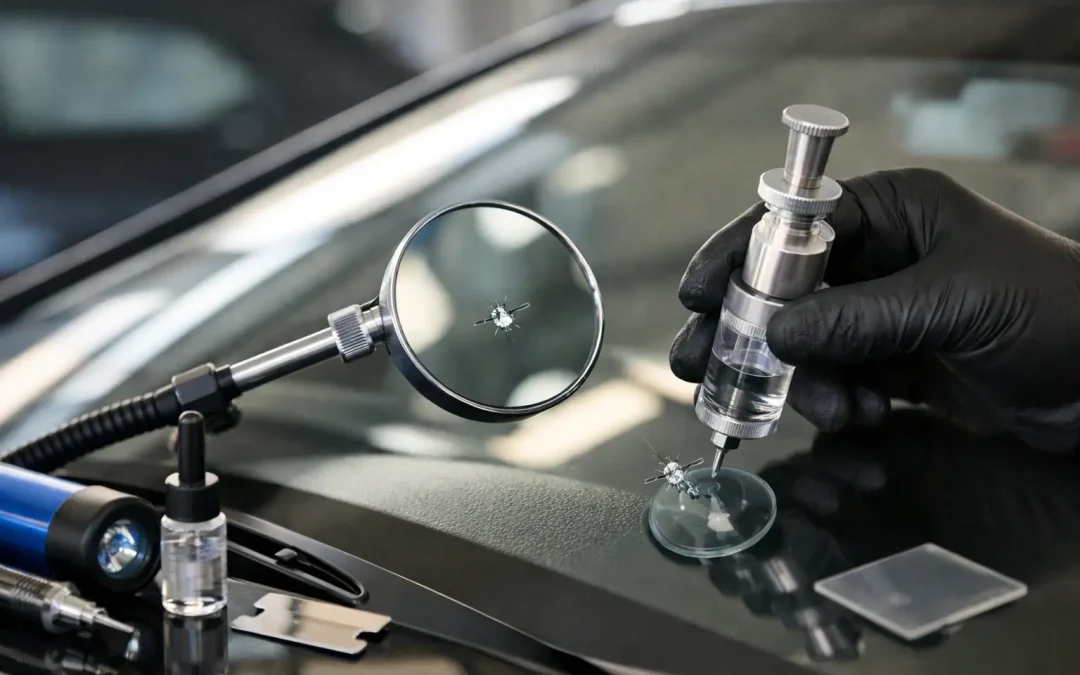
A rock chip can look minor when it first appears, especially on a busy commute through Humble or Harris County. But the best windshield chip repair methods work best before Texas heat, road vibration, rain, and temperature changes turn that small impact mark into a spreading crack. Acting quickly can often preserve the original windshield, protect your visibility, and cost far less than replacement.
The right solution depends on the chip’s size, location, depth, and damage pattern. A quality repair is not simply filling a hole with clear material. It is a precision process that stabilizes damaged glass, restores much of its strength, and reduces the visual distraction caused by the impact.
What Makes a Windshield Chip Repairable?
Most small chips can be repaired when the damage is limited to the outer layer of the laminated windshield. As a general rule, repair is more likely when the chip is smaller than a quarter, the crack legs are short, and the impact has not reached the windshield’s inner glass layer.
Location matters just as much as size. Damage near the edge of the windshield is more likely to spread because that area carries added structural stress. Chips directly in the driver’s primary viewing area also require careful judgment. Even when resin can fill the damage, a faint mark may remain. If it could interfere with clear sightlines, replacement may be the safer choice.
A technician will also look for contamination. Dirt, moisture, glass fragments, and old DIY resin can make a clean repair more difficult. This is why covering a fresh chip with clear tape and scheduling an inspection promptly is often a smart first move. Do not press tape hard into the damage, and avoid washing the vehicle with high-pressure water until it has been assessed.
Best Windshield Chip Repair Methods for Lasting Results
Professional resin injection
Professional resin injection is the preferred method for most repairable chips. A technician begins by inspecting the impact point and surrounding glass, then removes loose fragments and prepares the damaged area. A repair bridge and injector are secured over the chip to deliver a specialized clear resin into the breaks within the glass.
The key is controlled pressure and vacuum. These cycles help pull trapped air from the chip and move resin into the small fractures that cannot always be seen from the surface. Once the damage is fully filled, ultraviolet light cures the resin. The technician finishes by smoothing and polishing the surface.
This method is effective for common damage types, including bull’s-eye chips, star breaks, combination breaks, and small surface pits. The goal is not always to make the chip disappear completely. A properly repaired spot may still leave a small visual blemish, but it should be smoother, more stable, and much less likely to spread.
Advanced crack-stop repair for short crack legs
Many chips have short cracks extending from the center impact point. If those legs are still short and the damage has not reached a critical location, a technician may be able to repair them as part of the resin injection process. The resin is worked carefully through the crack paths before curing.
This requires experience. A crack that appears small can extend farther inside the glass than it does on the surface. Repairing it early gives the technician the best chance of stopping its movement. Waiting through another hot afternoon, a cold rainstorm, or several days of highway driving can change a repairable chip into a replacement situation.
DIY repair kits for limited temporary situations
DIY windshield repair kits are available and can help in a narrow set of circumstances. They are most useful for a fresh, small chip away from the edge and outside the driver’s direct line of sight. If used correctly, they may reduce the chance of immediate spreading until a professional can inspect the vehicle.
The trade-off is control. Consumer kits do not typically provide the same vacuum, pressure consistency, resin selection, cleaning process, or inspection as professional equipment. Applying resin over moisture or debris can seal contamination into the chip. Overfilling, underfilling, or using the wrong amount of pressure can also leave the repair weaker or more noticeable.
If clear tape is protecting the chip and a professional appointment is available soon, waiting is often the better choice. A failed DIY repair can limit the options for a cleaner professional result.
Windshield replacement when repair cannot protect safety
Replacement is not a chip repair method, but it is the correct answer when the windshield cannot be safely restored. Deep damage, cracks reaching the edge, multiple impacts, damage in a critical viewing zone, and chips that have spread substantially may call for a new windshield.
Modern windshields are part of the vehicle’s safety system. They help support the roof in a rollover and provide a surface that helps the passenger-side airbag deploy correctly. Installing a replacement windshield with the right materials and procedures is just as important as choosing the glass itself.
For vehicles with forward-facing cameras or other advanced driver-assistance systems, replacement may also require windshield calibration. Features such as lane-keeping assistance, automatic emergency braking, adaptive cruise control, and traffic sign recognition rely on accurate camera positioning. If the windshield is replaced, calibration helps confirm that these systems can interpret the road correctly.
Why Fast Repair Matters in Texas
The Houston-area climate is hard on damaged auto glass. A windshield can heat up quickly while parked in the sun, then cool rapidly when the air conditioning is turned on. Glass expands and contracts with these temperature changes. A chip that stayed stable in the morning can develop a crack by the end of the day.
Road conditions add another source of stress. Potholes, uneven pavement, gravel, and normal body flex all transfer movement through the windshield. The longer a chip remains open, the more likely dust and moisture are to enter it. Once contamination reaches the damaged area, a repair may still be possible, but the cosmetic result can be less predictable.
Avoid sudden temperature shocks while waiting for service. Do not pour hot water on a cold windshield, blast a hot windshield with maximum cold air, or park where direct sun will hit the damaged area for hours if you have another option. These steps cannot fix the chip, but they can help prevent it from becoming worse.
How a Technician Decides Between Repair and Replacement
A trustworthy recommendation starts with the condition of the glass, not a one-size-fits-all answer. The technician should inspect the type of break, its depth, its distance from the edge, and whether it obstructs the driver’s vision. They should also check whether the impact affected more than the outer glass layer.
Repair is usually the practical choice when it can safely stabilize the windshield. It saves time, keeps the factory-installed glass in place, and is generally more affordable than replacement. Replacement becomes the better value when a repair would leave the vehicle with compromised visibility or a high risk of continued cracking.
At NXT Auto Glass, that decision is approached with safety and workmanship first. Drivers deserve a clear explanation of what can be repaired, what should be replaced, and whether calibration is needed afterward. No one should be pushed toward a larger service when a precise repair will do the job, and no one should be told a repair is enough when the glass needs replacement.
What to Do After a Chip Is Repaired
After a professional repair, the windshield is normally ready for regular use right away. The cured resin is designed to stabilize the damage, but the repaired area is still not the same as untouched glass. A faint outline, small pit, or slight optical mark can remain depending on the original damage.
Keep an eye on the repaired spot over the next few weeks. If a new crack begins to extend from it, arrange an inspection promptly. This is uncommon with a properly selected and completed repair, but rapid follow-up is the best way to protect the windshield if the damage changes.
A windshield chip does not always require a new windshield, but it always deserves timely attention. Cover it, avoid extreme temperature changes, and have a qualified local auto glass specialist inspect it before a small repair turns into a larger safety issue.