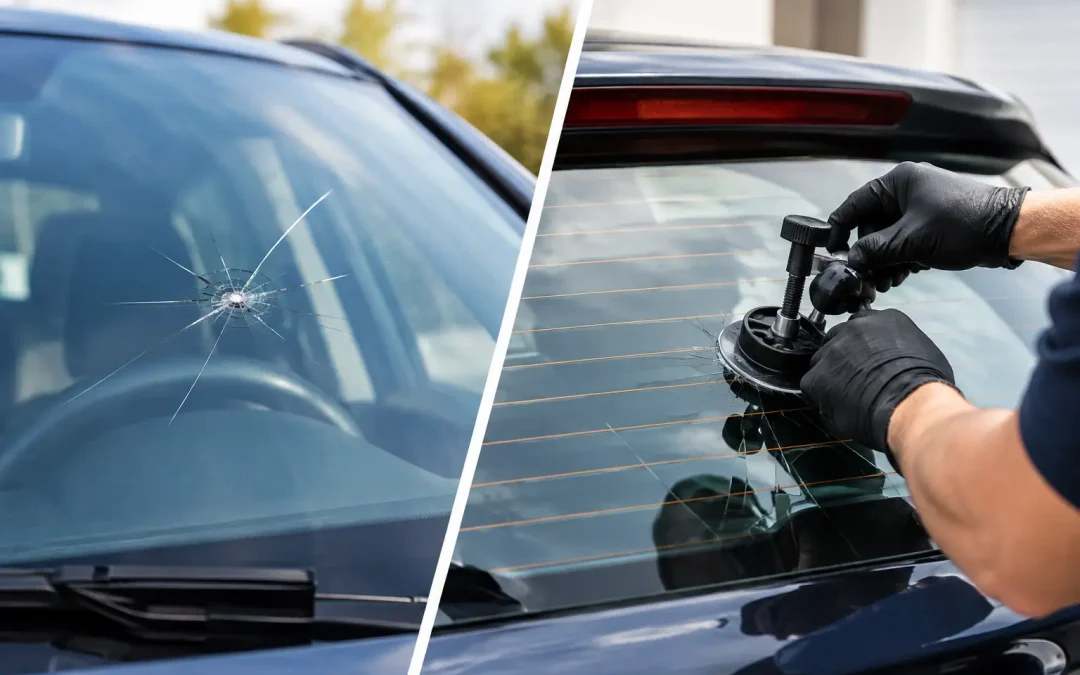
A cracked windshield and a shattered back window can both stop your day, but front versus rear glass damage is not handled the same way. The glass is built differently, protects your vehicle in different ways, and may involve different safety systems. Knowing the difference helps you make a safer decision when damage happens.
Why Front and Rear Auto Glass Are Different
Your front windshield is usually made from laminated safety glass. It has two layers of glass bonded around a clear plastic layer. When it is struck by a rock or develops a crack, the plastic interlayer helps hold the broken pieces together. That is why a windshield can often remain in place after damage instead of breaking into the cabin.
Rear glass, also called back glass or a rear windshield, is generally tempered glass. It is heat-treated to be strong during normal use, then designed to break into many small, rounded pieces if it fails. This reduces the risk of sharp shards, but it also means rear glass damage often becomes a full replacement job right away.
That difference affects what you see after an impact. A windshield may have a small chip, a star break, or a crack that slowly spreads. Rear glass can look fine after a light hit, then suddenly shatter because of a weak point, temperature change, or pressure on the damaged area.
Front Versus Rear Glass: Repair Options
A windshield chip can sometimes be repaired when it is small, recent, and outside the driver’s direct line of sight. During windshield repair, a technician cleans the break, injects a specialized resin, and cures it to stabilize the glass. The goal is to restore strength, reduce the visible mark, and prevent the damage from spreading.
Repair is not always the right choice. A long crack, damage near the windshield edge, multiple impact points, or a chip that reaches the inner layer may require replacement. Waiting can turn a repairable chip into a larger and more expensive problem, especially during Texas heat, cold fronts, or daily highway driving.
Rear glass generally cannot be repaired once it cracks or breaks. Tempered glass does not respond to resin repair the way laminated windshield glass does. If the rear window has shattered, has missing pieces, or has a crack that compromises the panel, replacement is the safe solution.
A professional replacement includes more than fitting a new pane. Loose glass must be removed from the cabin, trunk area, weather seals, and liftgate or rear deck. The replacement glass must be properly installed and sealed to protect against water leaks, wind noise, and future movement.
Safety Systems Behind the Glass
The windshield does more than block wind and rain. On many vehicles, it supports the roof structure and helps the passenger-side airbag deploy as designed. During a collision, the windshield can help keep occupants inside the vehicle. Those are serious reasons to avoid low-quality glass work or improper adhesive installation.
Modern windshields may also support advanced driver-assistance systems, often called ADAS. A forward-facing camera may sit near the rearview mirror and power features such as lane departure warnings, lane-keeping assistance, forward collision alerts, and automatic emergency braking.
When an ADAS-equipped windshield is replaced, the camera may need calibration. Calibration verifies that the system recognizes the road and vehicle position accurately after the new glass is installed. Skipping this step can leave a dashboard warning light on or, more concerning, allow a safety feature to respond at the wrong time.
Rear glass can carry its own important components. Many back windows include defroster lines that clear fog and frost, along with antennas, connectors, cameras, or sensors. Some vehicles have glass mounted in a liftgate with wiring that flexes every time the hatch opens. Correct replacement protects these features and confirms they work before the vehicle is returned to you.
Visibility Risks Are Not the Same
Windshield damage is especially urgent when it blocks your view of traffic, pedestrians, or road hazards. Even a small chip can create glare at sunrise, after dark, or during rain. Cracks also tend to travel across the glass with vibration and temperature changes.
Rear glass damage affects your ability to check mirrors, see vehicles behind you, and safely back out of driveways or parking spaces. If the rear window is shattered, the open area also allows rain, dust, and loose debris into the vehicle. A broken rear window should be covered temporarily and replaced promptly, not treated as a cosmetic issue.
What To Do After Windshield or Back Glass Damage
First, take a close look without touching loose or sharp glass. If your windshield has a small chip, place clear tape over the outside of the damage if conditions are dry. This can help keep out dirt and moisture until it can be inspected. Do not use household glue, nail polish, or a do-it-yourself kit on major damage. These attempts can make a professional repair harder.
If rear glass has broken, keep passengers away from the affected area and avoid slamming doors. Changes in air pressure can dislodge more fragments. Remove only large, clearly accessible pieces if you can do so safely, but leave detailed cleanup to an auto glass professional. Small fragments often hide in carpet, seat tracks, trim panels, and cargo areas.
You should also avoid directing a high-pressure car wash at damaged glass or exposed seals. Water can enter the cabin and reach electronics, upholstery, or the headliner. If rain is expected, temporary protection can limit further damage, but it is not a replacement for proper installation and sealing.
Choosing the Right Replacement Service
For either front or rear glass, fit and workmanship matter. The correct replacement glass should match the vehicle’s specifications for shape, tint, sensor locations, heating elements, and other factory features. An incorrect part may fit poorly, interfere with a camera bracket, or leave functions such as defrost unavailable.
Ask whether the installation includes cleanup, replacement-quality adhesives and materials, leak checks, and calibration when your vehicle requires it. A clear answer is a good sign. You should also receive practical instructions about safe drive-away time after a windshield replacement, since adhesive needs adequate time to cure.
Mobile service can be a convenient option when the vehicle is parked safely at home or work. However, weather, workspace conditions, and the type of replacement can affect whether mobile installation is appropriate. A reputable technician will explain what is safest for your vehicle instead of forcing every job into the same approach.
For drivers in Humble and nearby Harris County communities, NXT Auto Glass can inspect the damage, explain whether repair or replacement makes sense, and handle windshield calibration when needed. The objective is not to sell more work than necessary. It is to restore your vehicle’s visibility, protection, and everyday function correctly.
When You Should Not Keep Driving
Do not continue driving if the windshield crack significantly obstructs your view, the glass is loose, or damage is spreading rapidly. You should also stop driving if rear glass has shattered into the cabin, if weather is entering the vehicle, or if a camera or defroster issue affects safe operation.
For less severe windshield chips, prompt attention still matters. The sooner the glass is inspected, the better the chance of avoiding a complete replacement. A small chip is rarely convenient, but addressing it early is usually easier than dealing with a crack across the entire windshield.
Your front and rear glass may look like simple panels, but each has a distinct job in keeping you protected and aware of the road. When damage occurs, choose the repair path that matches the glass, the vehicle’s safety equipment, and the way you drive every day.