A new windshield can make your view of the road crystal clear, but it may also affect the camera behind it. That is why drivers often ask, when is ADAS recalibration needed? The short answer is: whenever a repair, replacement, impact, or vehicle change could cause an Advanced Driver Assistance System sensor or camera to lose its precise reference point.
ADAS features are designed to help your vehicle recognize lane markings, other vehicles, pedestrians, and road conditions. They can provide lane departure alerts, automatic emergency braking, adaptive cruise control, forward collision warnings, parking assistance, and more. Those systems only work properly when their cameras and sensors are aimed and programmed correctly.
For drivers in Humble and across Harris County, calibration is not an optional add-on after qualifying work. It is a safety step that helps restore the vehicle’s driver-assistance features to the manufacturer’s specifications.
What ADAS recalibration actually does
Most modern vehicles use a forward-facing camera mounted near the rearview mirror, often behind the windshield. Some systems also use radar sensors in the grille or bumper, cameras in the mirrors, or sensors around the vehicle.
Recalibration tells the vehicle where those components are positioned in relation to the road. Even a very small change in camera angle can affect what the system sees. A camera that is slightly off-center may misread lane lines, calculate following distance incorrectly, or fail to recognize an object as expected.
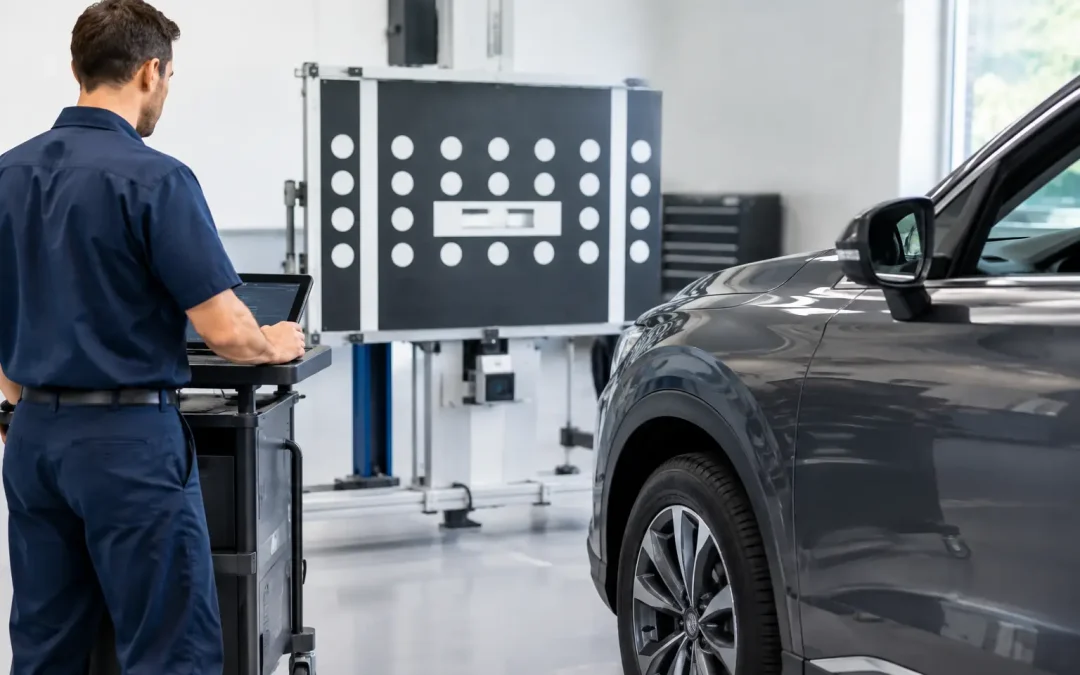
Calibration is performed with professional diagnostic equipment and manufacturer-specific procedures. Depending on the vehicle, the process may be static, dynamic, or both. Static calibration is performed in a controlled setting with precisely placed targets. Dynamic calibration requires a technician to drive the vehicle under specific road and traffic conditions while the system completes its learning process.
The right method depends on the vehicle make, model, year, and installed safety features. A proper shop verifies the required procedure rather than assuming every vehicle can be handled the same way.
When is ADAS recalibration needed after windshield work?
Windshield replacement is the most common reason for ADAS recalibration. If your vehicle’s front camera is mounted to, views through, or is positioned near the windshield, removing and installing that glass can change the camera’s reference point. The new windshield may look identical, but tiny differences in glass position, camera bracket placement, or mounting angle can matter to the system.
In most cases, a vehicle that requires calibration after windshield replacement should be calibrated before it is returned to regular service. This is particularly true for vehicles with lane-keeping assistance, lane departure warning, forward collision warning, traffic sign recognition, or automatic emergency braking.
Windshield repair is different. A small chip repair does not automatically mean recalibration is needed. However, it may be necessary if the damage or repair is directly in the camera’s viewing area, if the camera assembly was removed or disturbed, or if the vehicle displays an ADAS warning afterward. The vehicle manufacturer’s procedures should always guide that decision.
Replacing a windshield with the correct glass also matters. Many ADAS-equipped vehicles require glass designed for cameras, heads-up displays, rain sensors, acoustic insulation, or specialized tint bands. The lowest-priced glass option is not always the correct safety choice if it does not meet the vehicle’s required specifications.
Other repairs that can require calibration
A windshield is not the only part that can affect ADAS performance. Any work that changes a sensor’s position, the vehicle’s ride height, or its direction of travel may create a calibration need.
Common situations include:
- Collision damage or repairs involving the front end, bumper, grille, mirrors, or suspension
- Wheel alignments, especially when the alignment was significantly out of specification
- Replacement or repair of a radar sensor, camera, sensor bracket, mirror, bumper, or grille
- Suspension repairs, changes in ride height, or replacement of steering and suspension components
- Installation of different-sized tires or wheels when they alter the vehicle’s height or handling geometry
- A hard pothole strike, curb impact, or other event that may have shifted components
Not every alignment or minor repair automatically requires ADAS calibration. Some vehicle manufacturers call for it, while others do not under certain conditions. The key is not guessing. A professional inspection and scan can identify warning codes, confirm installed ADAS features, and determine whether the manufacturer requires calibration.
Warning signs your system may need attention
Your vehicle may warn you directly. Messages such as “front camera unavailable,” “ADAS system malfunction,” “pre-collision system unavailable,” or “lane assist unavailable” should not be ignored. A dashboard light is a clear reason to have the system inspected.
Still, no warning light does not guarantee the system is operating perfectly. A camera can be slightly misaligned without immediately triggering a fault code. That is why calibration is routinely recommended after qualifying windshield replacement and collision-related work.
You may also notice that lane assistance reacts inconsistently, adaptive cruise control behaves unexpectedly, or forward collision alerts appear too late or too often. These symptoms can have several causes, including a dirty windshield, poor weather, blocked sensors, electrical issues, or an out-of-calibration component. A qualified technician can separate a simple visibility issue from a calibration concern.
Before scheduling service, check for dirt, ice, decals, dash-mounted accessories, or windshield damage in front of the camera. Clean the outside and inside glass near the camera area carefully. If the warning remains, have the vehicle evaluated rather than relying on the safety feature until it clears.
Why precision matters more than a dashboard reset
ADAS calibration is not the same as clearing a warning light with a scan tool. The vehicle must be set up correctly, the required targets or driving conditions must be met, and the results must be verified. Skipping those steps can leave a vehicle with driver-assistance features that are present but not dependable.
These systems are designed to assist the driver, not replace attentive driving. Even when calibration is complete, you should keep your hands on the wheel, watch the road, and follow normal safe-driving practices. But when the system does need to intervene or alert you, accurate calibration gives it the best opportunity to work as designed.
There can be practical trade-offs. Static calibration may require controlled shop space, while dynamic calibration requires suitable road conditions and additional driving time. Some vehicles need both. The extra time is worthwhile because the goal is not simply to finish the glass job quickly – it is to return the vehicle with its visibility and safety technology properly addressed.
What to expect during a calibration appointment
A professional calibration visit typically begins with confirming the vehicle identification number, installed ADAS options, and any warning messages. The technician inspects the windshield, camera area, sensor mounts, and related components. They then follow the appropriate manufacturer procedure using compatible calibration equipment.
Afterward, the vehicle is scanned to confirm the calibration completed successfully and to identify any remaining diagnostic trouble codes. If calibration will not complete, that can point to a damaged camera, incorrect windshield, bent bracket, wiring problem, alignment issue, or another repair that must be addressed first.
At NXT Auto Glass, the focus is on explaining what your vehicle needs in plain language, not adding unnecessary work. If a windshield replacement requires ADAS recalibration, the goal is to make sure the job accounts for the technology that helps protect you and your passengers.
If you have had a windshield replaced, experienced a collision, completed suspension or alignment work, or see an ADAS warning on the dash, ask whether calibration is required for your specific vehicle. A clear answer before you get back on the road can provide the peace of mind that your safety systems have been checked with the same care as the glass in front of you.