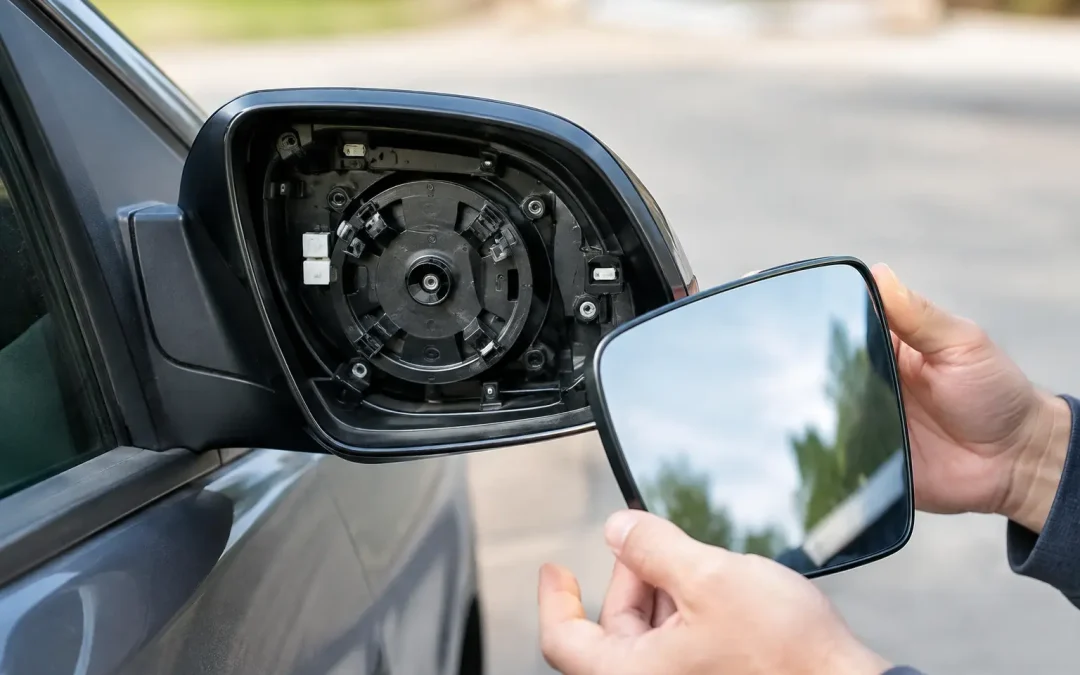
A damaged side mirror can turn a routine drive through Humble or Harris County into a safety problem fast. Reduced visibility, a loose housing, exposed wiring, or a mirror that will not adjust properly makes lane changes and parking more difficult. The best automotive mirror repair options depend on what actually failed: the glass, the housing, the adjustment motor, the wiring, or the safety technology built into the mirror.
Replacing an entire mirror assembly is sometimes the right move, but it is not automatically the most cost-effective one. A careful inspection helps identify the repair that restores clear visibility, proper operation, and a secure fit without paying for parts you do not need.
Best Automotive Mirror Repair Options by Damage Type
Replace cracked or missing mirror glass
If the mirror glass is cracked, chipped, cloudy, or missing while the outer housing and power functions still work, glass-only replacement is often the practical choice. This repair restores the reflective surface without replacing the motor, painted cover, or mounting base.
Glass replacement is especially sensible after a minor parking-lot impact or when a small object strikes the mirror face. A technician removes remaining broken pieces, checks the backing plate and retaining clips, and installs glass designed to fit the vehicle correctly. On heated mirrors, the electrical terminals must be transferred and tested so the defrost feature continues to work.
This option has limits. Convex glass, auto-dimming glass, and mirrors with blind-spot warning indicators may require a vehicle-specific part. A universal stick-on mirror can be a temporary measure, but it may distort the field of view, cover a warning icon, or come loose in Texas heat. It should not be treated as a long-term safety repair.
Repair or replace a damaged mirror housing
The housing is the outer shell that protects the mirror glass, motor, wiring, and turn-signal components. A housing may be scuffed, cracked, loose, or partially detached after contact with a garage door, another vehicle, or roadside debris.
When the mounting points are intact and the damage is limited to a removable cap or trim piece, replacing that exterior component can improve appearance and protect the mirror from moisture. If the housing itself is split, the pivot is loose, or the assembly will not stay firmly positioned, a complete housing or assembly replacement is usually safer.
Do not ignore a mirror that shakes at highway speed. Even if the glass is not broken, vibration can make it hard to judge traffic and may signal damaged mounting hardware. A secure mirror should stay in position through normal driving, car washes, and routine door closing.
Fix power adjustment problems
A power mirror that will not move in one or more directions may have a failed adjustment motor, damaged wiring, a faulty switch, or corrosion in an electrical connector. The right repair begins with diagnosing the source instead of assuming the entire mirror needs replacement.
Sometimes the issue is isolated to the switch or a loose connector. In other cases, the internal actuator has failed and replacing the assembly is the more reliable repair. On many late-model vehicles, the motor and internal components are not designed to be serviced separately, making a complete assembly the better fit for long-term function.
If both mirrors stop adjusting at the same time, the cause may be a fuse, switch, or vehicle electrical issue rather than two failed motors. This is why a hands-on inspection matters. Replacing a good mirror will not solve an upstream electrical fault.
Address broken folding mirror mechanisms
Power-folding mirrors are convenient in tight garages and busy parking areas, but their folding motors and gears can wear out or break after an impact. A mirror that clicks, sticks, folds only partway, or will not return to the driving position needs attention before it becomes fully jammed.
In some vehicles, a folding mechanism can be repaired with the correct internal part. More commonly, especially when the mirror has impact damage or water intrusion, replacement of the complete assembly provides a more dependable result. The replacement must be matched to the vehicle’s features, including power fold, heat, turn signals, memory settings, and blind-spot monitoring where equipped.
Replace a mirror with failed integrated features
Modern side mirrors may include heating elements, turn-signal repeaters, puddle lights, cameras, blind-spot alerts, memory positioning, and auto-dimming technology. These features are useful, but they add complexity when a mirror is damaged.
For example, a mirror can look fine from the outside while its blind-spot warning light no longer illuminates or its turn signal lens fills with moisture. A replacement part that lacks the original feature set may fit physically but leave the vehicle with warning lights, inoperative functions, or reduced safety capability.
The best repair is one that matches your vehicle’s equipment level and confirms that every function works afterward. Depending on the make and model, certain camera or driver-assistance features may also require system checks or calibration procedures after replacement.
When Full Mirror Assembly Replacement Makes Sense
Full assembly replacement is often the clearest choice when several components are damaged at once. If the glass is broken, the housing is cracked, the motor does not work, and wiring is exposed, repairing each piece separately can cost more in labor and still leave an unreliable result.
Replacement is also the better path when the mirror has been struck hard enough to bend the mounting base or damage the door-side attachment points. A mirror that cannot be secured correctly can create wind noise, allow water into electrical connectors, and obstruct the driver’s view.
A quality replacement should match the vehicle’s side, mounting configuration, connector style, and factory features. Driver-side and passenger-side mirrors are not interchangeable, and even two mirrors from the same model year can differ based on trim package. Color-matched caps may be available for some vehicles, but a specialist should first focus on fit, function, and safety.
Do Not Overlook the Interior Rearview Mirror
The interior rearview mirror is different from an exterior side mirror. A loose or damaged inside mirror may involve a detached windshield button, a broken mirror stem, failed auto-dimming electronics, or integrated equipment such as a compass, camera, HomeLink controls, or rain sensor components.
Avoid using household adhesives to reattach a rearview mirror to the windshield. Incorrect adhesive can fail in heat, damage the glass, or interfere with the mounting area. If the mirror is attached near sensors or a forward-facing camera, the repair should be handled carefully to avoid affecting nearby safety systems.
Choosing Repair, Replacement, or a Temporary Fix
A temporary fix may seem attractive when the mirror is only slightly damaged, but visibility equipment deserves a higher standard. Tape may hold a loose cover briefly, yet it cannot restore proper adjustment, weather sealing, or crash-resistant mounting. It can also leave sharp edges or block the mirror’s viewing area.
Repair is generally the best value when the damage is limited to glass, a cap, a connector, or a clearly identified serviceable component. Replacement is usually the wiser investment when structural parts, motors, folding mechanisms, multiple features, or wiring have failed. The condition of the vehicle, the availability of correct parts, and the presence of advanced features all affect the final recommendation.
For drivers with comprehensive coverage, mirror damage may qualify for an insurance claim depending on the cause and deductible. Before filing, compare the deductible with the expected repair cost. A direct estimate can make that decision much easier.
What a Proper Mirror Repair Visit Should Include
A dependable repair is more than snapping in a new piece of glass. The technician should inspect the mounting area, verify the correct part and features, secure the mirror properly, and test every applicable function. That includes power adjustment, heating, folding, turn signals, cameras, warning indicators, and memory settings when equipped.
At NXT Auto Glass, the goal is to give local drivers a clear recommendation based on the damage, not push a replacement when a focused repair will do. Mobile service may be a convenient option for many mirror repairs, while more involved electrical or calibration-related work may be better handled with the vehicle positioned for complete testing.
If your mirror is loose, cracked, missing, or not responding to its controls, get it checked before your next long drive. A clear, stable mirror is one of the simplest ways to protect your visibility and make every lane change with more confidence.