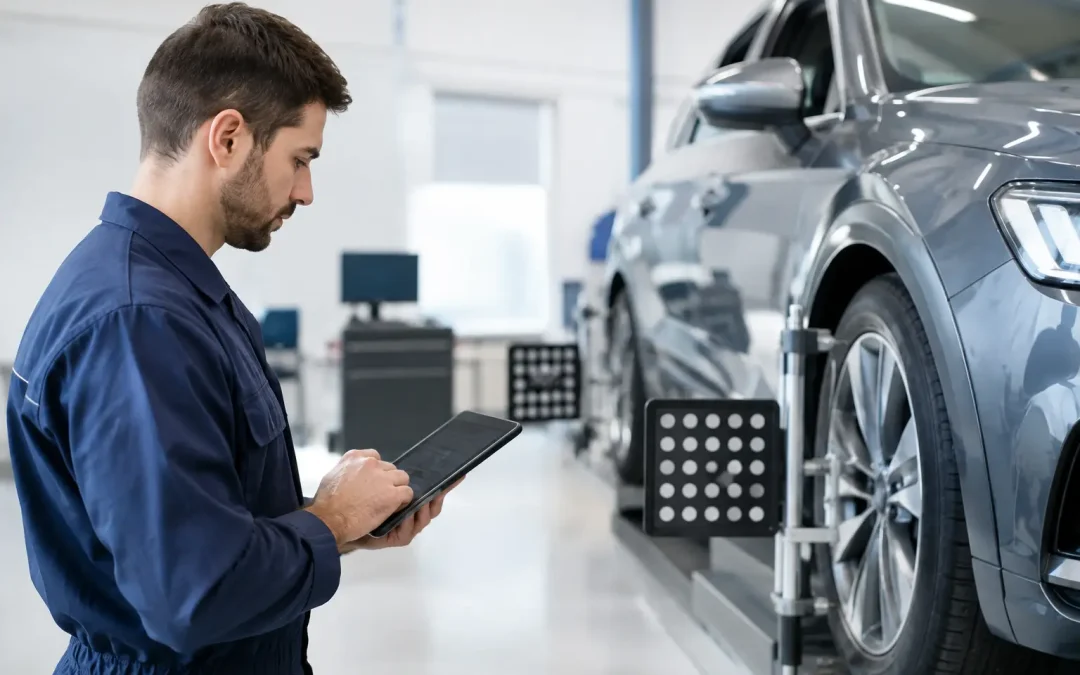
A windshield replacement can involve more than fitting new glass and sealing it properly. If your vehicle has a forward-facing camera or driver-assistance features, dealer calibration options may come up before the job is complete. The right choice depends on your vehicle, its safety systems, the type of calibration required, and whether a qualified local auto glass specialist has the equipment and information to perform the work correctly.
For drivers in Humble and across Harris County, the priority should be simple: restore the windshield, camera position, and safety features to the condition your vehicle needs for safe driving. A dealership can be one path to that result, but it is not automatically the only path.
Why Windshield Calibration Matters
Many newer vehicles use advanced driver-assistance systems, commonly called ADAS. Features such as forward collision warning, automatic emergency braking, lane departure warning, lane-keeping assistance, adaptive cruise control, and traffic-sign recognition may rely on a camera mounted near the rearview mirror.
That camera looks through the windshield. When the windshield is replaced, even a carefully installed new piece of glass can change the camera’s reference point. Calibration tells the vehicle where the camera is positioned and verifies that it is reading the road as intended.
Without proper calibration, a vehicle may display warning lights, disable certain features, or react at the wrong time. Lane-assist alerts could be delayed or overly sensitive. Automatic braking and collision warning systems may not interpret distance correctly. These systems are designed to assist the driver, not replace attentive driving, but they still need accurate inputs to work as designed.
Calibration is a safety step, not an optional add-on to a windshield replacement.
Dealer Calibration Options Compared With Local Service
Dealership service departments often have factory-level scan tools, manufacturer software access, and technicians trained on the brands they sell. For some vehicles and certain repairs, dealer involvement may be required or may be the most practical choice. This is especially true when a manufacturer restricts a procedure, requires a software update, identifies unrelated fault codes, or calls for programming beyond a standard camera calibration.
However, a qualified auto glass calibration provider can often complete windshield-related ADAS calibration without sending the vehicle to a dealership. Professional calibration equipment is designed to follow manufacturer procedures for many makes and models. When the correct process, targets, diagnostic scan, and verification steps are used, local calibration can provide a convenient alternative to coordinating a separate dealer appointment.
The best decision is not about choosing a dealer simply because it is a dealer, or choosing mobile service simply because it is easier. It is about confirming who can perform the exact required procedure for your specific vehicle and document the completed work.
When Dealer Service May Be Necessary
A dealership may be the right next step when the vehicle needs manufacturer-only programming, a module update, security access, or diagnosis that goes beyond windshield replacement. Some vehicles also have model-specific requirements that limit where certain calibrations can be completed.
Dealer service can also make sense if the vehicle already has dashboard warnings, collision damage, suspension changes, alignment issues, or other electrical problems. Calibration equipment cannot correct a damaged camera, bent mounting bracket, failing sensor, or underlying fault in the vehicle’s system. Those concerns should be diagnosed before calibration is treated as the final fix.
If warranty coverage is involved, ask whether the manufacturer requires dealership documentation or whether work performed by a qualified independent provider is acceptable. It is better to clarify that before authorizing service than to make assumptions afterward.
When a Local Calibration Specialist Is a Strong Choice
A local auto glass specialist is often the practical choice when the repair involves a windshield replacement and the vehicle’s required calibration can be completed using approved procedures and professional equipment. Keeping glass replacement and calibration coordinated through one provider can reduce delays, avoid moving the vehicle between shops, and give you one clear point of contact.
This approach is particularly helpful when your windshield damage makes driving unsafe or inconvenient. A qualified mobile team may be able to replace the glass at your home or workplace, then complete calibration where conditions allow. Some calibration procedures require a controlled indoor environment, level surface, proper lighting, sufficient space, or a road test. In those cases, shop-based service may be safer and more accurate than attempting to force a mobile solution.
At NXT Auto Glass, the goal is to explain what your vehicle needs before the work begins, not after. If dealer service is genuinely required, a reputable provider should tell you directly.
Static, Dynamic, and Dual Calibration
The calibration method matters as much as the location. Manufacturers generally specify one of three approaches.
Static calibration is completed while the vehicle is stationary. The technician positions precise targets at measured distances and heights in front of the vehicle, then uses diagnostic equipment to guide the camera through its learning process. Small errors in floor level, target placement, tire pressure, ride height, or vehicle alignment can affect the result. This is why a clean, measured workspace and careful setup are essential.
Dynamic calibration is completed while driving under specified conditions. The vehicle may need to travel at certain speeds on clearly marked roads for a set period while the system recognizes lane lines, traffic, and road conditions. Weather, traffic, faded markings, and construction zones can make this process take longer or prevent completion that day.
Some vehicles require both static and dynamic calibration. Others require a scan tool procedure before or after calibration to check for trouble codes and confirm system status. The vehicle manufacturer determines the process, not the convenience of the shop or driver.
Questions to Ask About Calibration
Before authorizing a windshield replacement on an ADAS-equipped vehicle, ask a few direct questions. Clear answers can help you avoid surprises and confirm that safety is being handled correctly.
- Does my vehicle require calibration after this windshield replacement?
- Does it need static calibration, dynamic calibration, or both?
- Can you perform the required procedure for my year, make, and model?
- Will the service include a diagnostic scan and proof of successful calibration?
- Are there any conditions that could require a dealer visit, such as fault codes or programming needs?
You should also ask whether the quote includes calibration, moldings, clips, adhesives, glass type, and any applicable taxes or mobile-service charges. A low windshield replacement price can be misleading if the required safety work is left out of the estimate.
OEM Glass, Aftermarket Glass, and Calibration Results
Vehicle owners often ask whether they must choose original equipment manufacturer glass for calibration to work. The answer depends on the vehicle and the glass available. OEM glass is produced for the vehicle manufacturer or to its specifications. Quality aftermarket glass is produced by another manufacturer and may meet applicable safety standards, but fit, optical clarity, acoustic features, camera bracket design, and sensor-related details can vary by part.
For many vehicles, a properly specified aftermarket windshield can be installed and calibrated successfully. For others, especially vehicles with highly sensitive camera systems, heads-up displays, heating elements, specialty coatings, or complex sensors, OEM glass may be the better recommendation. The key is using glass that is correct for the vehicle’s exact options, not simply choosing based on the lowest price.
A professional installer should verify the vehicle identification information and equipment before ordering glass. Two vehicles from the same model year can look identical but require different windshields because of camera brackets, rain sensors, antennas, acoustic layers, or ADAS features.
Do Not Ignore Warning Lights After Replacement
A windshield replacement should not leave you wondering whether your safety features are working. If an ADAS warning light stays on, a dashboard message says a system is unavailable, or lane-assist and collision alerts behave differently after service, contact the provider promptly. Do not assume the warning will clear on its own.
The issue may be as straightforward as an incomplete calibration drive cycle. It could also point to a fault code, camera obstruction, incorrect glass configuration, or a pre-existing problem that needs further diagnosis. Prompt follow-up protects your safety and creates a clearer record for warranty or insurance purposes.
Choose the Option That Verifies the Work
The most useful question is not, “Do I have to go to the dealer?” It is, “Who can complete my vehicle’s required calibration correctly and verify the result?” A dealership may be necessary in some cases. In many others, an experienced auto glass calibration specialist can provide the same critical outcome with faster scheduling and more convenient service.
Before you drive away, make sure you understand what was performed, whether calibration passed, and what to do if an ADAS warning appears. That small conversation can give you far more confidence than choosing service based on location alone.