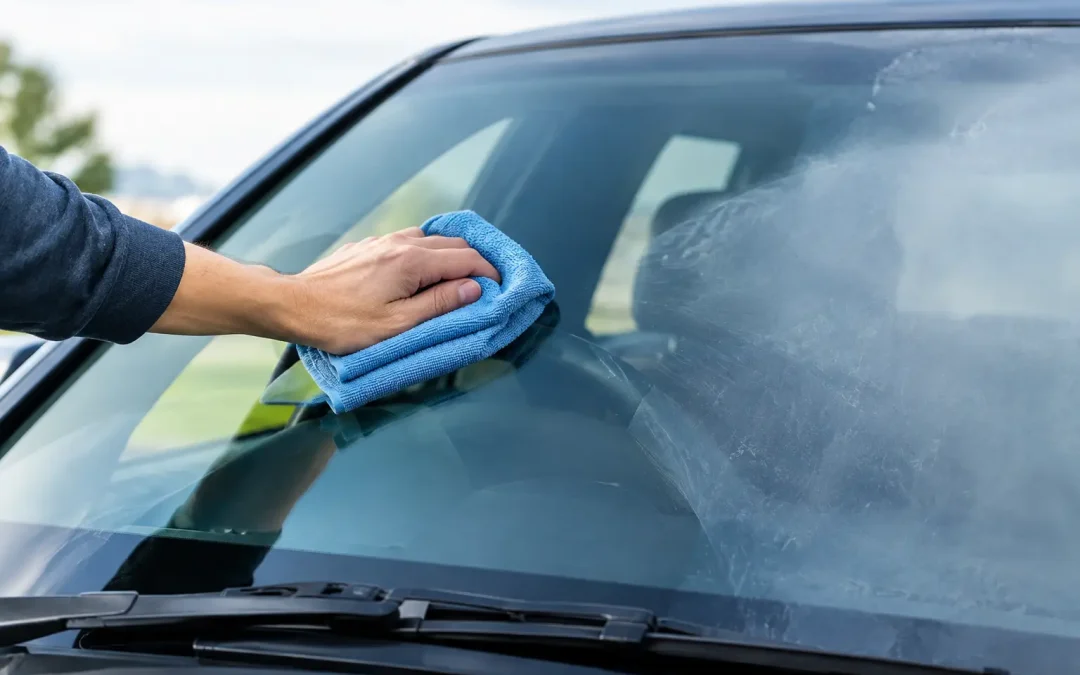
A windshield can look clean in the driveway and still turn milky the moment you drive toward the sun. That stubborn film scatters light, exaggerates glare from headlights, and makes a normal commute feel harder than it should. Knowing how to clean windshield haze properly means treating the source of the haze, not just wiping the glass until it looks better for an hour.
For drivers in Humble and across Harris County, heat, humidity, road grime, and long hours behind the wheel can all contribute to cloudy-looking glass. The good news is that most haze can be removed safely with the right process. The key is using clean materials, avoiding products that leave residue, and recognizing when the problem is actually damaged glass rather than dirt.
Start by Identifying Where the Haze Is
Before reaching for a cleaner, determine whether the haze is on the inside, outside, or between the layers of the windshield. Park in shade, then look through the glass from several angles. If the haze changes or disappears when you wipe the interior surface with a dry microfiber towel, the issue is likely inside the vehicle.
Interior haze is common because dashboards, trim panels, seat materials, and air fresheners release small amounts of vapor as they heat up. That vapor settles on the glass as an oily film. Smoke and vaping residue can create a heavier version of the same problem. Even a freshly detailed vehicle can develop interior haze again if the glass was cleaned with a product that leaves behind silicone or fragrance oils.
Exterior haze is often caused by road film, dried rainwater, hard-water minerals, tree sap, bug residue, or worn wipers dragging contamination across the glass. In Texas, mineral deposits from sprinkler water and summer heat can bake onto a windshield surprisingly fast.
If the cloudy appearance cannot be wiped away from either side, or if you see a whitish edge around the windshield, distortion in your line of sight, bubbling, or separation within the glass, do not keep scrubbing. Those signs can point to windshield delamination or other damage that requires professional inspection.
What You Need to Clean Windshield Haze
Use a dedicated automotive glass cleaner or a residue-free cleaner labeled safe for glass. You will also need several clean microfiber towels. Use one towel to apply the cleaner, another to remove it, and a third dry towel for a final buff. Reusing a towel that already has dashboard dressing, wax, or oil on it can put the haze right back on the glass.
For stubborn interior film, isopropyl alcohol diluted with clean water can help cut through oily residue. A common starting mix is equal parts 70% isopropyl alcohol and distilled water. Spray it lightly onto the towel rather than soaking the windshield or spraying heavily around the dash.
Avoid household cleaners containing ammonia if your windshield has aftermarket tint at the top strip or if you are cleaning nearby tinted side windows. Avoid paper towels as well. They can shed lint and may not lift oily residue as effectively as microfiber. Abrasive pads, razor blades, and harsh chemicals are also poor choices for routine cleaning because they can scratch glass, damage coatings, or harm surrounding trim.
How to Clean Windshield Haze on the Inside
Clean the interior glass when the windshield is cool and out of direct sunlight. Heat causes cleaner to evaporate quickly, which often leaves streaks before you can wipe them away.
First, wipe the glass with a dry microfiber towel to remove loose dust. This simple step matters because dust can smear into a muddy film when cleaner is added. Fold the towel into quarters so you always have a clean side available.
Next, apply a small amount of glass cleaner or your diluted alcohol solution to a fresh microfiber towel. Work in manageable sections, starting at one corner and using overlapping horizontal passes. Then use a second clean towel to wipe vertically. Changing direction helps reveal streaks you might otherwise miss.
Finish with a dry, clean microfiber towel and lightly buff the glass. Do not press hard. The goal is to remove the final trace of cleaner, not polish the windshield aggressively. At night, check the result under streetlights or with a flashlight held at an angle. This is the quickest way to spot missed film before it becomes a visibility problem on the road.
The lower corners and area behind the rearview mirror deserve extra attention. These spots are easy to skip, but haze there can be especially distracting during sunrise, sunset, or oncoming traffic.
If the Interior Film Keeps Coming Back
A recurring film does not always mean you are cleaning incorrectly. It may be coming from the vehicle’s interior materials, particularly after hot days. It can also come from smoking, vaping, or a cabin air filter that needs attention.
Clean the windshield thoroughly, then wipe the dashboard and defroster vents with a suitable interior cleaner to reduce dust and residue circulating through the cabin. Replacing a dirty cabin air filter may also help if airflow has become musty or dusty. Keep in mind that a small amount of interior film can return over time in almost any vehicle, so regular glass cleaning is normal maintenance.
Removing Haze From the Outside of the Windshield
Wash the outside of the windshield first. A glass cleaner is effective for light road film, but it is not a substitute for washing away grit, mud, and bug debris. Use automotive soap, plenty of water, and a clean wash mitt before moving on to detail cleaning.
After washing and drying the glass, use a residue-free glass cleaner with a microfiber towel. Wipe one section at a time, then buff dry with a separate towel. If your windshield still looks cloudy when wet or catches sunlight in patchy areas, you may be dealing with mineral deposits rather than ordinary dirt.
Hard-water spots usually need a product formulated specifically for automotive glass mineral removal. Follow the product directions carefully and test a small area first. The trade-off is simple: stronger cleaners can work faster, but they should be used carefully around paint, rubber moldings, and aftermarket coatings.
Do not assume every exterior haze issue is on the glass itself. Old wiper blades can leave rubber residue or smear grime across a clean windshield. Wipe the rubber edges with a damp cloth and inspect them for cracks, hardened spots, or uneven edges. If the blades chatter, streak, or leave a repeating pattern after cleaning, replacement is usually the better solution.
Prevent Haze From Affecting Your Visibility Again
The most effective prevention is consistent, simple care. Clean the inside of the windshield every few weeks, or more often if you smoke, vape, carry pets, or spend a lot of time in traffic. Wash the exterior glass whenever you wash the vehicle, and do not wait until glare is bad enough to affect your driving.
Use windshield washer fluid designed for automotive glass rather than plain water. Washer fluid helps lift road grime and is less likely to leave mineral spotting. Keep the washer reservoir filled, especially before long trips or during seasons when pollen and road spray build up quickly.
Be selective about interior detailing products. Shiny dashboard sprays can look good, but overspray and vapor residue may settle on the windshield. Apply interior products directly to a towel, not toward the glass, and allow surfaces to dry before driving.
If you have recently had a windshield replaced, make sure the glass is cleaned after installation and inspect it in daylight and at night. A new windshield should provide a clear, undistorted view. For vehicles with forward-facing cameras and driver-assistance features, correct windshield installation and calibration are also part of restoring safe visibility and vehicle function.
When Cleaning Is Not Enough
A windshield that remains foggy after thorough cleaning may have pitting, scratches, delamination, or damage to a glass coating. Fine pitting is common on vehicles that spend years on highways, where sand and debris gradually wear the surface. It may be nearly invisible in shade but create heavy glare in direct sunlight.
Cracks and chips can also distort your view, even when they are outside the main line of sight. Small chips are often easier and less expensive to repair before they spread. If the windshield needs replacement, modern vehicles may require ADAS calibration afterward so cameras and safety systems can operate as intended.
At NXT Auto Glass, we help local drivers determine whether a visibility issue is simple surface haze, repairable glass damage, or a windshield concern that needs replacement and calibration. Clear answers and careful workmanship matter because your windshield is not just a window – it is a safety component.
The next time sunlight turns your windshield into a blur, do not just turn up the defroster and hope for the best. A clean, clear windshield gives you more time to see road hazards, pedestrians, and changing traffic conditions exactly when it counts.