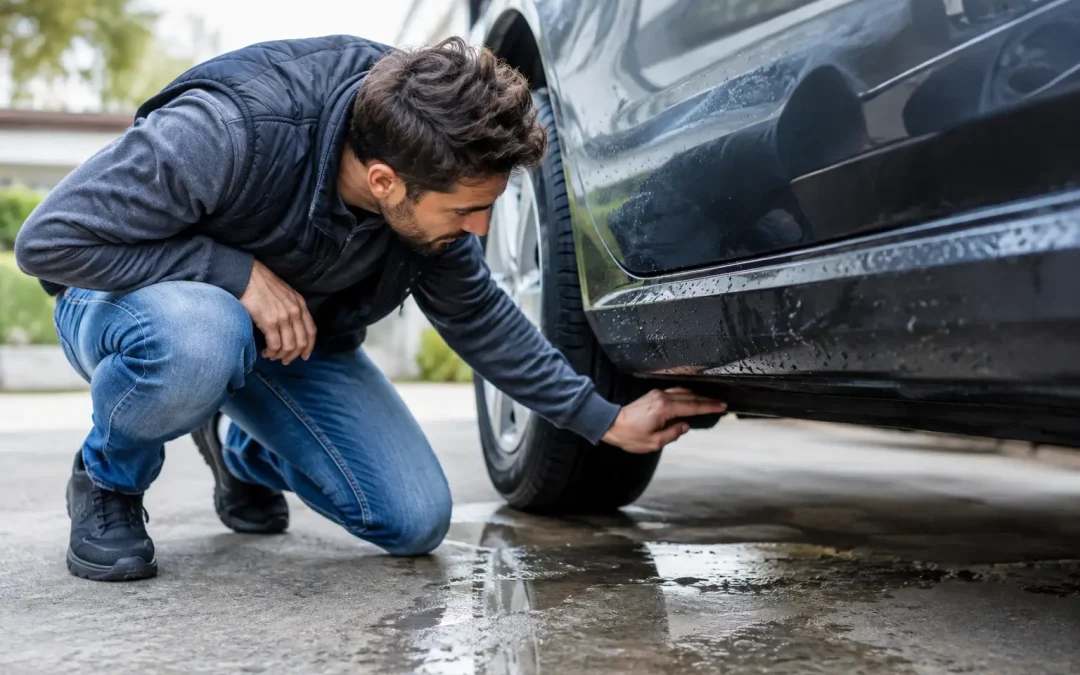
A damp floor mat after a Gulf Coast downpour is more than an inconvenience. Water can soak sound insulation, corrode wiring, create odors, and damage electronic modules hidden beneath the carpet. This vehicle water leak diagnosis guide helps you narrow down where water is entering, what you can safely check yourself, and when a professional repair is the smarter call.
The visible wet spot is not always directly below the leak. Water can travel along the roof frame, behind dashboard trim, through a pillar, or under carpet padding before it appears inside the cabin. That is why a careful inspection matters more than simply sealing the closest-looking gap.
Start by Confirming It Is Water
Before looking for an exterior leak, make sure the moisture is actually rainwater. A sweet smell, colored residue, fogging that appears with the heater on, or a dropping coolant level can point to a heater core issue. That requires mechanical diagnosis rather than glass or body sealing work.
Clear, odorless water after rain, a car wash, or a windshield rinse is usually an exterior water intrusion problem. Note where the carpet first feels wet: the front footwells, rear floor, headliner, cargo area, or around the spare tire well. Also pay attention to timing. A leak that happens only while driving in rain may come from the windshield, cowl area, or door seals, while one that appears after the vehicle sits outside may be entering from the roof, sunroof, or rear glass.
Do not ignore condensation from the air conditioning system, either. If the passenger-side front floor gets wet on hot days when the A/C is running, a blocked A/C evaporator drain may be the cause. That water typically appears even when it has not rained.
The Most Common Vehicle Water Leak Entry Points
Water leaks have several usual suspects, but the correct repair depends on the vehicle design and the exact path of the water.
Windshield and rear glass seals
A windshield is not held in place by a simple rubber gasket on most modern vehicles. It is bonded to the body with urethane adhesive, and that bond helps support the vehicle structure. If glass was installed incorrectly, the adhesive bond is incomplete, the glass is damaged near its edge, or corrosion has developed in the pinch weld, water can enter around the glass.
Clues include a damp headliner near the windshield, wet front pillars, moisture under the dash, or water near the rear package shelf after rain. Wind noise, visible gaps in exterior molding, or prior windshield replacement can also justify a closer inspection. The molding itself does not create the primary watertight seal, so adding caulk around trim rarely solves the real problem and can make proper repairs more difficult later.
Sunroof drains and sunroof seals
A sunroof frame is designed to manage some water. Drain channels collect it and route it through tubes that exit near the lower body of the vehicle. When those tubes clog, disconnect, crack, or drain too slowly, water can overflow into the headliner and pillars.
Signs often include wet headliner fabric, moisture at the front or rear footwells, water stains around the sunroof opening, or a sloshing sound after heavy rain. Leaves, pine needles, and debris are common causes of drain blockage. Cleaning accessible debris is reasonable, but forcing compressed air into a drain tube can disconnect it inside the body, creating a larger problem. If water is already reaching the cabin, professional testing is the safer route.
Door weatherstripping and vapor barriers
Water enters the inside of a vehicle door during normal rain. The door is designed to drain that water through small openings at the bottom. Problems begin when drain holes clog, weatherstripping is torn or flattened, or the moisture barrier behind the interior door panel comes loose.
A wet carpet beside one door, water dripping from a lower door panel, or a musty smell after rain can point here. Check the door drains for visible mud and debris, but avoid poking them aggressively with tools that can damage paint or seals. If the door panel must come off, the vapor barrier should be resealed correctly to prevent repeat leaks.
Cowl, firewall, and A/C drain areas
The cowl is the area below the windshield where the wipers sit. Leaves and debris can block its drains, allowing water to collect and find a path through the fresh-air intake or firewall openings. This can lead to wet front carpeting, especially after a heavy storm.
The A/C drain is another common source of passenger-side moisture. Unlike a windshield or sunroof leak, it can occur on dry days. A technician can verify the drain operation and rule out water intrusion from the cowl before recommending a repair.
Trunk, hatch, and rear-body seals
A wet trunk, cargo area, or spare tire compartment may come from a rear windshield, hatch seal, tail light gasket, trunk weatherstrip, or body seam. Water in the spare tire well should be addressed promptly because it can corrode wiring, jack equipment, and the metal floor beneath the carpet.
Rear leaks can be deceptive. Water may enter near a tail light and travel along a body seam before pooling in the lowest point of the trunk. Drying the area without finding the entry point only hides the evidence until the next rain.
A Practical Way to Trace the Leak
A controlled water test is more useful than waiting for the next storm. Begin with a dry vehicle, then remove loose floor mats and inspect the carpet, headliner, pillar trim, door sills, and trunk lining. Use clean paper towels to identify the first area that becomes damp.
Have one person sit inside with a flashlight while another applies a gentle, steady stream of water outside. Start low and work upward. For example, test a door and its lower glass area before moving to the mirror area, roofline, windshield corners, and sunroof. Do not use a high-pressure nozzle. Strong water pressure can force water past seals that would not leak in real driving conditions, giving you a misleading result.
Keep the test controlled. Spray one small section for several minutes, stop, and inspect before moving higher. If water appears inside, mark the area being tested and look for the first visible trail rather than assuming the puddle identifies the source.
When a DIY Check Is Enough and When It Is Not
Basic maintenance can prevent some leaks. Clearing loose leaves from the cowl, checking door drain openings, keeping sunroof tracks free of debris, and inspecting weatherstripping for obvious tears are sensible owner tasks. Avoid household silicone, expanding foam, tape, and random sealants. These materials often trap moisture, interfere with trim, and conceal the actual failure point.
Professional diagnosis is recommended when water is coming through or around auto glass, the headliner is wet, a sunroof drain may be disconnected, carpet padding is saturated, or warning lights and electrical issues have appeared. Modern vehicles often contain airbag components, wiring connectors, amplifiers, and control modules in areas affected by water. The repair may involve glass removal and reinstallation, corrosion treatment, drain repair, seal replacement, or carefully restoring interior components.
If your windshield has cameras or sensors for driver-assistance features, glass work may also require windshield calibration after replacement. Proper installation and calibration protect more than visibility – they help the vehicle’s safety systems operate as intended.
Do Not Delay Drying the Interior
Even after the entry point is repaired, trapped moisture needs attention. Carpet can feel dry on top while the foam backing underneath remains soaked. That moisture can lead to mildew, lingering odors, corrosion, and repeat fogging on the inside of the glass.
Remove floor mats, blot standing water, and run ventilation or a dehumidifier if possible. If water has reached wiring, pooled under the carpet, or soaked the headliner, have the interior inspected rather than relying on air freshener or a few sunny days. Early action is usually less expensive than replacing damaged electronics or interior materials later.
For drivers in Humble and surrounding Harris County communities, heavy rain can expose a minor seal problem quickly. A precise leak test and a repair that addresses the true entry point can restore a dry cabin, protect your vehicle’s interior, and let you drive through the next storm with more confidence.