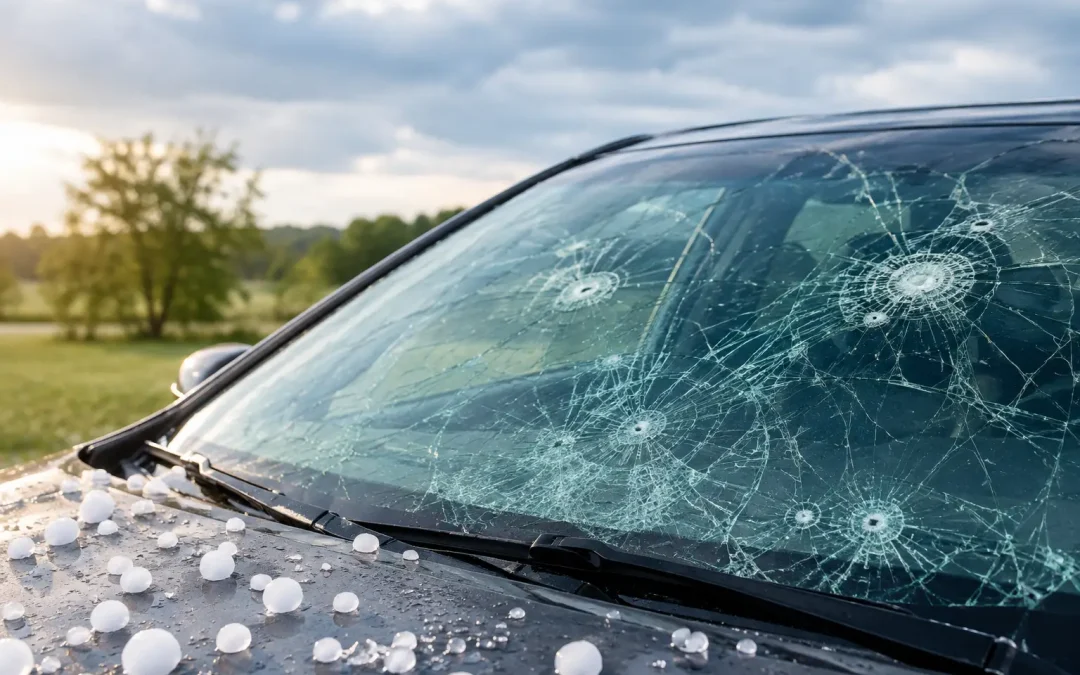
Does hail damage windshields? It can, even when your glass looks fine from the driver’s seat after the storm passes. In Humble and across Harris County, a fast-moving hailstorm can leave chips, surface pits, edge cracks, and damage that becomes more visible days later. A careful inspection helps you make the right call before a small issue affects your visibility or turns into a larger replacement.
How hail damages a windshield
Windshields are built from two layers of glass with a plastic laminate between them. That laminated design is a major safety feature. It helps the windshield stay together during an impact and supports the roof structure of the vehicle. Still, it is not indestructible.
Hail strikes concentrate force in a very small area. Larger hailstones can create obvious chips, star-shaped breaks, or cracks. Smaller hail may leave shallow pits that are easy to miss, especially if the glass is dirty or wet. Those pits can weaken the outer layer of glass, creating a point where temperature changes, road vibration, or a door slam may start a crack.
The outcome depends on several factors: hail size and speed, the angle of impact, the age and condition of the windshield, and whether the glass already had a chip or stress point. A windshield with a previous rock chip is more likely to crack during a hailstorm than clean, undamaged glass.
Does hail damage windshields even without a crack?
Yes. No visible crack does not always mean no damage. Hail can cause small impact marks, sometimes called bruises or pits, that do not immediately spread. In bright sunlight, look at the windshield from several angles. A pit may look like a tiny dull spot, a shallow crater, or a small white mark in the glass.
A light pit may not require immediate replacement. However, it deserves attention if it sits in your primary viewing area, catches your fingernail, creates glare at night, or appears alongside other damage. Multiple impacts can reduce clear visibility even if none has developed into a full crack.
Check the windshield’s edges, too. Damage near the perimeter is more likely to spread because the edge is under greater stress from the vehicle frame. If you see a crack reaching the edge, do not wait to have it evaluated.
What to inspect after a hailstorm
Park in a dry, well-lit location and inspect the windshield before your next long drive. Clean the glass first so dirt does not hide a chip or make a harmless mark look worse. Then look from inside and outside the vehicle.
Pay attention to more than the windshield. Hail can damage side windows, back glass, mirrors, and sunroofs. A chipped sunroof or cracked side window can allow water into the vehicle during the next heavy Texas rain.
Look for these signs of damage:
- Round dents, pits, or cloudy spots in the outer glass layer
- Star breaks, bullseye chips, or small half-moon-shaped chips
- Cracks that branch out from an impact point
- Damage near the windshield edge or in the driver’s direct line of sight
- Wind noise, water leaks, or loose-looking molding around the glass
If the windshield has a chip, cover it with clear tape only if the glass is dry and you need to keep dust and moisture out until service. Do not press hard on the damaged area, use a household glass repair kit on a large break, or blast the defroster against very cold or very hot glass. Sudden temperature changes can make a crack spread quickly.
When windshield repair may be the right choice
A prompt repair can often save a windshield when hail has caused a small, contained chip. During a professional repair, resin is injected into the damaged area to stabilize the glass and restore much of its clarity. The result may not make every mark disappear completely, but it can stop a chip from becoming a longer crack.
Repair is usually worth considering when the damage is small, limited to the outer glass layer, and away from the driver’s main viewing area. The glass also needs to be structurally sound around the impact point. Fresh damage is generally easier to repair because it has had less time to collect moisture and debris.
There are trade-offs. A repair is less expensive and usually faster than replacement, but it is not appropriate for every chip. If the impact is deep, spread across a wide area, located at the edge, or directly in front of the driver, replacement may be the safer option.
When hail damage calls for windshield replacement
Replacement is often necessary when hail causes a long crack, multiple significant breaks, deep surface damage, or damage that compromises your clear view of the road. It is also the better choice when a previous repair has failed or when cracks continue to grow after the storm.
A quality replacement is not simply a matter of fitting new glass into the opening. The windshield is part of your vehicle’s safety system. Proper bonding, correct molding, and careful installation matter for visibility, cabin protection, and roof support in a collision.
Many newer vehicles also have cameras and sensors mounted near the windshield. These systems may support forward collision warnings, lane departure alerts, automatic emergency braking, adaptive cruise control, or high-beam assistance. If the windshield is replaced, the Advanced Driver Assistance Systems may need windshield calibration so the camera can read the road accurately again.
Skipping required calibration can leave warning systems misaligned or unavailable. That is why it is smart to ask whether your vehicle requires calibration before scheduling replacement, especially if your rearview mirror area includes a camera or sensor housing.
Can you drive with hail damage to the windshield?
It depends on the severity and location of the damage. A small chip outside your main viewing area may allow you to drive carefully to a repair appointment. A spreading crack, damage directly in front of you, or shattered glass calls for more caution. Reduced visibility is a safety concern, particularly at night, in rain, or on busy Houston-area roads.
Avoid putting off service because a crack seems stable. Texas heat can be hard on damaged glass. The windshield expands in high temperatures, then contracts when the air conditioning cools the interior. Add rough pavement or another storm, and a small chip can become a crack with little warning.
If you are unsure whether the vehicle is safe to drive, have the glass inspected. A hands-on assessment is the best way to determine whether repair is still possible or replacement is the responsible next step.
What to do after hail hits your vehicle
Start by taking clear photos of the damage, including close-ups and wider shots of the windshield and roof. If you plan to file an insurance claim, documentation from the day of the storm can be helpful. Review your auto policy to see whether comprehensive coverage includes hail damage and whether your deductible applies.
Then arrange an inspection before the damage has time to spread. At NXT Auto Glass, the goal is to give local drivers a clear recommendation based on the condition of the glass, not push a replacement when a safe repair will do. If replacement is needed, proper installation and any required calibration help restore the vehicle’s safety features as intended.
After a hailstorm, a windshield does not have to be visibly shattered to deserve attention. A quick professional check can protect your view, preserve a repairable windshield, and give you confidence before the next drive.