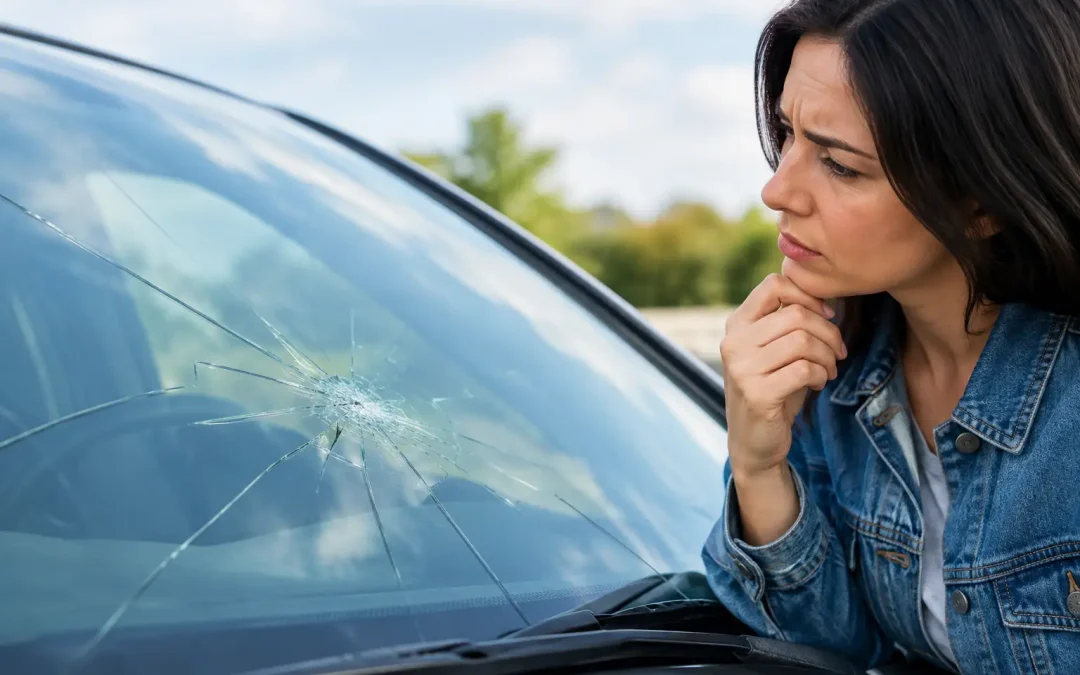
A rock hits your windshield on the way to work, leaving a chip directly in your line of sight. The first question is usually not whether it can be fixed. It is whether your windshield insurance deductible will make filing a claim worthwhile.
The answer depends on your policy, the type of damage, and whether repair can safely prevent the crack from spreading. For drivers in Humble and across Harris County, a clear understanding of glass coverage can help you make a fast, informed choice without putting visibility or vehicle safety on hold.
What Is a Windshield Insurance Deductible?
A deductible is the amount you agree to pay out of pocket before your insurance company contributes to a covered claim. If your windshield replacement costs $600 and your comprehensive deductible is $500, insurance may pay only $100. If the replacement costs less than your deductible, you would generally pay the full amount yourself.
Windshield damage is most often handled under comprehensive coverage, sometimes called other-than-collision coverage. This part of an auto policy can cover damage from road debris, hail, falling branches, vandalism, theft, and animal strikes. Collision coverage may apply if the windshield was damaged in an accident with another vehicle or object, though policy details vary.
Your deductible is not a set amount for every driver. Many policies have a $250, $500, or $1,000 comprehensive deductible. Some drivers also carry separate full glass coverage with a lower deductible or no deductible at all. The only reliable way to know is to review your declarations page or call your insurer before authorizing a claim.
When a Windshield Insurance Deductible May Not Apply
Small chips are often treated differently from full windshield replacement. Many insurance policies waive the deductible for a windshield repair because repairing a chip is less expensive than replacing an entire windshield. Insurers have a practical reason for this: a timely repair can stop a small impact point from becoming a long crack that requires much more costly work.
That does not mean every policy offers free repairs. Coverage rules can differ by insurer, policy type, and the cause of the damage. Ask two direct questions: Is chip repair covered under my comprehensive policy, and is my deductible waived for repair?
Texas does not require insurers to provide zero-deductible windshield replacement. That makes it especially useful to compare your deductible with the actual cost of the work before filing. A professional glass shop can provide an estimate and explain whether the damage appears repairable, giving you the information needed to decide.
Repair or Replacement: The Safety Decision Comes First
Cost matters, but a damaged windshield is more than a cosmetic issue. It supports the vehicle’s roof structure, helps keep passengers inside during a collision, and provides a clear surface for cameras and sensors on many newer vehicles.
A repair may be a good option when the chip is small, the damage is not at the edge of the glass, and the crack has not spread through multiple layers. A repaired area can remain visible at certain angles, but the goal is to restore strength and stop the damage from growing.
Replacement is commonly the safer choice when a crack is long, reaches the windshield edge, sits in the driver’s primary viewing area, or affects the inner glass layer. Damage near sensors, cameras, or heating elements also needs careful inspection. Waiting can turn a manageable chip into a replacement job after temperature changes, road vibration, or a rough pothole.
Do not let a deductible calculation push you into driving with unsafe glass. A qualified technician should assess whether repair is appropriate before price becomes the deciding factor.
Why ADAS Calibration Can Affect the Final Cost
Many late-model vehicles have advanced driver-assistance systems, or ADAS. Features such as forward collision warning, automatic emergency braking, lane departure alerts, and lane-keeping assistance may depend on a camera mounted behind the windshield.
When that windshield is replaced, the camera may need calibration so it can accurately recognize lane markings, vehicles, and distances. Calibration is not an optional add-on when your vehicle manufacturer requires it. It is a safety step that helps the system work as designed after the glass has been removed and replaced.
This matters for insurance because the claim total may include the windshield, moldings, labor, materials, and required calibration. Ask whether your policy covers calibration and whether it is included in the estimate. A lower quote that skips a required safety procedure is not necessarily the better value.
At NXT Auto Glass, windshield replacement and calibration are approached as connected parts of restoring the vehicle safely, not as separate tasks to leave unresolved.
Should You File a Glass Claim?
Start by comparing three numbers: your deductible, the repair or replacement estimate, and the amount your insurer is likely to pay. If replacement is estimated at $450 and your deductible is $500, filing a claim may not provide a financial benefit. You can still choose a professional replacement and pay directly.
If the job is estimated at $1,200 and your deductible is $250, a claim may make much more sense. For a chip repair, a deductible waiver could make insurance the most affordable option, assuming your policy includes that benefit.
There is also a personal comfort factor. Some drivers prefer to avoid filing smaller claims, particularly if the savings are limited. Others value using coverage they have been paying for, especially after storm damage or a sudden road-debris impact. Ask your insurer whether a glass-only claim could affect your rate or claims history. The answer can vary by carrier and policy.
Be wary of anyone who promises a claim will never affect premiums or tells you to avoid contacting your insurer. Clear information is better than assumptions. A reputable auto glass professional can help you understand the estimate, but your insurer is the authority on your coverage and claim terms.
What to Ask Before Scheduling Service
Before you approve repair or replacement, have your vehicle identification number available and confirm the year, make, model, and trim. The exact windshield can vary by features such as rain sensors, heads-up display, acoustic glass, antennas, heating elements, or camera brackets.
Call your insurer and ask whether the damage is covered, what deductible applies, whether repair has a waived deductible, and whether you can choose your own glass provider. Also confirm whether OEM glass is required by your policy or whether equivalent aftermarket glass is covered. OEM glass is made to the vehicle manufacturer’s specifications, while quality aftermarket glass may be a cost-effective option for many vehicles. The right choice depends on your vehicle, policy, availability, and comfort level.
If you are filing a claim, ask for the claim number and any billing instructions. Providing those details before service helps avoid confusion when the work is complete.
Do Not Wait for a Chip to Become a Crack
A windshield chip rarely improves with time. Heat, cold air conditioning, humidity, car washes, and everyday driving can all add stress to damaged glass. Covering a fresh chip with clear tape can help keep dirt and moisture out temporarily, but it is not a repair. Avoid pressing on the glass or using harsh cleaners around the damaged area.
The best next step is a prompt inspection. You will know whether repair is still possible, what replacement would involve if it is not, and how your windshield insurance deductible fits into the decision. Clear answers now can protect your visibility, your budget, and the safety systems your vehicle relies on.